.jpg)
▲Ministry of Land, Infrastructure and Transport Future Mobility Innovation Roadmap
Ministry of Land, Infrastructure and Transport announces 'Mobility Innovation Roadmap' on the 19th
24 years of urban operation verification, first commercialization in 25 years
Preemptive investment in technology development, review of granting priority business rights The 4th Industrial Revolution has brought a wind of innovation to the future mobility market. As competition to lead the global industry intensifies, the Ministry of Land, Infrastructure and Transport announced a roadmap for commercializing future mobility and shared strategies to preempt the global market.
The Ministry of Land, Infrastructure and Transport announced on the 19th that Minister Won Hee-ryong and 27 industry experts, including Professor Ha Heon-goo of Inha University, jointly announced a 'Mobility Innovation Roadmap' on autonomous vehicles, urban air traffic (UAM), digital logistics, mobility services, and urban tasks.
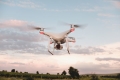
Task 2 of the roadmap is to implement air mobility without worrying about traffic congestion, and the commercialization of urban air mobility (UAM) is the core goal.
The Ministry of Land, Infrastructure and Transport said that it will actively foster new industries by supporting various services from the first commercialization of the service in 25 years and activating drone services closely related to daily life.
This is in line with the argument made by the Ministry of Land, Infrastructure and Transport at the 'UAM Urban Air Mobility Industry Development Policy Seminar' held on the 14th, where it stated that in order for Korea to lead the UAM ecosystem, both policies and technologies must be supported to create a new ecosystem, and that active participation from all parties will be encouraged.
The Ministry of Land, Infrastructure and Transport plans to carry out a verification project in an environment similar to actual situations, with the goals of ▲ verifying the safety of aircraft and communication systems in Goheung, Jeollanam-do from 2023, ▲ operating between urban areas and airports in 2024, and ▲ launching the first UAM service in 2025.
In enacting the UAM Act, the government boldly applied special exceptions that exclude the application of existing laws and regulations on aviation safety, business, and security to the greatest extent possible when conducting demonstration and pilot projects, and reaffirmed its position that was expressed at the previous policy seminar.
In particular, it was announced that it would proactively complete the following systems for various types of services: △business operator requirements, △transportation rights allocation, and △insurance systems.
="text-align: center;">

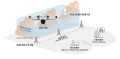
Early investment in dedicated infrastructure essential to UAM services, such as vertiports and communication networks, will also be expanded. This will be gradually expanded starting from major hub airports such as Gimpo and Incheon, and then to railway stations and complex transfer centers.
In this process, it seems necessary to establish a classification system for aircraft and vertiports, define operators based on existing air transport operators, and provide explicit situational regulations. In addition, urban planning related to the development of vertiport facilities, etc., should also be reviewed.
Additionally, 5G communication infrastructure will be built to support autonomous flight, flight information communication, and in-flight infotainment.
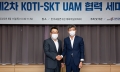
Meanwhile, to commercialize K-UAM, domestic telecommunications, platform, and infrastructure companies have formed a consultative body and are collaborating with the Ministry of Land, Infrastructure, and Transport and local governments to undertake various verification projects.
The Ministry of Land, Infrastructure and Transport announced that it will make preemptive investments in the development of UAM core technologies and that it plans to “review granting priority business rights if companies participating in the demonstration project also participate in the commercialization project starting in 2025.”
As new industry leaders have the opportunity to dominate the market while also carrying high investment risks, it seems that appropriate government support and regulations should accompany various aspects of UAM, such as safety, security, business, and infrastructure.