생성형 AI는 개발자가 올바른 코드를 보다 신속하게 평가, 수정, 검증 및 테스트할 수 있도록 지원한다. 이를 통해 대규모 애플리케이션을 더 효율적으로 현대화하고, 개발자는 영향력이 큰 작업에 집중할 수 있는 툴이 될 전망이다.
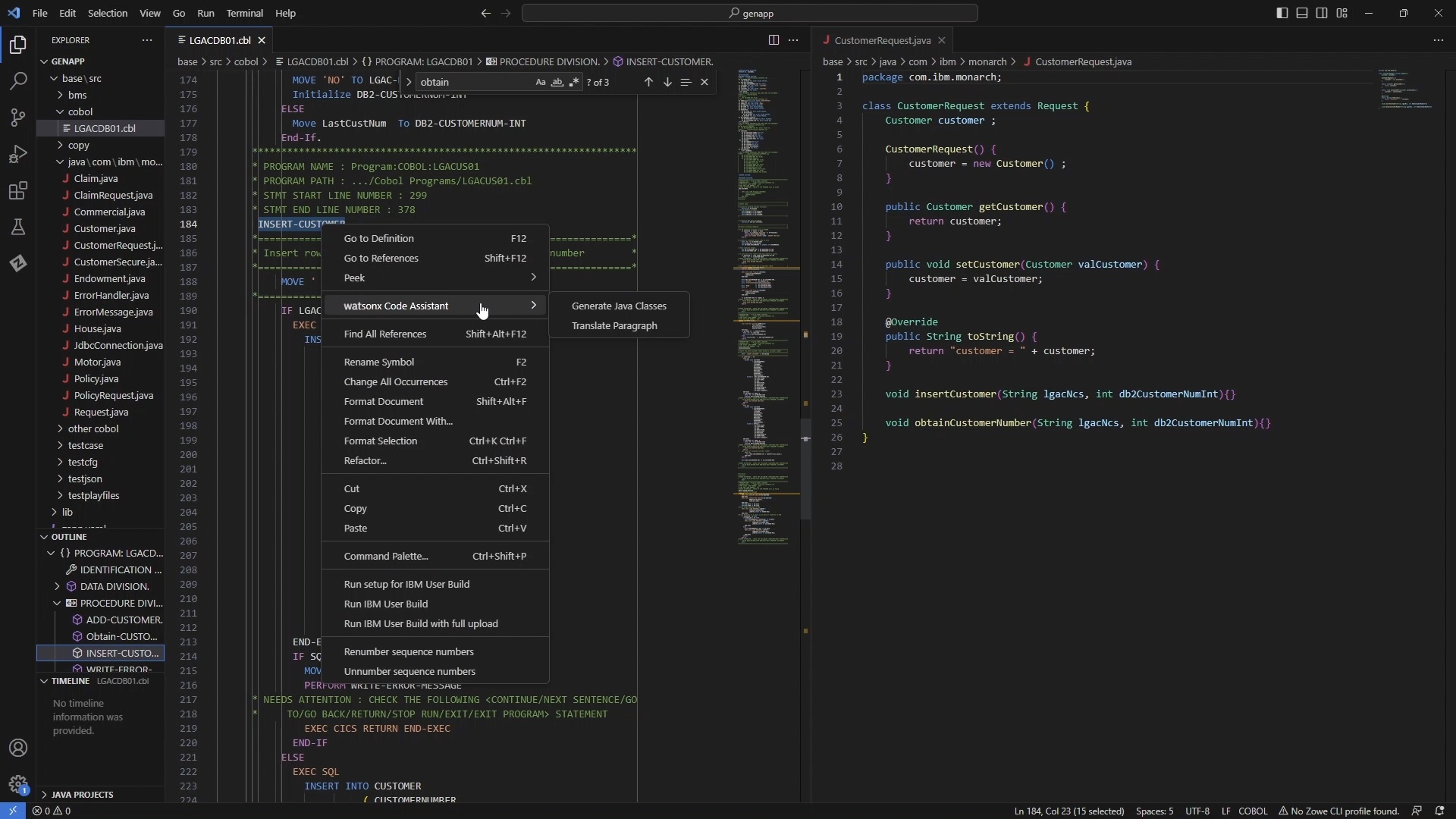
▲IBM Z용 왓슨x 코드 어시스턴트 데모 화면(사진:IBM)
200억 파라미터, 코드 자동화 위한 생성AI모델
메인프레임 애플리케이션 현대화 가속화 지원
생성형 AI는 개발자가 올바른 코드를 보다 신속하게 평가, 수정, 검증 및 테스트할 수 있도록 지원한다. 이를 통해 대규모 애플리케이션을 더 효율적으로 현대화하고, 개발자는 영향력이 큰 작업에 집중할 수 있는 툴이 될 전망이다.
IBM이 생성형 인공지능(AI) 신제품 'IBM Z용 왓슨x 코드 어시스턴트 (watsonx Code Assistant for Z)'를 1일 발표했다.
IBM Z용 왓슨x 코드 어시스턴트는 IBM Z 플랫폼에서 코볼(COBOL)을 자바(Java)로 더 빠르게 변환하고 개발자의 생산성을 향상시키는 데 도움이 된다. 2023년 4분기에 정식 출시될 예정이며, COBOL 애플리케이션에 대한 현대화를 가속화에 기여할 것으로 보인다.
IBM Z용 왓슨x 코드 어시스턴트는 올해 말 출시 예정인 레드햇 앤서블 라이트스피드(Red Hat Ansible Lightspeed)와 함께, ‘왓슨x 코드 어시스턴트’ 제품군에 새롭게 추가된다. 해당 솔루션들은 1조5,000억개의 토큰으로부터 학습된 115개 코딩 언어에 대한 지식을 갖춘 IBM의 왓슨x.ai(watsonx.ai) 코드 모델에 기반을 두고 있다.
200억개의 파라미터로 구성되었으며, 코드 자동화를 위한 최대 규모의 생성형 AI 기반 모델 중 하나가 되는 것을 목표로 한다. 왓슨x 코드 어시스턴트 제품 포트폴리오는 추후 다른 프로그래밍 언어까지 확장되어 현대화를 가속화하고 개발자의 스킬(skill) 향상에 대한 도전을 해결할 것으로 예상된다.
IBM Z용 왓슨x 코드 어시스턴트는 기업으로 하여금 생성형 AI와 자동화된 툴링을 활용하여 메인프레임 애플리케이션 현대화를 가속화할 수 있도록 지원하도록 설계되었으며, 이 모든 것이 IBM Z의 성능, 보안 및 복원력 기능을 유지하는 것을 목표로 하고 있다.
COBOL 데이터 처리 언어는 전 세계 기업의 수많은 주요 비즈니스 및 운영 프로세스를 지원한다. IBM Z용 왓슨x 코드 어시스턴트를 광범위하게 적용할 경우(수십억 라인의 COBOL 코드가 현대화를 위한 잠재적 후보로 추정) 다른 접근 방식과 비교했을 때, 기존의 COBOL 코드를 잘 설계된 고품질 자바 코드로 선택적이고 점진적으로 변환하는 것이 보다 용이하게 된다.
IBM은 현대화의 각 단계마다 적합한 툴을 제공하기 위한 기능을 설계하고 있다. 이 솔루션에는 기존의 IBM의 애플리케이션 디스커버리 및 딜리버리 인텔리전스(ADDI) 인벤토리 및 분석 도구가 포함될 것으로 예상된다. ADDI에 이어 COBOL에서 비즈니스 서비스를 리팩토링하는 단계, 최적화된 설계를 통해 COBOL 코드를 자바 코드로 변환하는 단계, 최종적으로 자동화된 테스트 기능을 사용하여 변환된 결과물을 검증하는 단계가 포함된다.
이를 통한 잠재적 이점은 △전체적인 애플리케이션 현대화 주기에 걸쳐 코드 개발 가속화 및 개발자 생산성 향상 △IBM Z 내에서 코드 번역 및 최적화를 포함한 애플리케이션 현대화 이니셔티브의 전체적인 비용, 복잡성 및 위험에 대한 관리 △더 광범위한 IT 기술 풀에 대한 접근성 확대 및 개발자의 참여와 투입 가속화 △모델 맞춤화 및 성공사례 적용을 통한 고품질 코드 생성 및 용이한 유지 보수 등의 효과를 기대할 수 있다.
IBM기업가치연구소(IBV)에서 새로 발표한 연구결과에 따르면, 기업은 향후 2년 내에 애플리케이션 자산을 처음부터 다시 구축하는 대신 기존 메인프레임 자산을 활용할 가능성이 12배 더 높다. 그러나 동시에 이러한 기업이 직면한 가장 큰 과제는 인력 자원과 기술 부족인 것으로 나타났다.
IBM 소프트웨어 제품 관리 및 성장 담당 수석 부회장 카림 유수프(Kareem Yusuf) 박사는 "왓슨x를 통해 생성형 AI 기능을 새로운 사용 사례들에 적용함으로써, 고객을 위한 실질적인 발전을 도모할 계획"이라며, "IBM은 목표 지향적이고 최적화된 접근 방식을 위해 IBM Z용 왓슨x 코드 어시스턴트를 엔지니어링하고 있으며, IBM Z에 최적화된 코드를 신속하고 정확하게 변환해 시장 출시 기간을 단축함과 동시에 기술 풀을 확장할 수 있도록 설계됐다"고 말했다.
그는 "이를 통해 IBM Z 고유의 성능, 복원력, 보안성을 유지하면서 애플리케이션을 개선하고 새로운 기능을 추가할 수 있다"고 덧붙였다.