2026 Physical AI Conference
반도체 AI 보안 인더스트리 4.0 SDV 스마트 IoT 컴퓨터 통신 특수 가스 소재 및 장비 유통 e4ds plus

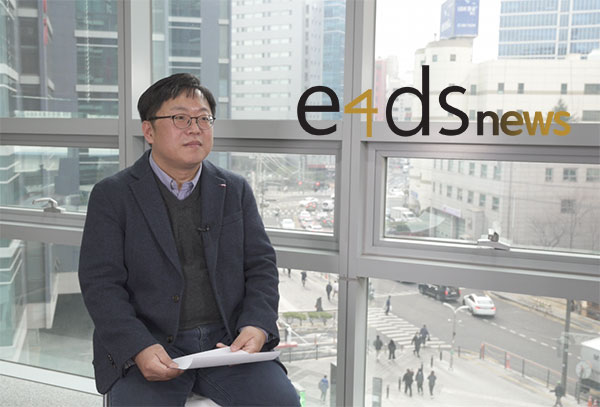
[Interview] Kim Hak-yong, Director of IoT Strategy Research Institute - “Matter Standard Changes the Smart Home Market Landscape”

기사입력2023.03.16 15:21

“Matter Standard Changes the Smart Home Landscape”

Open Smart Home Interoperability Standard, Smart Device Connectivity↑
Amazon, Apple, Google, Samsung to Launch Matter 1.1 in 2023
Expected expansion of applications to smart homes, robots, and car charging devices

[Editor's Note] One of the hot topics in the global smart home industry is 'Matter'. Matter is an open smart home interconnection standard currently being developed by the Connectivity Standards Alliance (CSA), and is an IoT protocol created to improve connectivity or interoperability between smart devices. It was initiated by global platform and smart home device companies such as Apple, Google, Amazon, and Samsung. Matter is expected to dominate the industry due to its high expandability and compatibility, but it is still in the pre-activation stage. Our magazine spoke to Kim Hak-yong, head of the IoT Strategy Research Institute, which is at the forefront of research into Matter standards in the industry, about the characteristics of Matter standards, the current status of research, and the impact Matter will have on the business ecosystem.

■ What is the Matter Standard and what are the benefits of applying it?

The Matter standard is a smart home interconnection standard, and version 1.0 was released in October 2022.

Previously, each smart home platform operator, such as Google, Apple, and Alexa, used their own proprietary protocols, but now, through Matter, various smart home devices can be interoperable and linked.

For example, users of Samsung and LG products were only able to connect to the SmartThings and ThinQ platforms, but by applying the Matter standard, all products and platforms can be linked, providing convenience from the user's perspective.

■ If there are differences from existing standards such as OCF

OCF (Open Connectivity Foundation) is called C2C protocol, or cloud-to-cloud protocol. By linking smart home platforms and platforms in the platform cloud, it supports using different smart home platforms as if they were one.

Matter is called a D2D platform protocol, or device-to-device. Configure one server locally, within your home, and connect to devices regardless of manufacturer.

The existing OCF required linking between clouds, and when the number of clouds requiring connection increased, there were inconveniences in linking. In addition, when a failure occurred in one part because they were interconnected, it was impossible to check the relevant part, and there were difficulties in using smart home devices connected to the same Internet signal.

On the other hand, Matter is not affected by the operation between devices, and since it is a local connection, it has the advantage of a fast response speed to control signals. In addition, in terms of security, privacy is guaranteed because user information is processed and discarded locally without being shared with the cloud. This part may change depending on the platform operator's policy.

If it was led by device manufacturers, the Matter standard is led by platform service providers such as Amazon, Apple, Google, and Samsung Electronics. This is because the protocol is platform-independent, so the structure changes to one where platforms that secure many users are at an advantage. If the market becomes active from this point on, it is expected that device providers and chip manufacturers will also have opportunities.

■ The products to which Matter is currently applied and the product groups to which it will be applied in the future are:

For the standard Matter 1.0 version, the protocol was applied to approximately 7-8 product groups, including basic smart accessory product groups in the form of lights, switches, plugs, lamps, blinds, and door locks.

Starting in 2023, the industry has announced that it will revise the Matter standard twice a year to expand the target products or product functions. If the market response is also positive, the target is expected to expand significantly to include smart home products, devices in individual industries, robots, vacuum cleaners, cameras, and car chargers.

■ How do you expect the smart home market landscape to change when the Matter standard is applied?

The domestic smart home market has formed an ecosystem centered around mobile carriers, home appliance manufacturers such as Samsung and LG, or large construction companies. This is because the structure is such that services are provided only to devices related to the company’s platform, just as when moving into a new apartment, you have to use the products of the relevant company.

If the Matter standard is adopted, users will not be locked into a platform because any product that supports Matter will be interchangeable. They will find the platform with the best user interface that provides the best service for them.

Ultimately, it is expected that how useful services can be provided to consumers on a smart home platform will determine the future of the smart home ecosystem.

■ What are the strategies of global corporations leading the smart home market?

It's still early so there's nothing remarkable.

Amazon and Google, traditionally strong in AI speakers, are pursuing an 'AI everywhere' strategy, that is, a strategy to popularize AI that recognizes voices so that it exists everywhere.

For example, smartphones are widely used when using smart home devices, but intuitive voice command control maximizes convenience. In fact, since AI speakers are installed in more than half of households, this is a strategy that is naturally permeating our daily lives.

On the other hand, Samsung Electronics is putting forward a 'Hub everywhere' strategy, which is a strategy of connecting numerous smart home devices into a hub using a hub device.

On the other hand, since users are more likely to adopt familiar services, strategies for securing the initial market are expected to be important. As existing platforms become more severe, they will eventually be pushed towards large platform operators, so small and medium-sized companies will have to strengthen their power in specialized service areas outside of the platform business area.

For example, it is expected that the retail industry, or the security industry such as ADT and S1, will be able to take the lead in specialized fields by approaching them with the concept of providing smart home-based security services.

■ Let me introduce the content that will be covered in the webinar on Thursday, April 6th.

We introduce the basic concepts and key features of Matter, and then go into more detail about the impact that the emergence of Matter standards will have on the business ecosystem rather than the technical aspects.

We will discuss how domestic and global companies are leading the smart home market after Matter, as well as how small and medium-sized businesses should respond.

This will provide insight into how to respond to market changes following the Matter standard.

thank you

스마트홈 시장에 지각변동을 일으킬 매터(Matter) 표준
2023-04-06 10:30~12:00
e4ds / IoT 전략연구소 김학용 소장