반도체 AI 보안 인더스트리 4.0 SDV 스마트 IoT 컴퓨터 통신 특수 가스 소재 및 장비 유통 e4ds plus

Securing deoxidation technology for waste titanium, securing resources and increasing value added, 'killing two birds with one stone'

기사입력2021.05.14 15:33


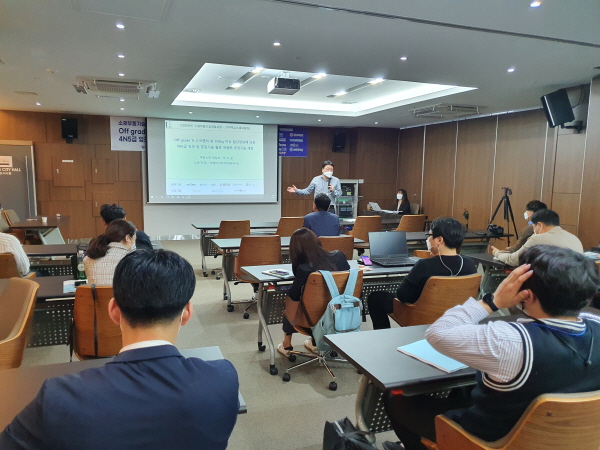
▲ Participants in the project 'Development of product manufacturing process technology using 4N5 grade ingot and powder technology through deoxidation refining of over 100 kg of off grade Ti scrap per day' are taking a commemorative photo after the symposium presentation.


MTIG Host Organization, Ti Scrap Product Process Technology Development Project
Participation of demand companies, utilization of displays, electronic devices, aviation, medical, etc.

Technology is under development to make off-grade titanium (Ti) scrap, which was previously impossible to recycle, recyclable through a hydrogenation-dehydrogenation (HDH) process. Upon completion of the project, it is expected that titanium scrap will be upgraded and have higher added value, and that titanium material independence will be achieved.

The Korea Resources Recycling Society, a non-profit organization, held the 2021 Spring Temporary General Meeting and the 54th Academic Conference of 'Recycling Korea 2021 Yeosu' at the Yutap Marina Hotel from May 13 to 14.

At this event, one of the special symposiums featured a presentation on the project, ‘Development of product manufacturing process technology using 4N5 grade ingot and powder technology through deoxidation refining of over 100 kg of off grade Ti scrap per day.’

This project is led by MTIIG (CEO Ji-Hwan Park) and is supported by the following organizations: △ Advanced Technology Research Institute △ Suncheon National University △The Korea Institute of Geoscience and Mineral Resources, Kyungpook National University, Korea Institute of Industrial Technology, and Hanbat National University are participating, and Intops, Hansco, and Geoelement are participating as demand organizations.

Most of the existing domestically produced on-grade titanium scrap was exported overseas or remelted for recycling, but off-grade titanium scrap was impossible to recycle due to its high impurity content.

Titanium is used in large quantities, accounting for 15% of the weight of an aircraft, but only about 5% of the input materials are actually used in the manufacturing process, so the remaining 95% is disposed of as scrap. Approximately 200 tons of titanium scrap are generated annually in Korea alone.

In particular, since Korea is specialized in deoxidation technology, titanium scrap is being exported overseas, and a lot of money is being spent on re-introducing it domestically.

In the United States, the price of titanium sponge is $10.98 per kg, while the price of titanium turning scrap is $0.99 per kg, which has significantly reduced the price of titanium turning scrap, and can secure high added value when recycled.

In Korea, the price of off-grade titanium scrap is known to be about 1/6 of the price of titanium sponge.

Accordingly, after completing this project, it is expected that it will be possible to achieve self-sufficiency in domestic titanium materials through structural reform of the material upcycling industry through technological innovation, beyond the simple use of existing off-grade titanium scrap as an intermediary trade, and that it will be possible to develop consistent process technologies for upgrading titanium materials, increasing added value, eco-friendly deoxidation/melting/refining technology, and powder/ingot productization.

Accordingly, MTIG, the main organization, is fully committed to developing Ti-based alloy materials using the MIM process, developing materialization process technology according to scrap type, establishing and optimizing a commercial deoxidation system, and securing technology to establish and operate electron beam equipment.Standing.

In addition, the Advanced Institute of Technology, a participating institution, is working on impurity removal and powderization processes, Soonchunhyang University is working on Ti alloy design, the Korea Institute of Geoscience and Mineral Resources is working on the development of a hydrogen deoxidation process, Kyungpook National University is working on the development of rare earth deoxidation technology, the Korea Institute of Industrial Technology is working on the development of Mg deoxidation and electron beam, and Hanbat National University is working on basic research on Mg deoxidation.

In particular, this project is a demand-side project, and demand-side companies such as Intops, Hansco, and Geoelement plan to use the deoxidized titanium materials for: △displays, △electronic device parts, △small transport parts, △medium-to-large transport parts, and △medical materials.

Meanwhile, at the 54th Academic Conference of the Recycling Society, Professor Jae-Woo Ahn of Daejin University gave a lecture commemorating the Juam Award, presenting on the carbon-neutral era and lithium recovery technology, and many general presentations were given in the fields of resources, materials, and smelting.

Also, as a special symposium, 'Development of product manufacturing process technology utilizing 4N5 grade ingot and powder technology through deoxidation refining of more than 100kg of off grade Ti scrap per day', 'Development of high-efficiency/eco-friendly resource recycling technology and secondary battery raw material technology for medium and large-sized waste lithium secondary batteries', 'Development of eco-friendly integrated process technology for high-grade materialization of strategic metal ores' were presented.


▲MTIIG CEO Park Ji-hwan, the project lead organization for the 'Development of a product manufacturing process technology utilizing 4N5 grade ingot and powder technology through deoxidation refining of over 100 kg of off grade Ti scrap per day' project, is explaining the project.
rBoardContent">

타이타늄 분말 기술 활용 및 고순도 탄탈륨 분말 제조 기술
2021-06-08 10:30~12:00
e4ds / 박지환 대표이사