UNIST, 압력으로 전고체 전지 내부 진단하는 기술 개발
기사입력 2021.09.07 12:02
UNIST 이현욱 교수팀, 압력 변화로
전고체 전지 수명 줄이는 부반응 구분
폭발위험 없는 전고체 전지 개발에 기여
전고체 전지의 수명을 줄이는 부반응을 파악하는 진단기술이 국내에서 개발됐다.
울산과학기술원(UNIST) 에너지화학공학과 이현욱 교수팀은 7일, 美 조지아 공대 매튜 맥도웰(Matthew T. McDowell) 교수 연구팀과 압력 변화를 분석해 황화물 전고체 전지 내 2차상과 수지상 물질 생성 반응을 구분하는 데 성공했다.
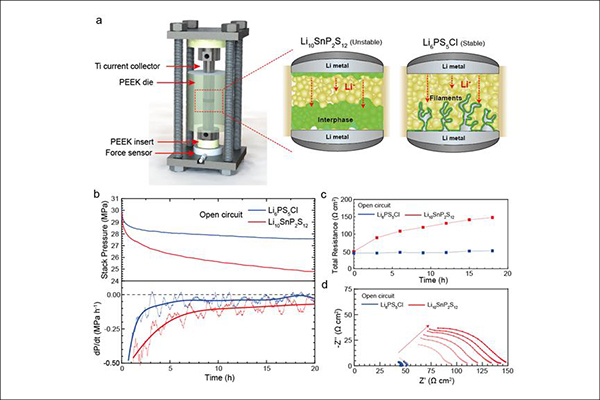
▲ 두 종류 황화물계 고체전해질을 활용한
실험 모식도 [그림=UNIST]
실험 모식도 [그림=UNIST]
이현욱 교수는 “고가의 엑스레이(X-ray) 기술과 달리 이번 진단 방식은 소규모 전지부터 상용화될 대용량 전지까지 쓸 수 있는 기술”이라며, “더욱 간편하고 정밀한 전고체 전지 성능 평가와 예측이 가능해질 것”이라고 기대했다. 전고체 전지는 내부 액체 전해질을 고체로 바꿔 폭발위험이 없는 차세대 전지다.
공동 연구팀은 2차상 물질이나 리튬 수지상 물질이 만들어질 때 전지 내 부피 변화에 차이가 있을 수 있다는 데서 아이디어를 얻어 연구를 진행했다. 전지 내 물질의 부피가 감소하면서 외부에서 측정한 압력이 감소하는 원리다. 이를 입증하기 위해 전지 내 부반응이 다른 두 종류 황화물계 고체전해질을 썼다.
주석 금속 이온을 포함한 황화물계 고체전해질은 전지 리튬금속 전극과 만나면 불안정한 2차상으로 변하기 쉽다. 반면 금속 이온이 없는 황화물계 고체전해질에는 전극 표면에 전해질 속으로 파고드는 뾰족한 리튬 수지상이 잘 생긴다.
제 1저자인 이찬희 UNIST 에너지공학과 박사과정 연구원은 “기존 전해질보다 부피가 작은 2차상은 전해질 단면 전체에 거쳐 만들어지기 때문에 압력 감소가 크지만, 리튬 수지상은 고체전해질 내부의 작은 구멍을 메우는 형태로 생겨 압력 감소가 적었다”라며 “실제 충전 실험 중 이 같은 형태를 관찰”했다고 말했다.
전고체 전지 상용화 관건은 액체만큼 이온전도도가 좋은 고체를 찾는 것이다. 황화물계 고체는 지금껏 나온 고체전해질 중 가장 이온전도도가 좋은 물질이다.
연구팀은 또한, 황화물계 고체전해질 제조에서 가하는 압력 정도를 달리해 위와 같은 분석 실험을 했다. 실험 결과, 분말 형태 황화물을 뭉쳐 전해질을 만드는 공정의 압력이 높을수록 리튬 수지상 생성이 억제되고 전지 수명이 길었다.
이번 연구는 한국에너지기술평가원, 한국연구재단 신진연구사업의 지원을 받아 수행됐다. 연구 결과는 에너지 분야 국제학술지인 에이씨에스 에너지 레터스(ACS Energy Letters)에 8월 24일 자로 온라인 공개돼 출판을 앞두고 있다.
이수민 기자
관련뉴스
-
키사이트, 이벤트 기반 IoT 배터리 수명 분석 SW 제공
R&D 및 설계 검증 엔지니어는 하드웨어 서브시스템에 의한 전력 소비량을 파악하고 다양한 상황과 기후 조건에서 IoT 디바이스가 어떻게 동작하는지 분석해야 한다. IoT 디바이스 배터리 수명 최적화는 중요한 사항이나, 까다롭고 많은 시간이 소요될 수 있다. 키사이트는 이를 간소화하는 이벤트 기반 전력 분석 소프트웨어, KS833A2A를 발표했다.
2021-08-02 오전 10:00:07by 이수민 기자
-
‘하이 니켈계 끝판왕’ 나왔다…Ni 98% 양극재
전기차 배터리 가격의 40%는 비싼 코발트가 들어간 양극재가 차지한다. 가격을 낮추려면 코발트를 적게 쓰면서도 용량은 커야 하는데, UNIST 교원창업기업에서 최적의 대안을 제시했다. ‘하이-니켈계 끝판왕’으로 기대되는 ‘Ni98 NCMA (NiCoMnAl) 단결정 소재’다.
2021-08-18 오후 3:03:15by 배종인 기자
-
전기연구원, 배터리 음극재 기술 11억 기술이전
과학기술정보통신부 국가과학기술연구회 산하 정부출연연구기관인 한국전기연구원(KERI)이 실리콘 단점을 그래핀으로 보완한 배터리 음극재 대량 제조기술을 개발하고, 이를 11억원에 기술이전하는 쾌거를 거뒀다.
2021-08-30 오전 9:39:02by 배종인 기자

많이 본 뉴스

[열린보도원칙] 당 매체는 독자와 취재원 등 뉴스이용자의 권리 보장을 위해 반론이나 정정보도, 추후보도를 요청할 수 있는 창구를 열어두고 있음을 알려드립니다.
고충처리인 장은성 070-4699-5321 , news@e4ds.com