마이크로칩7월
Physical AI HBM Smart Factory SDV AIoT Power Semicon 특수 가스 정정·반론보도 모음 e4ds plus

AI, data, robots, IoT, the core of smart logistics

Google 우선 소스 기사입력2021.08.05 15:45

AI-based autostore, quick processing of minimum area and maximum products
Product classification AI through camera, cutting-edge distribution through learning
Smart Logistics Center Certification Project, Support for Business Expense Loan Interest

Smart logistics, which reduces the product loading area and quickly processes the maximum amount of products, is spreading due to the spread of automation technology resulting from the advancement of technologies such as artificial intelligence (AI), robots, and IoT. Through smart logistics, logistics personnel can be optimized and the safety of logistics workers can be greatly improved. Accordingly, the government is investing its budget in the spread of smart logistics and is actively promoting the expansion of smart logistics.

■ Active support for certification of the first smart logistics center, low-interest loans for business expenses, etc.

The Ministry of Land, Infrastructure and Transport recently certified the logistics facilities of six companies, including Pasto, Hanjin, CJ Korea Express, Logis Valley SLK, Logis Valley Cheonma, and Hanaro TNS, as smart logistics centers for the first time in Korea.


▲First Smart Logistics Center Certification Results


The government is introducing a smart logistics center certification system to promote private investment in advanced logistics facilities with excellent efficiency and safety, and is proceeding with smart logistics center certification through the process of establishing detailed certification criteria, selecting certification agencies, and securing interest support budget.

The recent smart logistics center certification was finalized through a certification review committee comprised of the Ministry of Land, Infrastructure and Transport, industry and experts, after document and on-site examinations by experts from each field at the Korea Transport Institute, the certification agency.

The certification grades are given from 1 to 5 based on the facility's level of sophistication and automation, and in particular, parcel terminals were evaluated with a focus on the level of automation that replaces the labor-intensive sorting work.

In addition, we evaluated whether the facility and management system for responding to fire and safety accidents, rest areas, and a safe working environment with appropriate temperature and humidity were in place.

When a certified facility borrows business expenses necessary for facility investment, it can receive interest cost support from the government.In particular, small and medium-sized enterprises can receive support of up to 2%p.

As a result of the evaluation, small and medium-sized enterprises were certified for their excellent technological prowess and bold investments.

Pasto's 'Yongin 1 Center', which received the 1st grade preliminary certification, is developing its own AI-based logistics operation optimization system, and is also the first logistics startup to introduce an automatic warehouse system (Autostore) where robots automatically pick products, and a state-of-the-art sorter (SureSort), and plans to link it with self-driving robots, etc.


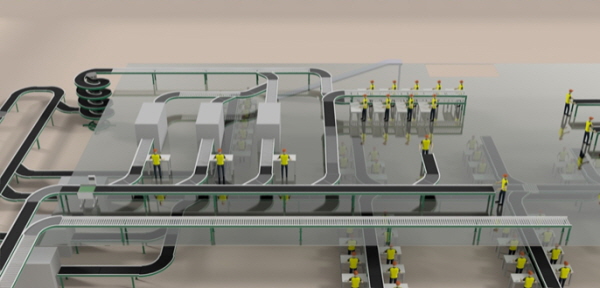
▲Expected automation floor plan of Pasto Yongin 1 Center


Logis Valley SLK and Logis Valley Cheonma's Ansan Center, which received a third-grade rating, also organically connected automated facilities such as automatic waybill attachment machines (autolabelers), conveyors for clothing hangers, automatic sorting systems (PAS), and robotic pallet stacking equipment with information systems to improve the efficiency of material handling and work accuracy.

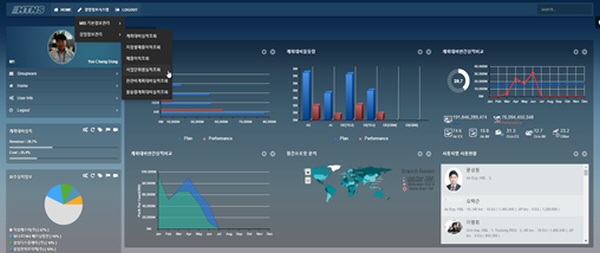
Hanaro TNS's 'Dongtan Logistics Center' received a 5th grade rating for developing its own logistics system (WINS) that integrates control and real-time linkage between the headquarters and domestic and overseas bases.


▲Hanaro TNS's own logistics system (WINS)


CJ Logistics and Hanjin's Mega Hub Terminals both received first-class ratings.

CJ Logistics' 'Mega Hub Gonjiam' is the largest parcel terminal in Asia, completed in 2018, and processes 1.75 million parcels a day using cutting-edge automatic sorting equipment. In addition, products shipped from the fulfillment center on the upper floor are automatically shipped from the parcel terminal on the lower floor using inter-floor equipment, shortening delivery times.

Hanjin received preliminary certification for the 'Daejeon Mega Hub Terminal' scheduled for completion in 2022. The plan is to automate the entire process from unloading to loading, including sorting and arranging products by size through artificial intelligence shape recognition after unloading, recognizing barcodes, and sorting and transporting them by destination through an automatic sorter.

The Ministry of Land, Infrastructure and Transport’s Advanced Logistics Division Director Oh Song-cheon said, “I hope that this smart logistics center certification will be a catalyst for a leap forward in the advancement of the logistics industry,” adding, “Advancing logistics facilities will not only enhance companies’ market competitiveness and consumer satisfaction, but will also contribute to creating a safe work environment and making logistics eco-friendly.”

He also asked for “active participation from the private sector as we plan to support the transition to smart logistics in various ways, including through financial support in the future.”

■ Comprehensive automation technology through AI, IoT, robots, and big data

Smart logistics encompasses all 4th industrial technologies, including AI, IoT, robots, and big data.

Yongin Center 1, which is currently under construction by Pasto, was built entirely with Pasto’s own hardware design and software. In particular, the automated facility, Autostore, was introduced for the first time by a startup.

Pasto's Autostore was built with an investment of approximately 2.5 billion won. AutoStore is a company headquartered in Norway. Inside the AutoStore, there is a grid-shaped robot running rail called a 'grid'. At the bottom of this grid, there is a dedicated container called a 'bin', and the robot running on the grid picks up the bin and returns it to the receiving port outside. The structure excludes work passages, etc., and realizes about four times more space efficiency than a typical logistics warehouse, making it suitable for installation in narrow spaces and has the advantage of being able to handle a lot of logistics.

▲By building an autostore, you can achieve space efficiency that is about four times higher than that of a regular logistics warehouse. (Photo: Autostore homepage)


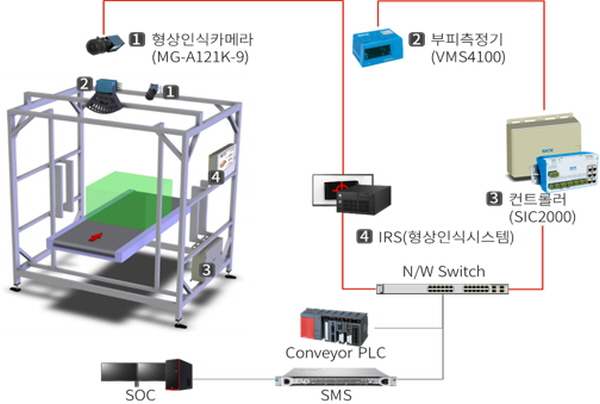
In the case of Hanjin Daejeon Megahub Terminal, it is equipped with AI solutions, a next-generation parcel operation platform, and cutting-edge facilities. Looking at the AI solution installed here, after the product is unloaded, the shape of the product is recognized through a camera, and based on the learned data, the parcel products are usually classified into small, medium, and large. According to the category, it is classified into small, medium, and large and distributed as pillow products through an automated logistics machine. This allows for the processing of 1.2 million delivery boxes per day.


▲Hanjin AI shape recognition device

Another commonly applied technology is automated control. Real-time monitoring and remote control are possible through the control center, and when a problem occurs, measures can be taken for the facility remotely through control alone without the input of the relevant manpower. In particular, it is possible to respond to internal information leaks or hacking by paying attention to security.

The introduction of autonomous driving technology is also a technology that is being considered in smart logistics. In the case of logistics robots, they are responsible for safely transporting products that are difficult for people to transport or are heavy, thereby reducing the risk of safety accidents for workers. In particular, the latest autonomous driving technology enables safe and accurate logistics transport through position correction technology and human recognition technology.

Advances in communication are also being introduced to expand smart logistics. In the past, the cost of communication was quite high, but with the development of communication means, the cost has decreased, and various communication means such as Wi-Fi, LTE, and 5G are being used to facilitate communication between devices.

■ Contributing to the spread of fulfillment system and smart logistics

Fulfillment systems are spreading due to the spread of smart logistics.

The CJ Korea Express Megahub Gonjiam, Pasto Yongin 1 Center, and Logis Valley Cheonma Ansan Center, which were recently certified, are comprehensive fulfillment service hub facilities.

Fulfillment service is a 'integrated logistics agency service' in which a logistics specialist company takes on the consignment of companies wishing to sell goods and handles all processes including delivery, storage, packaging, inventory management, exchange and refund services.

Naver, CJ Logistics, and others have recently been actively entering the fulfillment business, and in the future, the fulfillment business is expected to contribute to the spread of smart logistics by using highly automated equipment utilizing AI, robots, and data technology to process more logistics more quickly and quickly than before.