반도체 AI 보안 인더스트리 4.0 SDV 스마트 IoT 컴퓨터 통신 특수 가스 소재 및 장비 유통 e4ds plus

[Planning] IoT that changes our lives, implemented with cutting-edge technology (4) - Microcontroller

기사입력2021.05.26 06:50

Serial order
(1) Sensor on May 17th
(2) Connectivity on May 20th
(3) Actuator on May 24th
(4) Microcontroller on May 26
(5) May 28 Security


[Editor's Note] When smoke is detected in a house, the fire detector sounds, firefighting equipment near the detector is activated, and an emergency call is sent to the homeowner and the fire department. In fields other than firefighting, the implementation of such systems that operate without people has become easy and widespread in our daily lives, and it seems that further development will continue in our daily lives in the future. A system that connects and operates through the Internet of Things without human intervention is called the Internet of Things. The Internet of Things is being applied to many aspects of our lives, whether we know it or not, such as health care, power, gas, parking lots, and home appliances. Accordingly, this magazine has prepared a five-part series to examine cutting-edge technologies that make the Internet of Things possible.
Microcontroller , the 'central nervous system' of IoT devices

High computational processing, low power consumption required, support for various wireless communications
Infineon supports all types of applications with a wide range of MCUs

■ IoT device control

A microcontroller is required to control IoT devices.

Microcontrollers process and analyze data collected by sensors and generate control signals for IoT devices. This allows us to move actuators and implement IoT.

The biggest requirements for microcontrollers for recent IoT systems are high computational processing performance and low power consumption.

This is because signals from numerous sensors must be processed to implement IoT, and high-efficiency power technologies such as silicon carbide and gallium nitride are increasingly being adopted to save energy.

Accordingly, recent microcontrollers for IoT require various functions that support improved performance and energy efficiency, and receive sensor data and control additional usage functions through accelerators that can perform calculations faster and more efficiently than general-purpose main processors.

Additionally, in a changing communications environment, it must be able to support various wireless communication standards such as Wi-Fi and Bluetooth, and must be connected at high speeds.

In addition, interface support that can supply power to the device or enable fast charging is also required.

In particular, the requirements for recent microcontrollers are to expand the application range, reduce power consumption, and simplify the design.

Enhanced security features are also needed here.


Infineon , wide ranger/make-iot-work/">MCU provided

Microcontrollers for IoT devices are as diverse as IoT applications.

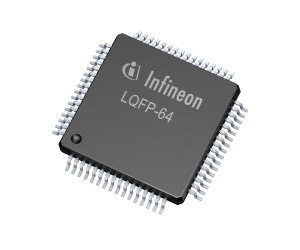
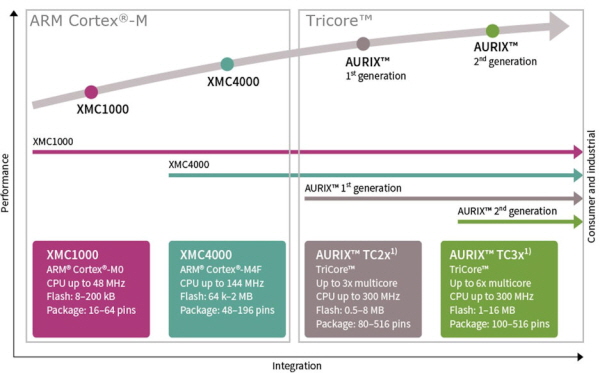
Infineon offers a wide range of MCUs based on the 32-bit Arm® architecture, Infineon's 32-bit TriCore™ architecture and other architectures to support all types of applications.

Additionally, we offer comprehensive tools and development platforms such as DAVE™, a development platform for XMC™ microcontrollers, AURIX™ embedded software and AURIX™ tools to speed up development work.

PSoC™ low-power, high-performance MCU products enable customers to enter the IoT field more easily. The ModusToolbox™ software environment is provided for evaluation and design using PSoC™ 6 MCUs. PSoC Creator is an integrated design environment that allows simultaneous hardware and firmware editing, compilation, and PSoC™ and FM0+ system debugging.