반도체 AI 인더스트리 4.0 SDV 스마트 IoT 컴퓨터 통신 특수 가스 소재 및 장비 e4ds plus

[Planning] Semiconductors, the Key to Green Energy②-Semiconductors, Positioned as Key to Energy Production, Transmission, and Consumption

기사입력2022.05.23 14:34

Semiconductors , a key player in energy production, transmission, and consumption

High-voltage semiconductor technology is key to reducing transmission losses
The only one that can effectively manage power in all areas of life

[Editor's Note] Countries around the world are actively responding to climate change, and are actively working to reduce CO2 emissions and expand renewable energy. This trend is not just a national issue, but a common issue for all of humanity, and it is expected that related businesses will continue to grow in the future as essential policies for reducing fossil fuels that are being depleted and for sustainable living. The importance of semiconductors is also increasing in this green energy industry. Power semiconductors are essential components for minimizing losses and maximizing performance at all stages of power energy, and power semiconductors play a significant role in miniaturizing renewable energy devices such as solar, wind, and hydrogen. Accordingly, this magazine has prepared a two-part series to examine the importance of semiconductors in green energy based on Infineon Technologies ' ' Energy Efficiency Technology '.

■ Energy security, achieved through energy efficiency technology

Electricity accounts for one third of global energy requirements.

The Paris Climate Agreement, which began in 2016, sets limits to global warming that were reached before industrialization. The goal is to reduce the temperature to below 2 degrees Celsius.

Every kilowatt-hour of fossil fuel consumption increases carbon dioxide emissions by about 490 grams and heats the climate.

Also, the era of electricity will continue to grow.

In this situation, reducing pollution generated during the electricity production process is important, but the most realistic solution to reducing CO2 emissions from energy production is to preserve the energy produced by achieving energy efficiency technology without wasting it.

These answers can be achieved with semiconductor technology .

■ Optimize energy flow and reduce losses

To meet the growing energy demand, long-distance transmission, short-distance distribution systems, and energy storage systems for renewable energy are essential.

The U.S. Energy Information Administration estimates that transmission and distribution losses amounted to approximately 5 percent of the electricity transmitted and distributed in the United States from 2015 to 2019.

Especially in areas where power generation sites are far from energy consumers, stability and reduction of energy loss play an essential role.

Power semiconductors enable all of these functions in the most efficient manner, optimizing energy flow and reducing losses in the transmission and distribution process.all.

Ultimately, energy storage systems will become a central element of the electric age.


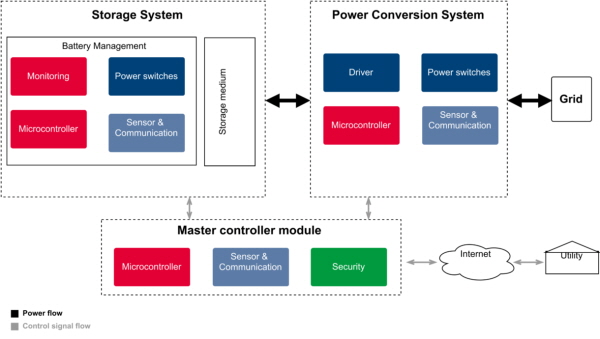
▲The energy storage system consists of two main parts. The power conversion system (PCS) handles AC/DC and DC/AC conversion, and energy flows to the battery to charge it or is converted from battery storage to AC power and fed into the grid. (Source: Infineon )


Semiconductors for high voltage supply are needed for energy transmission and storage.

High-power modules and thyristors enable high-voltage direct current (HVDC) transmission systems, reducing transmission losses by almost 15%, which is crucial for ensuring successful power transmission over long distances.

We encounter 4,500V IGBT modules in our daily lives, whether they are used to transmit green energy via HVDC transmission lines or to conveniently travel from A to B on high-speed trains.

Additionally, the 4.5kV IGBT module is applied in large-capacity medium-voltage drives, moving towards low energy consumption.
/> The IHV 4,500V module offers maximum reliability and robustness for high voltage supply.

■ Do more with less energy

From smartphones to homes, manufacturing and cars, we use electricity all day long. More than half of the world's population uses the Internet, and data from mobile devices has grown exponentially in recent years.

The ultimate goal of reducing CO2 emissions across all sectors is to do more with less energy.

Sensors , microcontrollers , and power management enable innovative, sustainable, and effective power management in all areas of life, including mobility, industry, communications, and home appliances.Conductors, etc.

Innovative semiconductor technologies have emerged as a key solution to reducing CO2 emissions amid growing awareness of climate change.

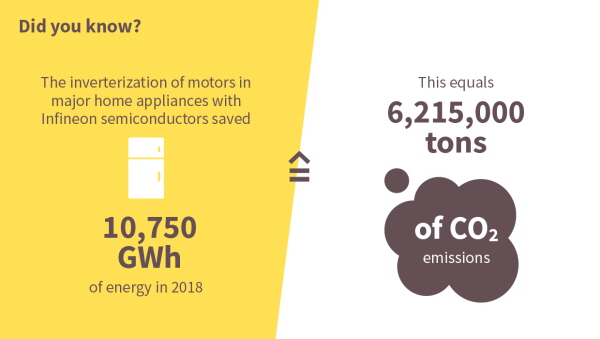
For example, in the case of home appliances, refrigerators can be converted to digital inverters to consume only the amount of electricity they actually need, and other electronic products such as air conditioners, vacuum cleaners, and washing machines can be converted to quieter and more energy-efficient products through intuitive sensor-based operation.


▲CO2 reduction through digital inverterization in refrigerators (Source:utm_medium=referral&utm_campaign=202205_ap_ko_c_cp.corporate.energy_efficiency&utm_content=article&utm_term=2" target="_blank">Infineon)


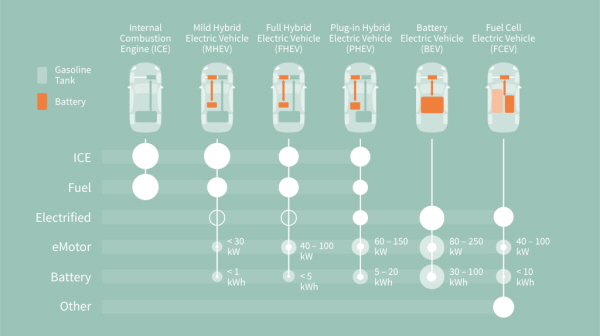
Electrification in automotive is key to reducing CO2, enabling clean, safe and smart cars by improving power efficiency through semiconductors and replacing hydraulic and mechanical solutions.


▲Types of electric vehicles (Data:en/about-infineon/energy-efficiency-technologies/?utm_source=e4ds&utm_medium=referral&utm_campaign=202205_ap_ko_c_cp.corporate.energy_efficiency&utm_content=article&utm_term=2" target="_blank">Infineon)


Additionally, the energy efficiency of the semiconductor industry is also rapidly changing through new materials.

Power devices based on so-called wide-bandgap materials, such as silicon carbide (SiC) and gallium nitride (GaN), can increase power density and reduce switching losses.

For example, silicon carbide power semiconductors offer excellent voltage blocking for applications starting at 650 V, and offer even greater benefits at higher voltages.

ong>■ Semiconductor industry actively responds to achieving energy efficiency

Semiconductor solutions are key elements in the generation, transmission and use of energy, and are positioned as solutions to process energy more intelligently and efficiently at all stages of the energy chain to improve the world's climate balance and quality of life in the future.

Accordingly, the semiconductor industry has been working for several decades to solve the immediate challenge of achieving energy efficiency and has been actively responding by innovating power semiconductor solutions.

In the future, semiconductor technology is expected to play a key role in realizing green energy by minimizing energy loss and enabling higher device and application performance.