Battery life reduced by 81% with standby current of 6µA
Supports Wi-Fi, BLE, and MCU with power rail support between 2.8 and 3.8V Maxim Integrated Products, Inc. has introduced the MAX77827, a buck-boost converter that achieves 96% peak efficiency and 6µA quiescent current, enabling designers to maximize the battery life of portable devices.
As the use of smart electronic devices increases and their functions are enhanced, the lithium-ion battery market continues to grow. Primary batteries made of lithium thionyl chloride (Li-SOCl2) and dual-cell alkaline (AA or AAA) batteries that operate at voltages as low as 1.8 V are gaining popularity in portable electronic devices that require long usage times.
These devices consume current over a wide voltage range, regardless of the battery type used, and support power rails between 2.8 V and 3.8 V to power the microcontroller (MCU), Wi-Fi, Bluetooth low energy (BLE), and GPS functions.
With the industry's lowest quiescent current, highest efficiency, and smallest size, the MAX77827 buck-boost converter sets a new standard for maximizing battery runtime.
It automatically switches between buck and boost modes regardless of battery voltage to provide consistent output power, making it ideal for supporting the power requirements of low-power wide area network (LPWAN) applications, asset tracking devices, and various Internet of Things (IoT) applications.
Topologies that combine a conventional buck or bypass-boost with a low drop-out (LDO) are not efficient in extending battery life and may not be ideal solutions for sophisticated devices.
Additionally, the simple buck converter topology can result in inefficiencies in the aforementioned applications, such as when high battery voltages are required to sustain power, which may result in earlier system shutdowns, thereby underutilizing the remaining battery capacity.
The MAX77827 is the lowest quiescent current among 1.5A buck-boost converters at 6µA, which is 81% lower than the closest competitor. It extends battery life in applications operating down to 1.8V and maintains superior performance over a wide range of loads compared to competitive products with 96% system efficiency regardless of whether it is in buck or boost mode.
It increases efficiency by up to 12% compared to the basic method using a bypass boost converter and LDO. It enables continuous operation of the system with a lower battery voltage than the existing buck converter, so that the battery capacity can be utilized more efficiently.
The compact, high-efficiency 1.5A converter offers system safety to minimize unexpected shutdowns with an input voltage of 1.8 to 5.5 V and an output voltage of 2.3 to 5.3 V. It includes fast transient response characteristics that enable seamless mode transition between buck and boost modes for stable system operation.
The MAX77827 has a rising/falling time of 15µs, which results in less than 1% of the output voltage ripple even when the output voltage (VOUT) is set to 3.3V. It provides a stable system voltage supply with a fast load transient response speed for transient response when the system voltage fluctuates.
Under extremely harsh conditions with a 0 to 1A load for 15µs, the MAX77827's undershoot is controlled to 6% of the output voltage, compared to competitive solutions that have 12% undershoot and longer recovery times.
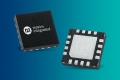
2.04 x 1.64 WLP size, total solution size of less than 15mm2, reduces space constraints. Output voltage can be set with a single external resistor, further reducing external components and board space.
“With the increasing adoption of lithium-ion batteries in smart consumer electronics, the market size for the segment is expected to reach $106.493 billion by 2024,” said Rishab Sharma, analyst at P&S Intelligence. “Advancements in complementary technologies that help improve battery life and reliability will drive continued growth in the market,” he said.
좋은 정보 감사합니다