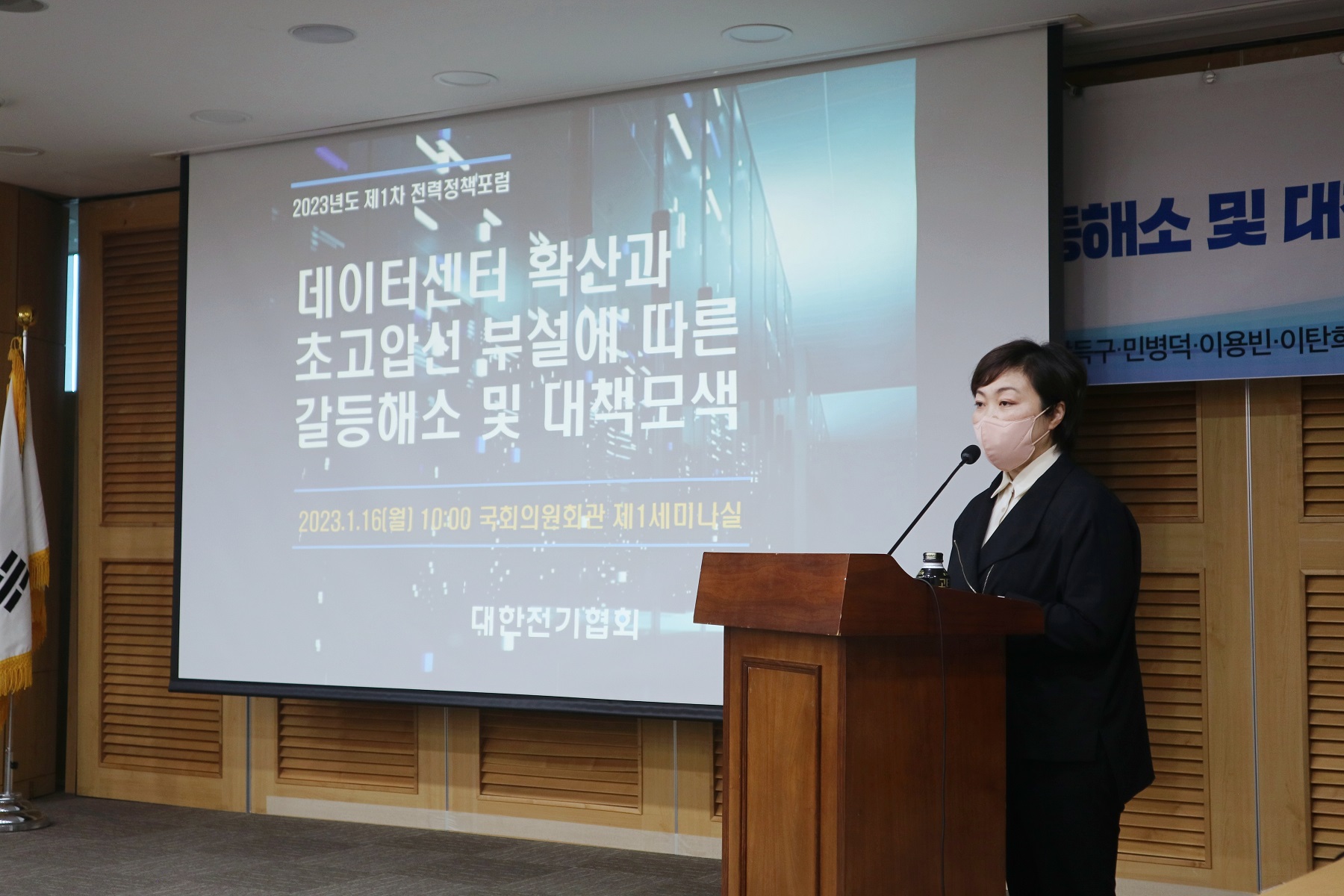
▲1st Electric Power Policy Forum, seeking solutions and resolving conflicts due to the expansion of data centers and the installation of ultra-high voltage lines
Current data centers 147 → Expected to surge to 784 by 2029
Residents' anxiety over large IDC ultra-high voltage lines' electromagnetic waves↑·Opposition to construction
LG U+, “Korea, IDC Growth Opportunity, Regional Dispersion Latency Disadvantageous”
A data tsunami is engulfing Korea. With the development of non-face-to-face services and content industries, and the spread of IT products such as the Internet of Things (IoT) and cloud, demand for data is skyrocketing, and the construction of data centers is rapidly increasing.
Meanwhile, large IDCs (Internet Data Centers) are being built one after another in the metropolitan area where data demand is high, and friction with local residents is intensifying.
On the 16th, the Korea Electric Power Association held its first Electric Power Policy Forum in 2023 at the National Assembly Members’ Hall in Yeouido. At the forum, discussions were held on the topic of resolving conflicts and seeking countermeasures due to the expansion of data centers and the installation of ultra-high voltage lines.
According to the data center regional distribution plan announced by Park Sang-hee, head of the New Industry Distributed Energy Division of the Ministry of Trade, Industry and Energy, the concentration of domestic data centers in the metropolitan area is accelerating. As of September 2022, 60% of data center locations and 70% of electricity demand are concentrated in the metropolitan area, and if this trend continues, both locations and electricity demand are expected to reach 80% by 2029.
There are currently 147 data centers operating in Korea, with a power demand of 1,762 megawatts (MW). In addition, 637 new data centers are expected to be built by 2029, requiring a power demand of 41,467 MW. Each data center uses 25 gigawatt hours (GWh) of power annually, which is equivalent to the annual power consumption of about 6,000 four-person households.
There is growing discontent among local residents due to increased infrastructure burden and congestion caused by the concentration of data centers, which are representative power-intensive facilities, in the metropolitan area, and concerns about electromagnetic waves caused by the installation of ultra-high voltage lines.
Recently, in Anyang City, friction between residents and LG U+ data center construction has been growing. When the second data center was built in Gwanyang-dong, Dongan-gu, Anyang City, the installation of ultra-high voltage lines became a problem. Residents raised their voices in opposition to the construction, expressing concerns about electromagnetic waves.
Opposition to the construction of these data centers is showing signs of turning into a hate facility, with voices of opposition emerging from various places, including the adoption of a resolution by the Yangju City Council opposing the construction of the Yangju Ganapri data center, and opposition to the burial of the special purpose line and construction of a data center in Gurae-dong, Gimpo. What they all had in common was that they were all data centers located in the metropolitan area.

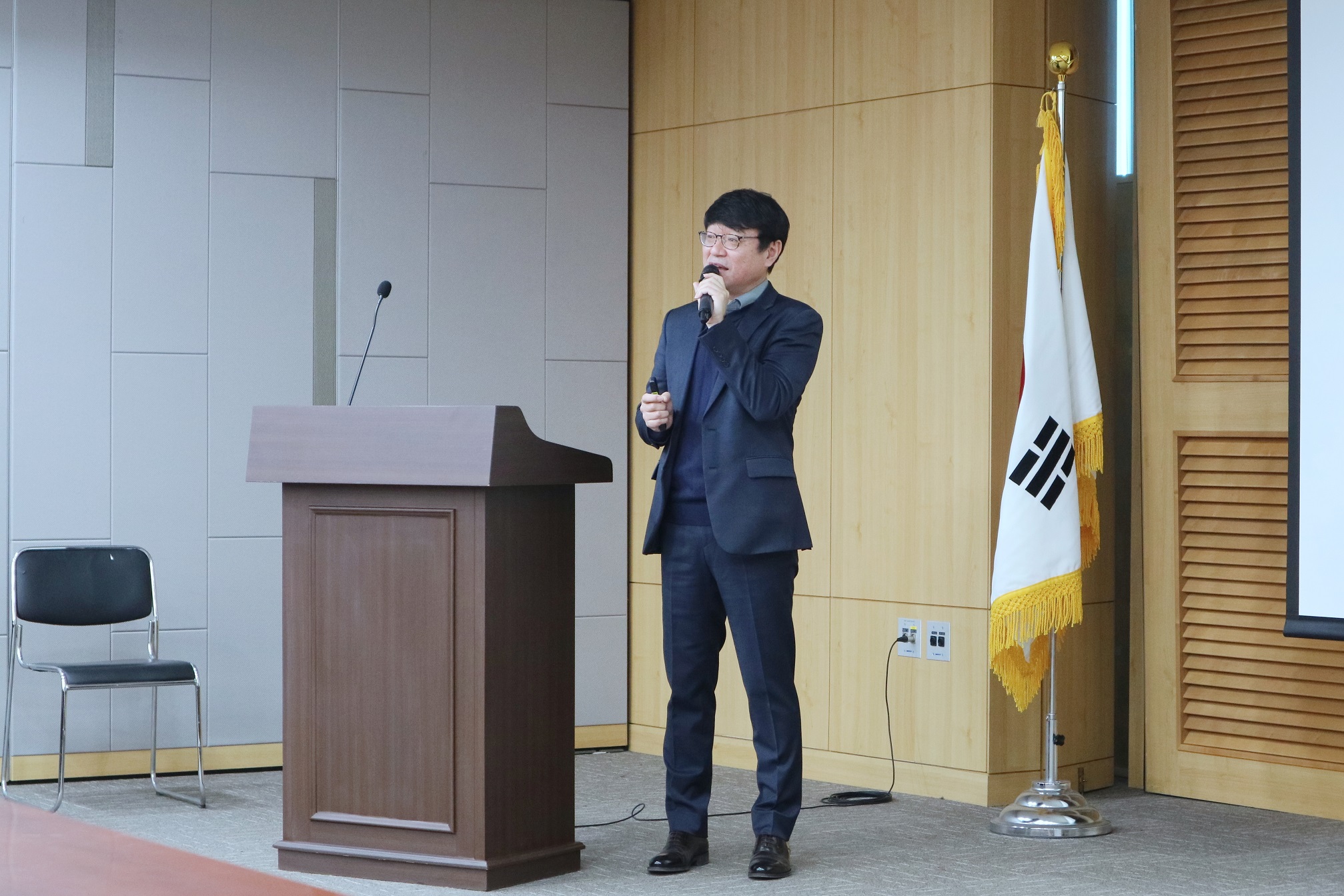
▲Lim Yoon-seok, head of the Korea Electric Power Corporation Electric Power Research Institute
Lim Yoon-seok, head of the Korea Electric Power Research Institute under the Korea Electric Power Corporation, said, “Most countries must follow the ICNIRP guidelines to ensure that the extremely low-frequency electromagnetic fields generated from extra-high voltage transmission lines are installed so that the electric field is 3.5 kV/m or less and the magnetic field is 83.3 μT or less at 1 meter above the ground.” He added, “Compared to overhead transmission installed and operated on steel towers, underground transmission is shielded from electric fields, so there is little external influence, and only the magnetic field needs to be considered.”
He added, “The evidence linking low-level magnetic field exposure to cancer, childhood leukemia, etc. is weak,” and “KEPCO is making efforts to dispel concerns about electromagnetic waves and provide correct information through measures such as implementing conflict resolution councils and holding briefing sessions for residents.”
LG Uplus Executive Director Choi Yong-beom emphasized that the domestic IDC industry ecosystem is at a starting point for advancement, saying, “IDCs are flocking to Korea due to Singapore’s location and lack of flexibility in power supply and demand, as well as political issues in Hong Kong.”
Executive Director Choi said, “IDC is an industry that is effective in stimulating the economy, and its investment cost is about eight times higher than that of general building construction. This is because demand is rapidly increasing not only in construction but also in equipment and air conditioning.” He added, “Concentration in the metropolitan area is bound to lead to concentration in places where data is needed a lot due to latency (response speed) issues.”
Kim Ki-hoe, deputy director of the National Radio Research Agency, said, “Currently, I“The DC conflict is similar to the case of the conflict over the installation of a base station in an apartment complex,” he said, emphasizing the safety of international standards, saying, “ICNIRP’s international protection standards set the standard at 1/50 of the level that affects the human body.”
He also said, “The commonality in civil complaints is that residents are very anxious because they do not know much about the issue,” and “The important thing is to build relationships of interest and find common ground through accurate information.”

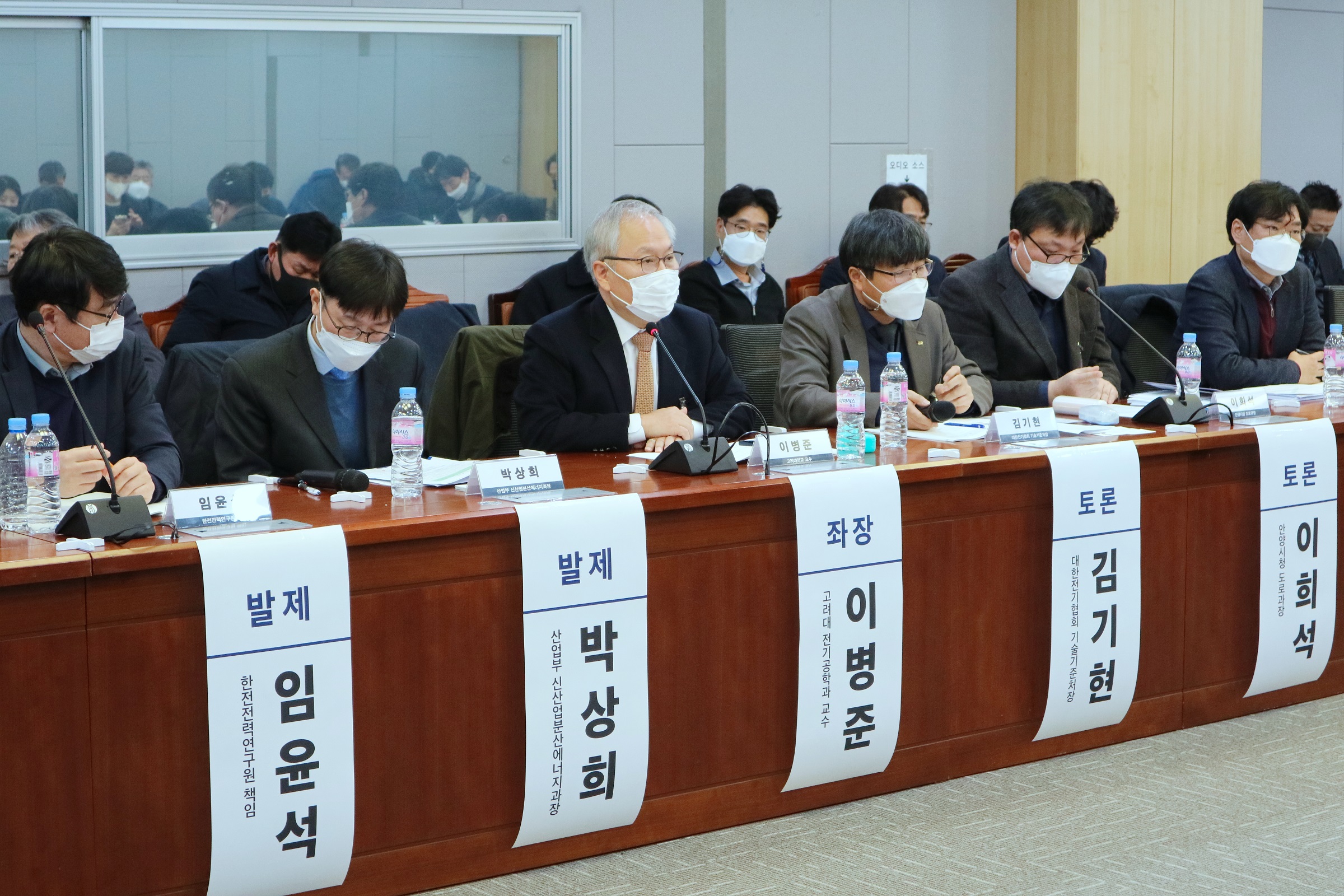
▲Professor Lee Byeong-jun of the Department of Electrical and Electronic Engineering at Korea University (currently the president of the Korean Institute of Electrical Engineers), who is leading the discussion, along with the presenters and discussion panelists
On this day, Rep. Lee Tan-hee of the Democratic Party of Korea raised his voice, saying, “In line with the change in industrial structure, data centers are expected to expand in terms of industrial and economic benefits, but what we should not overlook is concerns about safety,” and “Residents should not be excluded from decisions about participation.”
Meanwhile, it has been reported that Korea Electric Power Corporation is struggling to prevent power supply overload due to the concentration of data centers in the metropolitan area in the future. It has been reported that they are considering improving the system and establishing incentives for demand distribution through regional distribution of data centers, as only 11.6% of the 637 locations can be supplied on time.