With the development of artificial intelligence, virtual reality, etc., the amount of data to be processed is increasing, but the limits of integrated circuits are approaching. So instead of gates made of transistors, quantum computers that use the principles of quantum mechanics as their operational rules are emerging as an alternative. What exactly is quantum, and how can it be an alternative? A reporter who has no connection with science takes a close look at everything from quantum to the recently popular quantum computer with a learning mind. In 1994, Peter Shor of Bell Labs proposed a quantum associative algorithm that could quickly factorize numbers that were impossible on classical computers. And in 2001, IBM succeeded in factoring 15 using a 7-qubit nuclear magnetic resonance quantum computer.

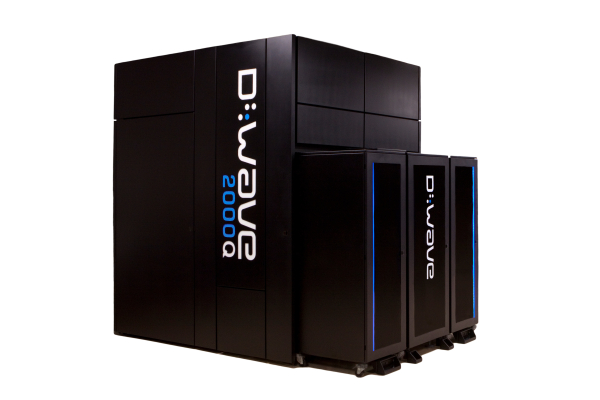
D-Wave Drives Market Interest in Quantum Computers In 2011, D-Wave commercialized the world's first quantum computer. There is some debate as to whether D-Wave's quantum computer is truly a quantum computer, but it is widely acknowledged in the industry that it uses the principles of quantum mechanics. Google gave D-Wave a boost in 2015 when it announced that the D-Wave 2X was up to 100 million times faster than a conventional computer with a single core processor on an optimization problem involving 945 binary variables.
D-Wave's quantum computer is a quantum annealing computer that can only solve optimization problems, but it has already attracted considerable interest in quantum computers. Since D-Wave, global companies such as Google, Microsoft, and Intel, as well as major countries such as the US, China, and Japan, have been pouring enormous resources into creating a universal quantum computer that can solve all problems. It is a universal quantum computer that must be created someday. Since D-Wave gave us a glimpse of the commercialization potential of quantum computers, they want to create it faster than other groups and gain a technological advantage.
Why develop a quantum computer? The semiconductor industry has been reporting that Moore's Law has reached its limit since the late 2010s. Moore's Law is a well-known law, but if I had to state it again, it is the law that states that the performance of semiconductor integrated circuits doubles every 24 months.

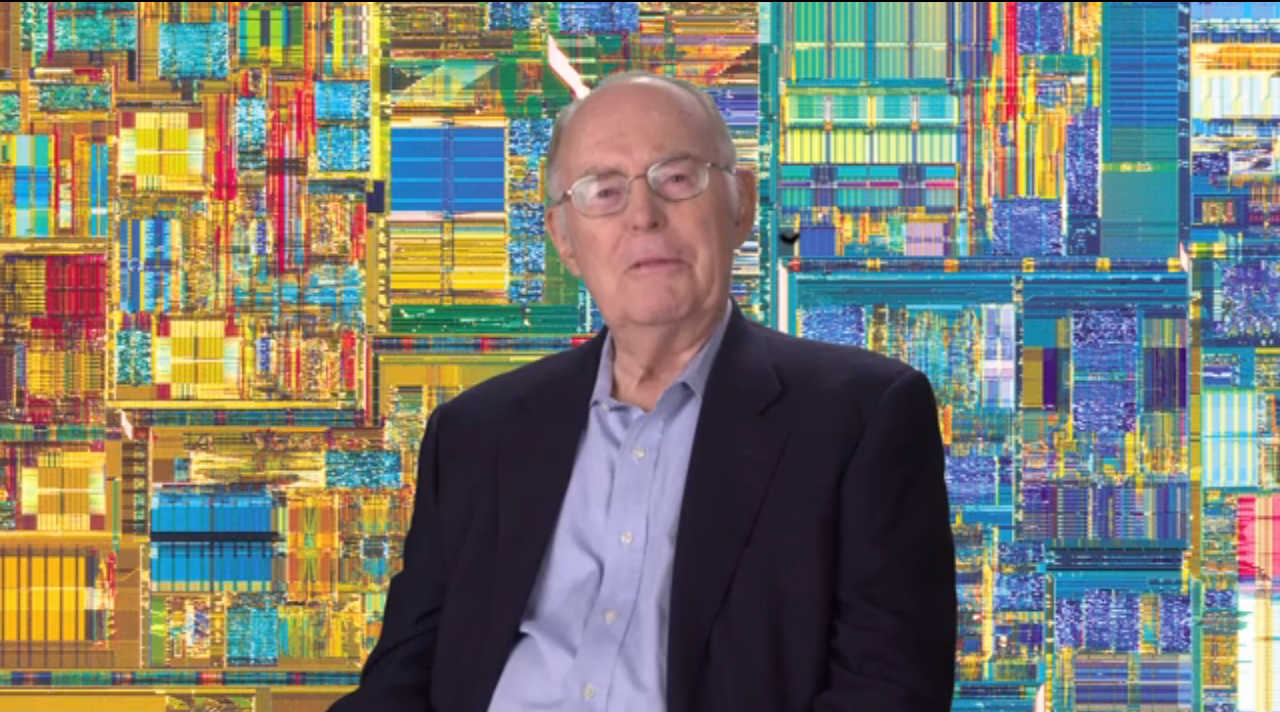
Intel co-founder Gordon Moore (1929~) Intel was the first to show signs that Moore's Law was reaching its limits. Intel, founded by Gordon Moore, who created Moore's Law, indirectly expressed the limits of technological advancement in 2016 when it announced that it would change the process cycle of its CPUs from two years to three years.
Intel has been developing its processes since 2007, spending one year on process refinement (tick) and one year on architecture development (tock). This is the so-called tick-tock strategy, but the strategy was revised in 2016 by adding one year for optimization.
The essence of a computer is computation. Computation is implemented through logic circuits that combine logic gates made by connecting multiple transistors. The advancement of computers depends on how many transistors can be integrated into a given area. So far, there has been no problem except for the developers' fatigue.
The problem arose as transistors became smaller, down to the atomic level. Current control became increasingly difficult as electrons that were supposed to flow along the circuit began to tunnel out of the circuit.

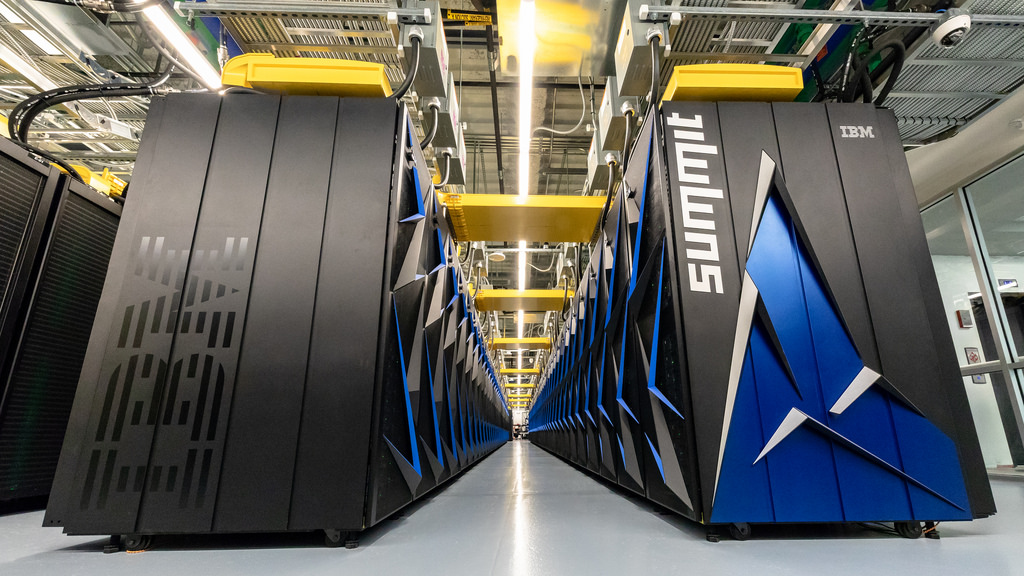
(As of November 2018) IBM Summit, the world's best supercomputer As it has become difficult to improve the performance of individual semiconductor chips, the industry is moving toward installing multiple semiconductor chips to improve the performance of computers. As of November 2018, the world's best supercomputer, IBM's 'Summit', has 2,397,824 cores. Installing many cores inevitably leads to the computer's size and massive power consumption.
Professor Shigeki Takeuchi of Kyoto University in Japan said that the annual power consumption of Japan's supercomputer Kyo is equivalent to that of 30,000 ordinary households. In contrast, it was predicted that a quantum computer with the same performance would consume 1/500th of the power.
Quantum computers are essential both economically and environmentally.
IBM's quantum computer developer The most representative organization developing quantum computers is IBM.
IBM has played a significant role in the history of quantum computing.
Charles Bennett, who joined IBM in 1972, created the theory of quantum information. At the atomic scale, particles can exist in a 'superposition' of several different positions. Two particles can also exhibit a state of 'entanglement'. When the state of one particle changes, the other particle changes at the same time. He realized that by utilizing this quantum phenomenon, he could efficiently perform computations that took exponentially long times.

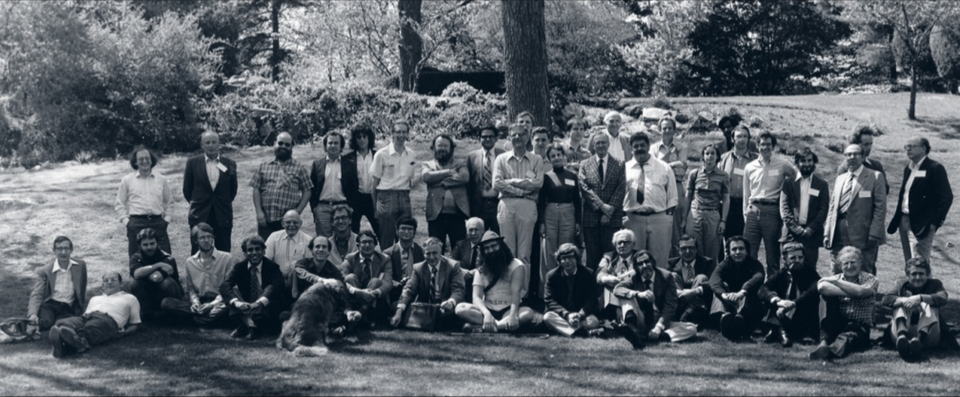
1981 IBM-MIT Computational Physics Conference (Source: MIT) The true beginning of quantum computing was a conference on computational physics hosted by IBM and MIT in May 1981, when Richard Feynman presented the idea of a quantum computer running on the principles of quantum mechanics. Feynman published a paper related to this in the Journal of Theoretical Physics in 1982.
In 1984, Bennett published a paper on the possibility of quantum cryptography, and in 1985, Professor David Deutsch of Oxford University, who was inspired by Bennett, announced the concrete reality of a quantum computer.
In 1994, Shor proved that the factorization algorithm using quantum information theory is more efficient than the one using classical information theory. In 1996, David DiVincenzo, a theoretical physicist working at IBM, announced the seven conditions for quantum computing, setting the standard for quantum computers.
And in 1997, IBM succeeded in developing a 2-qubit quantum computer.
IBM "Let's use collective intelligence" As mentioned above, IBM succeeded in factoring 15 with a 7-qubit quantum computer in 2001. Then, D-Wave appeared in 2010. Based on the market atmosphere created by D-Wave and its own technological prowess, IBM predicted the commercialization possibility of quantum computers.
In February 2012, IBM published a paper in the Journal of the American Physical Society suggesting that the development of a quantum computer was within sight. Since then, IBM has continued to release quantum processors with increasing qubits.
In May 2016, Quantum Experience, a platform that allows programming and testing of a 5-qubit quantum processor on the cloud, was released.

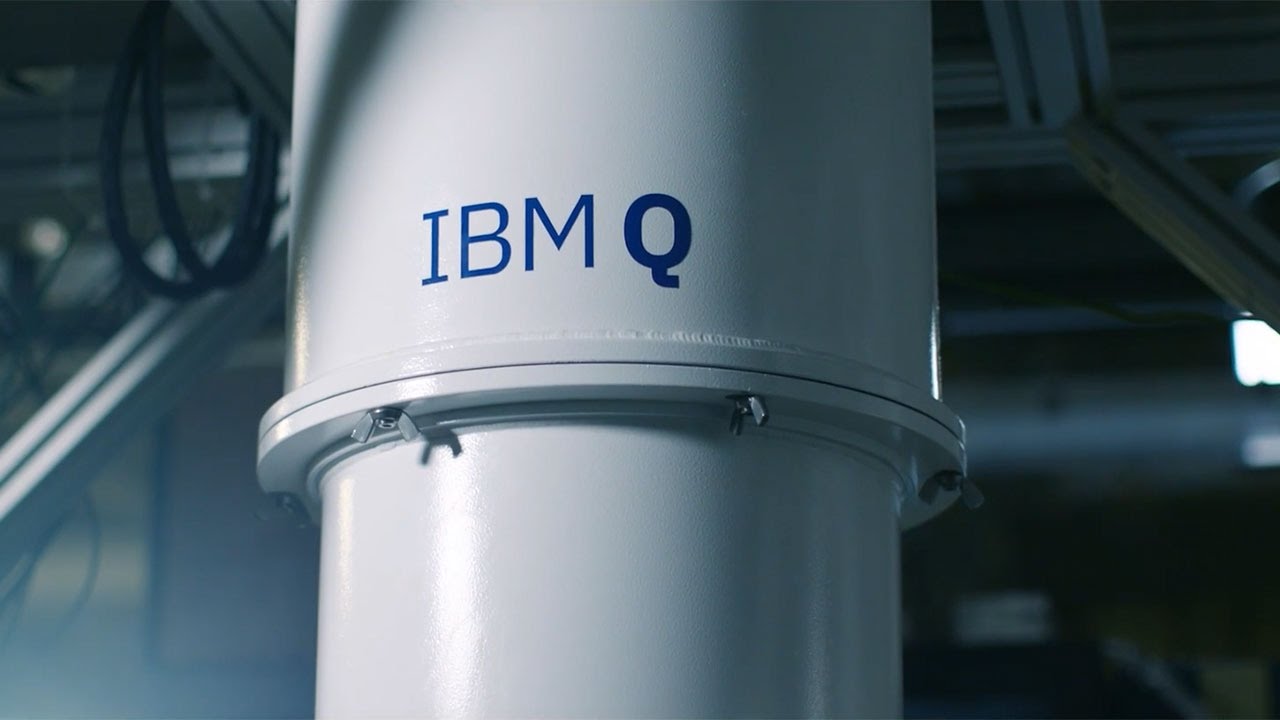
IBM Q quantum computer In March 2017, the world's first general-purpose quantum computer was announced for commercialization. (The term 'general-purpose' was added because the goal is to apply it to various industries, not just optimization problems like D-Wave.) At the same time, the 'IBM Q' system roadmap was announced, stating that a 50-qubit quantum processor would be released within a few years.
And two months later, it unveiled a commercial 17-qubit quantum processor and a 16-qubit experimental quantum processor for the cloud. In November, it announced a 20-qubit system, IBM Q, and a prototype 50-qubit quantum processor.
In the era of the 4th Industrial Revolution, collaboration is essential. A single company cannot efficiently carry out a large project. In December 2017, IBM announced that it would develop 20-qubit quantum computer technology in collaboration with 12 organizations, including 8 global companies and 4 research institutes.
Participating companies include Samsung Electronics, Honda, Daimler, JP Morgan, Barclays, JSR, Nagase, and Hitachi Metals. Samsung Electronics is working with IBM to study the impact of quantum computing on semiconductors, Honda and Daimler are working with IBM to develop autonomous driving technology and new automotive materials, and JPMorgan and Barclays are working with IBM to apply quantum computing in finance.
IBM is providing quantum computing experience to 92,000 researchers on seven continents around the world, with technology development hubs at the U.S. Department of Energy's Oak Ridge National Laboratory, Oxford University in the U.K., the University of Melbourne in Australia, and Keio University in Japan. The number of cases alone has exceeded 5 million, 100 papers have been published, and 1,500 universities are currently actively using IBM Q.
In the following article, we will look at IBM's anticipated applications for quantum computers, examples from other companies, and address skepticism about quantum computers.
너무 잘보고 있습니다. 전에 10을 보고 역주행을 했습니다. 어떻게 보면 진부해질수 있는 얘기는 너무나 재미있게 잘 풀어서 쓰신거 같아요 글쓰는 솜씨에 감탄하고 갑니다