Physical AI HBM Smart Factory SDV AIoT Power Semicon 특수 가스 정정·반론보도 모음 e4ds plus

The Three Kingdoms of Ericsson, Nokia, and Samsung Electronics, Aiming for Huawei's Position, Begins in Full Swing

기사입력2021.03.29 17:23

5G Equipment Market Share, Huawei-ZTE Decline
Ericsson-Nokia Expanding Market Share in Europe
Samsung Electronics Seeks Turnaround by Targeting Pacific Rim Countries


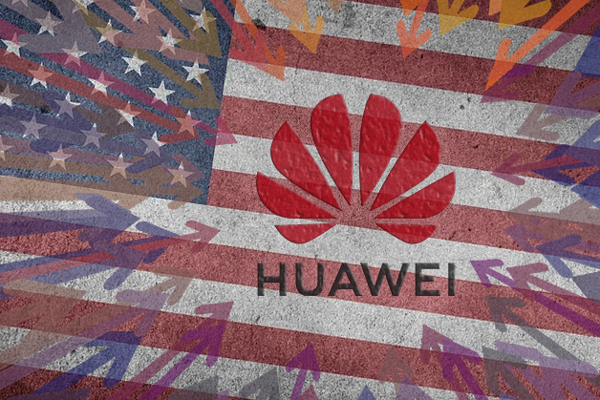
The former Donald Trump administration announced the “Clean Network” plan in August of last year to exclude Chinese companies from 5G telecommunications network businesses, app stores, and cloud markets, and proposed the participation of allies. Then, on March 11, the Biden administration took measures to restrict the export of parts for Huawei’s 5G equipment, suggesting stronger pressure on China, including export regulations implemented by the Trump administration.
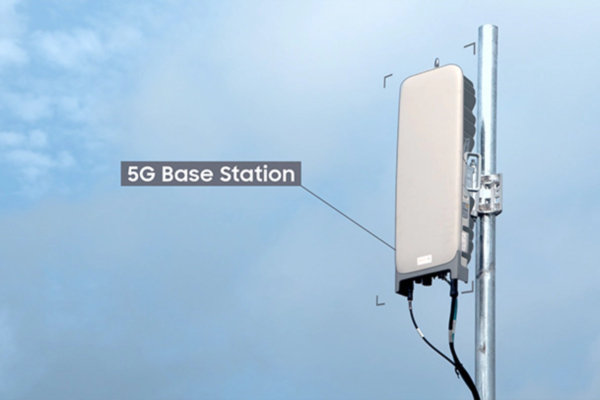
▲ Released by Samsung Electronics in August 2019
Millimeter wave band 5G base station [Photo = Samsung Electronics]

President Joe Biden has emphasized cooperation with allies since his inauguration and has made it clear that this will be the basis for gaining an advantage in competition with China. Accordingly, it is expected that he will likely ask allies to join the anti-Huawei front. As major countries in North America and Europe are announcing their intention to expel Huawei, a new opportunity is opening up for global telecommunications equipment companies such as Samsung Electronics, Nokia, and Ericsson.

◇ Huawei-ZTE are hesitating, Ericsson-Nokia-Samsung Electronics are looking for an opportunity

According to a February survey by IPLytics, Huawei ranked first with 15.4% of global 5G patent applications, followed by Samsung Electronics (13.3%), Nokia (13.2%), Qualcomm (12.9%), LG Electronics (8.7%), ZTE (5.6%), Sharp (4.6%), and Ericsson (4.6%).

According to a survey by Dell'Oro in September last year, the market share of 5G communication equipment in the third quarter of 2020 was Huawei (32.8%), Ericsson (30.7%), ZTE (14.2%), Nokia (13%), and Samsung Electronics (6.4%). Currently, these five companies are leading the 5G communication equipment market.

There are signs that the rankings of the top five will change in line with the US’s policy of increasing pressure on China. The combined market share of Huawei and ZTE reached 60% in the second quarter, but fell to 47% in the third quarter. On the other hand, the combined market share of Ericsson and Nokia rose from 30.8% to 43.7%.

While Huawei and ZTE are focusing only on the Chinese domestic market and Ericsson and Nokia are actively targeting the European market, Samsung Electronics is focusing on the North American and Japanese markets.

◇ Samsung Electronics to focus on North America and Japan instead of Ericsson-Nokia's European turf

On the 23rd, Samsung Electronics signed a contract to supply 5G communication equipment with Japan's NTT Docomo. As of the end of last year, NTT Docomo was the largest mobile carrier in Japan with 82 million subscribers and recorded annual mobile service sales of more than 4.5 trillion yen.

With this contract, Samsung Electronics has expanded its presence in the Japanese 5G mobile communications market by securing NTT Docomo as a 5G customer, following Japan's second-largest telecommunications operator KDDI (October 2019).

NTT Docomo has led the establishment of global mobile communication standards such as CDMA and LTE in the past. It currently directly employs numerous R&D personnel and is conducting various technology development and standardization activities. Samsung Electronics plans to supply NTT Docomo with base stations (Radio Units; RUs) necessary for building a 5G commercial network and support rapid 5G network construction.

On the 16th, it signed an exclusive supply contract for 5G and LTE mobile communication base stations and virtualized core equipment to SaskTel in Canada. SaskTel is a telecommunications operator operated by the Saskatchewan government in Canada, and Samsung Electronics plans to provide LTE and 5G RU, multiple input/output base stations (mMIMO), SW for virtualized cores, and maintenance and optimization services.

We are also the first overseas company to supply 5G virtualization core equipment that can simultaneously process 5G and LTE data traffic to manage network resources more efficiently. SaskTel has been using only Huawei equipment for 12 years since it built its 3G network in 2010, but when it started building 5G, it excluded Huawei and signed a supply contract with Samsung Electronics.

SaskTel plans to first launch 5G Non Standalone (NSA) service through Samsung Electronics 5G equipment in 2022, and later provide 5G Standalone (SA) service by receiving software upgrade support from Samsung Electronics.

In December 2019, Samsung Electronics signed an exclusive contract with Videotron to supply 5G and LTE mobile communication base stations, and in June last year, it signed a 5G mobile communication business contract with TELUS, one of Canada's three major mobile communication carriers.

Currently, Samsung Electronics is supplying 5G equipment to 12 mobile carriers around the world.

In chronological order, △May 2018, US Sprint △September 2018, SK Telecom, KT, LG Uplus △October 2019, Japan KDDI △December 2019, Canada Videotron △February 2020, US Cellular △March 2020, Australia Spark △June 2020, Canada Telus △September 2020, US Verizon △March 2021, Canada SaskTel, Japan NTT Docomo, all of which are companies located in countries bordering the Pacific.

There are not only positive signs. Sprint in the US, which already had a supply contract, was merged with T-Mobile, a subsidiary of Deutsche Telekom in Germany, in February last year, and T-Mobile has instead signed additional bulk equipment supply contracts with Ericsson and Nokia. In February of this year, it also lost AT&T, the last big fish in the US 5G telecommunications equipment market.

In January of this year, Samsung Electronics acquired Teleworld Solutions, a company specializing in 5G network design and optimization, to strengthen its 5G business in the North American market, and listed its equipment as a security-certified product managed by the National Information Assurance Partnership (NIAP), an affiliate of the U.S. National Security Agency (NSA).

◇ Political conflicts that go beyond cost-effectiveness, major countries' policies must be closely responded to

The U.S. government is demanding that its allies exclude Huawei’s 5G equipment, as it suspects that Huawei’s telecommunications equipment contains hidden backdoors and is transmitting confidential information of major countries and companies to the Chinese government. In response, countries around the world are banning or being cautious about introducing Chinese 5G equipment such as Huawei and ZTE.
▲ Major countries are currently maintaining concerns about Huawei equipment.
[Image = e4ds News]

The first to start was Australia ('18.08), which is experiencing severe diplomatic friction with China. Then, the UK, France ('20.07), Sweden, Italy ('20.10), and Canada ('20.11) joined. Korea and Japan, which are economically closely connected to China, are taking a wait-and-see approach, but are leaning toward exclusion. Japan allowed Huawei to enter the LTE business, but excluded it from the 5G business. In Korea, negative sentiment toward Huawei is growing, especially among the private sector.

Major European mobile carriers, which are relatively free from Chinese influence, are replacing Huawei with Ericsson and Nokia, which are also headquartered in Europe. Accordingly, Samsung Electronics is targeting the 5G equipment market, focusing on Pacific Rim countries.

On the other hand, China Mobile/Telecom/Unicom are actively promoting patriotic consumption of domestically produced equipment, and Germany, Brazil, etc. have declared that they will not exclude Huawei equipment.

Political conflicts caused by the US-China trade war are spreading to the 5G equipment market. It is a time when the government and society need to respond appropriately to the direction and changes in major countries’ policies, in order to support the livelihoods of numerous small and medium-sized enterprises supporting Samsung Electronics.
이수민 기자
기사 전체보기