세계 최초 5G 상용화 2주년 "절대적인 품질 확보 시동"
기사입력 2021.04.05 10:15
韓, 5G 모든 분야에서 세계 최고 수준 경쟁력
5G 집단소송 움직임 생길 정도로 불만은 여전
'22년까지 5G 전국망 목표로 세액공제 등 추진
2021년 4월 3일, 세계 최초 5G 상용화 2주년을 맞았다.
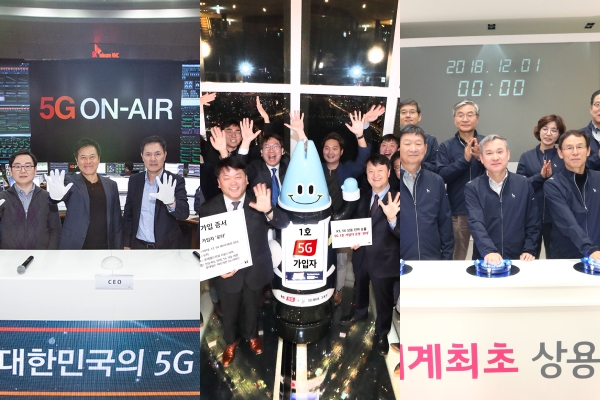
▲ 2018년 12월, 첫 5G 전파 송출을 기념하는 이통 3사
관계자들 [사진=SKT, KT, LGU+]
관계자들 [사진=SKT, KT, LGU+]
지난해 10월, 옴디아(OMDIA)는 초기 5G 시장에서 전 세계 주요 22개국 중 우리나라가 주파수, 서비스, 가입자 등 모든 면에서 앞서나가고 있다고 평가했다.
이어 12월에는 오픈시그널(Opensignal)이 5G 다운로드 속도치에서 전 세계 주요 15개국 중 우리나라가 351.2Mbps를 기록하며 1위를 차지했다고 밝혔다. 이는 2위인 사우디아라비아의 272.8Mbps를 웃도는 수치다.
같은 시기, 루트메트릭스(RootMetrics) 역시 서울, 취리히, 런던, 뉴욕의 최고품질 사업자 간 비교 시, 서울(LG유플러스 기준)이 5G 다운로드 속도 중앙값에서 476.5Mbps를 기록하며 1위를 기록했다 발표했다.
우리나라의 5G 경쟁력이 세계 최고 수준임을 인정받고 있다. 문제는 상대적으론 그러하나 절대적으론 시장의 기대를 충족하지 못하고 있다는 것이다.
국내 5G 가입자 수는 상용화 1년 반 만에 1천만 명을 넘겼고, 지난 2월 기준 1,366만2,048명으로 집계됐다. 그러나 주요 도심을 제외하면 실내외 커버리지가 제한적이라 집단소송 움직임이 본격화될 정도로 5G에 대한 이용자 불만이 크다.
.jpg)
▲ 5G의 초고속, 초저지연 특성의 핵심인 28GHz 망 구축이
지지부진한 상황이다 [사진=픽사베이]
지지부진한 상황이다 [사진=픽사베이]
또한, 이동통신(MNO) 외의 용도로의 5G 사용이 제한적이며, 3.5GHz 망보다 산업용으로 적합하다는 28GHz 망 구축도 지지부진한 상황이다. 5G 부품, 장비 산업기반도 취약해 국내 기업들의 글로벌 진출 역시 삼성전자를 제외하면 제한적이다.
화웨이 자리 노리는 '에릭슨-노키아-삼성전자' 삼국지 본격화
이에 과학기술정보통신부와 정보통신기획평가원(IITP)은 2일, ‘5G+ 전략’을 정비하고자 7대 분야(△생태계 △커버리지 △스마트팩토리 △콘텐츠 △헬스케어 △자율주행 △스마트시티) 정책협의체 전체 회의를 더케이호텔 서울에서 개최했다.
과기정통부 조경식 차관은 격려사를 통해 “지금이 더욱 분발해야 할 시기”라며, “지난 1월 수립한 △5G 전국망 조기 구축 △5G 융합 서비스 활성화, △부품, 장비 산업 선순환 구조 강화 △글로벌 생태계 선도 △지속 성장 기반 강화 등 다섯 가지 5G+ 전략 추진과제의 차질 없는 시행이 중요”하다 강조했다.
회의에선 2022년까지 5G 전국망 구축을 목표로, 올해에는 85개 시 주요 행정동, 교통망, 다중이용시설 등 국민 일상 반경에 5G 구축을 추진한다 밝혔다. 또한, 농어촌 지역도 조기에 5G를 이용할 수 있도록 통신사 간 5G망 공동 이용방안을 4월 중으로 마련할 계획이다. 1~2만 원대의 저렴한 5G 요금제 출시도 뒷받침한다.
올해는 △5G 투자세액 공제율 상향(2→3%), △등록면허세 감면(50%) △5대 핵심 서비스 기반 5G+ 이노베이션 프로젝트 추진(1,655억) △대·중소기업 간 5G 모듈 개발 지원(25억) △국산 5G 장비 고도화(525억) △5G 융합 디바이스 개발 지원 디지털 오픈랩 구축('21~'25, 480억) △5G 특화 펀드(1,044억) 투자 개시 △5G 기지국 에너지 효율화 기술개발('21~'25, 95억) 등이 중점 추진된다.
한편, 7대 분야별 정책협의체는 5G 전문 산학연이 공동 참여하며, 5G+ 전담 기관인 IITP에서 지원하는 방식으로 운영된다. 정책협의체는 5G 융합 서비스 실증을 넘어 서비스 구체화와 실제 확산까지 책임지는 역할을 수행한다.
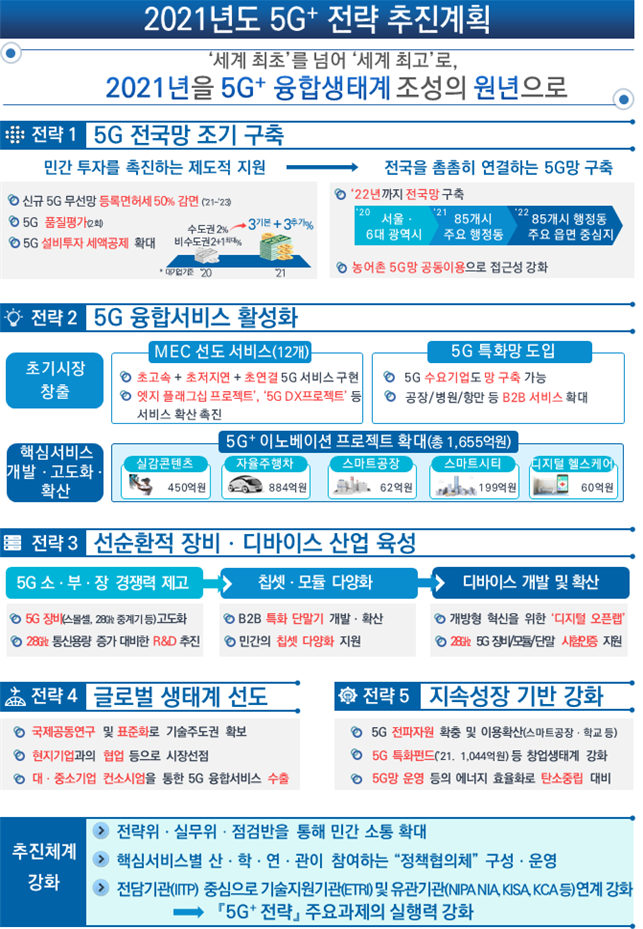
▲ 2021년도 5G+ 전략 추진계획 [그림=과기정통부]
이수민 기자
관련뉴스
-
5G B2B BM 발굴, 자동화 산업의 통신 요구사항 파악부터 시작
각국의 이동통신 사업자들은 사업 모델을 B2C에서 B2B 분야로 확장하기 위해 노력했고, 5G 기술은 URLLC 특성을 갖고 있어 산업용으로 활용하기에 적합하다. 5G 기술이 적용될 산업 분야로는 스마트팩토리, 에너지, 메디컬 등이 꼽히고 있다. 모든 산업의 자동화 시스템은 주기성과 결정성을 기반으로 고유의 동작 및 통신 패턴을 지닌다. 5G 제품, 서비스, 시스템은 이들 모두에 대비해야 한다.
2021-03-15 오후 5:53:15by 이수민 기자
-
5G 산업생태계 구축 목표로 중장기 정책협의체 발족
과기정통부가 5G+ 융합생태계를 조성하기 위해 5G+ 산업생태계 정책협의체 발족 회의를 가졌다. 해당 정책협의체는 2021년도 5G+ 추진계획에 따라, 5G+ 산업생태계 글로벌 선도를 위해 구성됐다. 5G+ 관련 민·관 협력을 강화하기 위한 정책협의체는 이날 발족한 산업생태계 정책협의체 외에도 다섯 개의 5G 서비스(스마트팩토리, 실감 콘텐츠, 디지털 헬스케어, 자율주행차량, 스마트시티) 및 5G 망을 포함하여 총 7개로 운영된다.
2021-03-25 오전 11:59:41by 강정규 기자
-
키사이트, LTE/5G 네트워크 트래픽 모니터링 기능 공개
키사이트가 자사의 비전 X 네트워크 패킷 브로커 장비 전용 신규 기능으로 모바일스택을 발표했다. 모바일스택 기능은 서비스 모니터링 품질을 개선하면서 비용을 절감할 수 있도록 LTE 및 5G 코어 네트워크에 대한 확장 가능한 가입자 인식 가시성을 제공한다.
2021-03-31 오후 3:15:57by 이수민 기자

많이 본 뉴스

[열린보도원칙] 당 매체는 독자와 취재원 등 뉴스이용자의 권리 보장을 위해 반론이나 정정보도, 추후보도를 요청할 수 있는 창구를 열어두고 있음을 알려드립니다.
고충처리인 장은성 070-4699-5321 , news@e4ds.com