반도체 AI 인더스트리 4.0 SDV 스마트 IoT 컴퓨터 통신 특수 가스 소재 및 장비 e4ds plus

KT succeeds in standardizing and testing 5G multi-wireless access technology

기사입력2019.08.29 10:31

| Standardization of ATSSS technology in preparation for the 5G SA era
| Reflecting 3GPP Release-16 5G System Architecture Specification
| Reduced initial connection delay time by half compared to existing TCP traffic


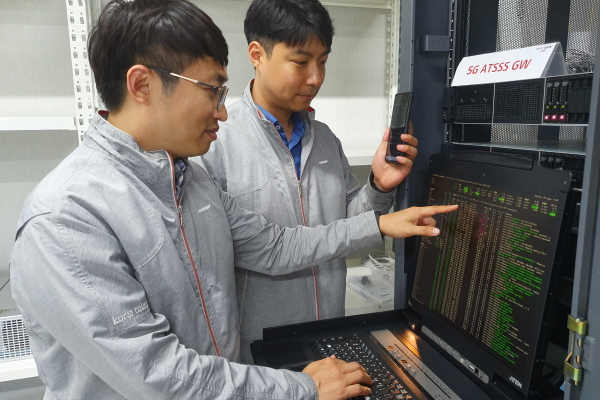
KT announced on the 27th that it succeeded in standardizing 'Access Traffic Steering, Switch and Splitting (ATSS)' in cooperation with Tessares and successfully conducted 5G commercial network tests.
KT develops multi-wireless access technology (ATSSS)

ATSSS is a technology reflected in the 3GPP Release-16 5G system architecture standard (TS 23.501) through collaboration between KT, Apple, Deutsche Telekom, Orange Telekom, and Cisco. Our tests have shown that ATSSS reduces the initial connection delay of traditional TCP traffic by more than a factor of two.

The new technology has the advantage of providing not only increased speed but also high transmission reliability by simultaneously or selectively utilizing multiple wireless networks connected between the terminal and the core network, so it can additionally combine wireless networks regardless of the 5G wireless network structure such as SA (Stand Alone) or NSA (Non Stand Alone).

This next-generation multi-wireless access technology has been led by KT and Tesares through the Internet Engineering Task Force (IETF) TCP working group, and Tesares is providing DSL+LTE/3G hybrid bonding solutions to European telecommunications companies.

Utilizing 5G ATSSS can provide customers with a faster and more stable network. This technology will be applied to KT’s enterprise-only 5G service in the future and used to activate delay-sensitive enterprise application services such as smart offices and smart factories.

The EN-DC (E-UTRA NR Dual Connectivity) merged transmission technology currently available in the 5G NSA architecture may cause delays as it connects to both 5G and LTE networks, and may also cause side effects such as reduced transmission speeds for existing LTE subscribers.

KT plans to provide ultra-low latency, ultra-high-speed 5G through 5G ATSSS when introducing the 5G SA structure, and to this end, it is continuing to lead international standardization and commercial network tests.

Lee Seon-woo, head of the Infrastructure Research Lab at KT Convergence Technology Institute, said, “With the successful test of ATSSS, customers can now use high-speed, high-quality wireless services that utilize not only 5G but also existing LTE and Wi-Fi,” adding, “KT will continue to develop 5G technology and strengthen its R&D capabilities going forward.”
최인영 기자
기사 전체보기