경기침체에 의해 디바이스 부문의 지출이 감소할 것으로 전망되는 가운데 소프트웨어(SW)와 IT 서비스 지출 증가량이 이를 뛰어넘으며 전반적인 IT지출이 올해도 상승세를 유지할 것으로 보인다. 이러한 가운데 IT서비스 의존도와 지출은 숙련인재 부족과 인건비 상승에 따라 더욱 높아질 것으로 전해져 관련 시장 확대가 예상되고 있다.
가트너, 글로벌 침체 속 SW·IT서비스 증가 예상
3년간 숙련인재 부족 지속, IT 서비스 의존도↑
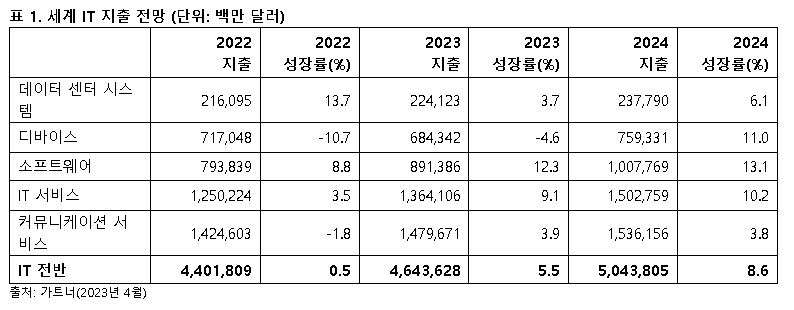
▲세계 IT 지출 전망
경기침체에 의해 디바이스 부문의 지출이 감소할 것으로 전망되는 가운데 소프트웨어(SW)와 IT 서비스 지출 증가량이 이를 뛰어넘으며 전반적인 IT지출이 올해도 상승세를 유지할 것으로 보인다. 이러한 가운데 IT서비스 의존도와 지출은 숙련인재 부족과 인건비 상승에 따라 더욱 높아질 것으로 전해져 관련 시장 확대가 예상되고 있다.
시장조사기관 가트너(Gartner)가 올해 전세계 IT 지출이 지난해 보다 5.5% 증가한 총 4조6천억 달러에 이를 것이라는 전망을 발표했다. 세계적인 경제 혼란이 지속되는 가운데서도 2023년 전세계 모든 지역에서 IT 지출이 증가세를 기록할 것으로 예측했다.
2023년 소프트웨어 및 IT서비스 지출은 각각 8,913억달러와 1조3,641억달러에 이르러 지난해 대비 12.3%와 9.1% 성장해 가장 높은 성장률을 보일 것으로 나타났다. 2024년 성장률도 각각 13.1%와 10.2%로 나타나 시장 확대가 기대되는 부문이다.
이는 디바이스 성장률이 마이너스 4.6%로 감소세 전망을 보이고 있는 가운데 다른 부문 지출 증가분이 이를 앞지르며 전체 지출 금액을 상승세로 이끌었다.
존 데이비드 러브록(John-David Lovelock) 가트너 리서치 부사장은 “거시 경제의 역풍에도 디지털 혁신은 둔화되지 않았다”며, “2023년 많은 국가에서 국내총생산(GDP) 성장률의 정체와 높은 인플레이션이 예측되는 가운데, IT 지출은 여전히 강세를 보일 것”이라고 말했다.
그는 또한 “CIO들이 디지털 기술을 활용해 기업의 가치 제안, 매출 및 고객 상호 작용을 혁신하는 동시에 지출을 최적화하기 위해 노력한다”고 전했다.
소프트웨어 부문의 경우, 기업들이 생산성 향상, 자동화 및 기타 소프트웨어 중심 혁신 이니셔티브를 통해 경쟁 우위를 확보하려는 차원에서 지출에 우선순위를 두면서 올해 두 자릿수 성장을 보일 전망이다. 반면, 디바이스 부문은 구매력 감소와 구매 인센티브 부족으로 소비자들이 디바이스 구매를 미루면서 전년대비 5% 가까이 감소할 것으로 예상된다.
가트너는 “기업들이 계속되고 있는 경제 격동기를 헤쳐 나아가기 위해 노력하는 가운데, ‘유지’ 기술과 ‘비즈니스 주도’ 기술 간의 격차가 전체적인 평균 IT 지출 증가율을 중심으로 더욱 분명하게 드러나고 있다”고 분석했다.
러브록 부사장은 “양분된 IT 지출을 통해서 볼 수 있듯이 CIO들은 균형을 잡아야 하는 상황에 직면해 있다”며, “예를 들어, 데이터 센터 시장에는 기존 온프레미스 데이터 센터를 유지하기 위한 지출이 충분히 일어나고 있지만, IT 서비스 부문의 지출 증가율에서 나타난 것처럼 새로운 지출은 클라우드 옵션으로 이동하고 있다”고 설명했다.
IT 서비스 부문은 올해 30% 이상 성장할 것으로 예상되는 서비스형 인프라 시장에 힘입어 2024년까지 성장세를 이어갈 것이다. 클라우드 서비스 부문에서 단순한 사용량 증가가 아닌 가격이 지출 증가의 주요 동인이 되는 것은 이번이 처음이다.
글로벌 경기에 투자 동향에 영향을 미친 실리콘밸리 은행, 시그니처 은행, 크레디트스위스의 파산은 은행 및 기술 업계에 충격파를 일으켰다. 이로 인한 피해는 상대적으로 적었으나, 기술 스타트업들은 이해관계자, 고객 및 잠재 고객으로부터 새로운 비전을 보여줘야 하는 상황에 직면했다.
러브록 부사장은 “이 회사들은 IT뿐만 아니라 모든 형태의 스타트업에 돈을 빌려주었기 때문에 이것은 비단 기술만의 문제가 아니다”라고 말했다.
그는 “테크 CEO들은 반드시 그들의 조직이 앞으로 나아가고 있는지를 즉시 확인 및 보장해야 하며 이를 위해서는 운영 자본 보존, 현금에 대한 영향 모니터링, 신용 접근성 확보, 그리고 인재 및 문화 예의주시 등의 조치를 취해야 할 것”이라며, “조직이 준비를 갖추면, 테크 CEO들은 직원들이 시장 기회를 탐색, 가속화, 실행하도록 방향을 제시하고 이끌어 갈 수 있다”고 덧붙였다.
기술 산업 전반에선 해고로 인한 영향이 계속되고 있지만, 숙련된 IT 인력은 여전히 크게 부족한 상황이다. 기술 인재에 대한 수요는 공급을 크게 앞지르고 있으며 이러한 현상은 IT 지출 전망을 기반으로 예측했을 때 최소 2026년까지 지속될 것으로 보인다고 언급했다.
러브록 부사장은 “기술 인력 해고가 IT 인재 부족이 끝났음을 의미하지는 않는다”고 강조했다. 이어 “모든 산업에서 내부 서비스에 대한 IT 지출이 둔화되고 있으며, 기업들은 임금 인상률을 따라잡지 못하고 있다”고 전하며 “결과적으로 기업들은 더 적은 인력을 유지하기 위해 더 많은 비용을 지출할 것이며 그 공백을 메우기 위해 IT 서비스 기업에 의존하게 될 것”이라고 전망했다.