TSMC presents first foundry business model
Semiconductor company · No. 1 in market capitalization among Asia Pacific companies
Government support , high management freedom , and talent concentration
The semiconductor industry is composed of 'Integrated Device Manufacturers (IDMs)' that design, manufacture, and sell semiconductors, such as Intel and Samsung Electronics; 'Fabless' that only designs and outsources production, such as Qualcomm and Nvidia; 'Foundries' that only manufacture and do not design, such as TSMC and UMC; and equipment suppliers, such as ASML and Lam Research.
Foundries are companies that receive contract manufacturing orders from fabless companies specializing in semiconductor design and manufacture semiconductors. Examples include TSMC and UMC in Taiwan, GlobalFoundries in the US, and SMIC in China. Some IDMs perform foundry functions that produce semiconductors for other companies as well as their own. Examples include Samsung Electronics and SK Hynix.
As demand for semiconductors increases due to the COVID-19 pandemic, foundry sales are also increasing. According to TrendForce, the global foundry market grew 13.6% from USD 60 billion in 2019 to USD 68.2 billion in 2020, and is expected to grow to USD 94.4 billion in 2024.
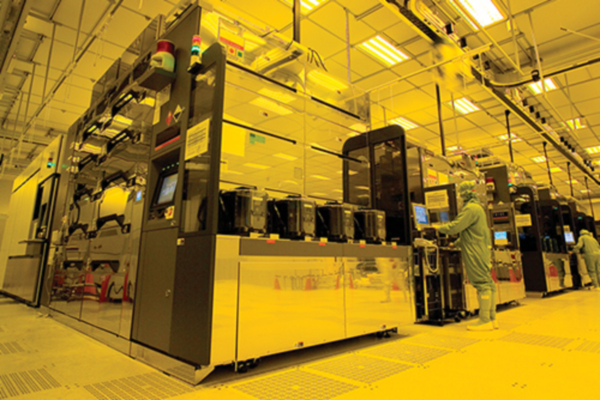
▲ TSMC, the semiconductor industry's No. 1 market capitalization company [Photo = TSMC]
Taiwan Semiconductor Manufacturing Company (TSMC) of Taiwan is the world's first foundry company, and it is maintaining the top spot in terms of sales and technology, accounting for 55% of the global foundry market in the second quarter of this year and accounting for nearly 18% of 5nm chip sales.
In their report, ‘TSMC Semiconductor Technology Trends and Success Factors Analysis,’ researchers Jeon Hwang-soo, Kim Hyeon-tak, and Noh Tae-moon of the Electronics and Telecommunications Research Institute (ETRI) examined how the number one foundry company grew into the number one semiconductor company and suggested the path the domestic semiconductor industry should take.
◇ TSMC, the world's first company to present a foundry business model Founded in 1987, TSMC is headquartered in the Hsinchu Science Park in Taiwan. It pioneered the pure-play foundry model, manufacturing products on contract with customers, but it does not design, manufacture, or sell semiconductor products under its own name, so it does not compete directly with customers.
It was listed on the Taiwan Stock Exchange (TWSE) in 1993, and in 1997, it became the first Taiwanese company to be listed on the New York Stock Exchange (NYSE). In 1993, it built Taiwan's first 8-inch wafer fab, and in 2000, it merged with TI-Acer Semiconductor, a joint venture between Texas Instruments (TI) of the United States and Acer of Taiwan, and Suda Semiconductor.
With the completion of 'Fab 6' in 2000, it began producing 12-inch wafers, and in 2003, it began operating the 0.13㎛ (micrometer) process, and has dominated the global foundry market to this day.
TSMC achieved consolidated sales of $45.51 billion and net income of $17.6 billion in 2020, up 31.4% and 57.5%, respectively, from 2019. In August 2021, it surpassed China's Tencent to become the largest company in Asia by market capitalization. In addition, it has already achieved a market capitalization of $670 billion in 2020, becoming the world's largest semiconductor company.
The company's customers include not only fabless companies such as Apple, Qualcomm, MediaTek, Nvidia, Broadcom, AMD, and Xilinx, but also most of the world's semiconductor companies, including TI, NXP, Infineon, and STMicroelectronics, to which it contracts to manufacture its products.
◇ 7nm and below process proportion approaches 49% “3nm verification in progress” TSMC produces 10,761 products using 272 technologies for 510 customers. Last year alone, it registered 6,900 patents, exchanged 12,000 confidential notes, and commercialized 5nm technology. As of 2020, it has an annual production capacity of 13 million 300mm equivalent wafers, and produces chips for customers with nodes from 2 microns to 5 nanometers.
It has six 12-inch wafer fabs, six 8-inch wafer fabs, and one 6-inch wafer fab. Most of the fabs are located in Taiwan, with a 12-inch wafer fab in Nanjing, China, a wholly owned subsidiary, and an 8-inch wafer fab in Shanghai and a US-based subsidiary of WaferTech.
By process, the proportion of processes below 7 nanometers reached 49% as of the second quarter of 2021. 5 nanometers account for 18%, 7 nanometers account for 31%, 28 nanometers, which are relatively general-purpose technologies, account for 11%, 40/45 nanometers account for 7%, 65 nanometers account for 5%, and 90 nanometers account for 3%. By region, North America is 62%, China 17%, Asia excluding Japan 11%, Europe 5%, and Asia 5%. By application, it is smartphones 48%, high-performance computing 33%, IoT 8%, home appliances 4%, automobiles 3%, and others 4%.
▲ Currently, TSMC is supplying 3nm chips from Apple and Intel.
Busy trying to get orders [Photo = TSMC]
TSMC was the first foundry to offer 5/7nm production capacity and commercialized extreme ultraviolet (EUV) lithography technology in large quantities. It plans to produce 5nm Arm processors as Apple transitioned its Mac computer lineup to Arm-based processors in June last year.
As of July, Apple and Intel are verifying semiconductor designs using TSMC's 3nm technology. Compared to the existing 5nm, performance is improved by 10-15% and power is reduced by 25-30%.
TSMC plans to invest $30 billion in facilities in 2021 and invest a total of $100 billion over three years until 2024 to establish foundries in the United States, Japan, and Germany to ease the global semiconductor shortage and meet requests from governments around the world.
◇ Unlike Samsung Electronics, TSMC does not compete with customers TSMC has been dedicated to manufacturing products entrusted to it by its customers under the motto of “not competing with customers.” In the wafer design field, where over 1,000 semiconductor-related companies are fiercely competing, maintaining the confidentiality of design drawings is a matter of life and death for the company. There is a high risk that confidentiality will be leaked during the process of sending design drawings containing top-secret information to the wafer foundry fab for production.
TSMC absolutely kept confidentiality and responded to customers with sincere management. Once they received an order, they accepted losses and thoroughly kept their promises to gain customers’ trust. Founder Morris Chang said that the principle of non-competition with customers was the biggest secret to TSMC’s success. True to his words, NVIDIA and AMD in the GPU field, Qualcomm and MediaTek in the AP field, and Broadcom and Realtek in the RF field are ordering their products to TSMC with confidence.
Since Apple's iPhone turned the mobile phone market upside down, Samsung Electronics has monopolized the most important component, the application processor (AP). However, as Samsung Electronics' smartphone global market share increased and competition between the two companies intensified, a new opportunity arose for TSMC. Morris Chang approached Apple to explore the production of iPhone APs.
Concerned about a potential future patent dispute between Samsung Electronics and TSMC, Apple and TSMC first resolved the design issues of the 'A6' SoC to be used in the 'iPhone 5', and TSMC continued to transfer IP to Apple for verification until August 2012, thereby minimizing the risk.
▲ Apple has released iPhone 6 and iPhone 13 recently.
Apple is using TSMC-produced APs in its mobile phones [Photo = Apple]
In April 2013, Apple shared confidential data on the 'A7' SoC with TSMC, and TSMC began production of the 'A8' SoC in 2014, and is currently producing the 'M1 and A15 Bionic'.
◇ High operating profit, half of it reinvested in R&D costs TSMC's operating profit margin is 30-40% on average, and it reinvests in technology development and facility investment. In 2020, facility investment was $18.1 billion, accounting for 38% of sales of $47.7 billion. R&D expenses increased from $943 million in 2010 to $3.72 billion in 2020, and R&D personnel also tripled from 2,881 in 2010 to 7,404 in 2020.
Since 2001, five 12-inch wafer fabs have been built over the past 20 years, or an average of one every four years. In 2000, it completed the world's largest semiconductor factory, Fab 6. In 2003, TSMC developed 0.13 micrometer technology and entered the world's top three semiconductor companies along with Intel and Samsung Electronics. When semiconductor companies around the world reduced their investments due to the financial crisis that originated in the U.S. in 2008, TSMC was the only one to significantly increase its facility investment. Since 2009, it has invested $10 billion annually.
The narrower the circuit line width of the semiconductor circuit, the more low-power and high-efficiency chips can be made. TSMC and Samsung Electronics are competing in technology development and facility expansion to take the lead in the nanometer-level microprocessing market that determines semiconductor performance. This is because smartphone APs and PC CPUs that are applied to microprocessing have large orders and high operating profit margins.
TSMC created R&D organizations called Blue Team and Red Team in the early 2000s, and had them compete internally, setting the Blue Team a goal of developing 16nm→7nm→3nm processes, and the Red Team a goal of developing 20nm→10nm→5nm processes. They began mass production of 7nm products in 2018, and 5nm in 2020. They are expected to begin mass production of 3nm products in the second half of 2022.
◇ Taiwanese government, TSMC's strongest ally The Taiwanese government has been actively supporting TSMC since Morris Chang founded it in 1987. TSMC was spun off from the Taiwan Industrial Technology Research Institute (ITRI), and ITRI's original technology was transferred to TSMC. The Taiwanese Executive Yuan initially owned 48.3% of TSMC's shares, and even after TSMC's privatization in 1993, it still owns 6.4% through the National Development Fund.
TSMC's executives and employees are hired by the board of directors, but major shareholders have no means of controlling the board. The board determines the compensation and reappointment of executives and employees based on performance, and executives and employees cannot seek their own interests. Therefore, massive investments are possible without regard to shareholder sentiment.
In addition, Hsinchu Science Park, where TSMC's headquarters and major fabs are located, is Taiwan's representative IT industry cluster, and companies located there receive various benefits such as corporate tax exemption for 5 to 9 years, low loan interest rates, and R&D subsidies. In addition, the Taiwanese government has also built the massive water and electricity infrastructure necessary for fabs. The high-speed rail and highway infrastructure that allows travel to various parts of Taiwan in one day have also contributed greatly to TSMC's success.
In Taiwan, the semiconductor industry has the highest annual salary among all industries, so many talents are flocking there. TSMC is attracting excellent talents based on government-level scholarship benefits and industry-university cooperation education models. In particular, under the 'stock bonus system', 10% of net profits were issued as new stocks and distributed to employees at par value, and the Taiwanese government exempted taxes on capital gains.
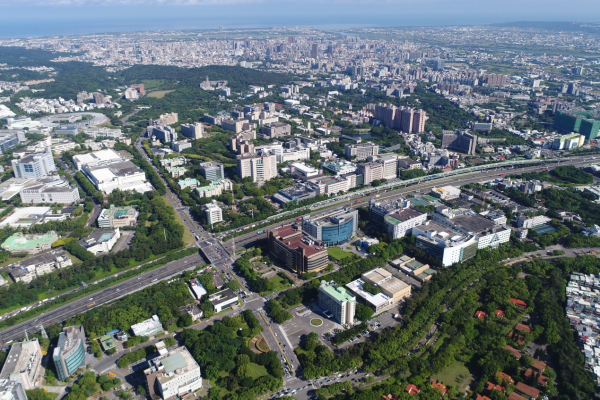
▲A view of the Hsinchu Science Park, the center of Taiwan's semiconductor industry
[Photo = Taiwan Ministry of Science and Technology]
In addition to TSMC, major semiconductor companies such as UMC, MediaTek, Novatek, and Realtek are located in the Shinju Science Park. They have been collaborating for a long time, being involved in chip design circuits, implementation of manufacturing processes, and various IPs, and are producing a large number of skilled, high-function personnel. Government support, high management freedom, and concentration of talent are the foundations of TSMC's success.
◇ Implications of TSMC's growth for the Korean semiconductor industry The semiconductor shortage triggered by the pandemic is expected to continue for the time being, and to fundamentally resolve this, foundry facilities must be expanded. System semiconductors produced in foundries are produced in small quantities in a variety of varieties, but increasing production requires securing stable demand from customers, massive facility investment, and more than three years, so it is not easy to expand.
In addition, the foundry combines expensive equipment with the know-how of skilled engineers. In order to reduce the defect rate, they must be immersed for 24 hours, and the number of processes has increased due to miniaturization. In order to complete a logic chip, they must go through countless complex individual processes.
The domestic foundry industry, except for Samsung Electronics, the world's second largest, and DB HiTek, the world's tenth largest, is mostly small in scale and has weak technology. The fabless customers are very small, so there is no stable demand base. The domestic semiconductor industry is far less competitive internationally than Taiwan.
In order for the foundry industry to develop, it is necessary to secure competent talent. In order to solve the shortage of personnel, it is necessary to increase the number of departments, recruit professors with extensive field experience, establish new departments under industry contracts, and increase the number of university semiconductor research centers. In addition, government support such as tax benefits, provision of infrastructure such as power and water supply, and enactment of related laws, like in Taiwan, should be supported. In the long term, a cooperative network between demand companies such as fabless and foundries should be established.