2026 Physical AI Conference
반도체 AI 보안 인더스트리 4.0 SDV 스마트 IoT 컴퓨터 통신 특수 가스 소재 및 장비 유통 e4ds plus
차세대 전력반도체 핵심 기술 – SiC와 GaN이 이끄는 전력 혁신
2026-01-13 10:30~12:00
김형우 센터장, 김승목 차장 / e4ds
  차세대 전력반도체 기술의 현주소와 미래   SiC와 GaN이 이끄는 전력 효율 혁신 전력 반도체는 이제 모든 산업의 핵심으로 자리 잡았습니다. 전기차, 신재생에너지, 산업 자동화 등 고효율·고신뢰성 전원이 필요한 곳에는 반드시 첨단 전력소자가 존재합니다. 이번 웨비나에서는 실리콘카바이드(SiC)..

Applied Materials, Ushio Collaborate to Launch Digital Lithography

기사입력2024.01.04 11:17


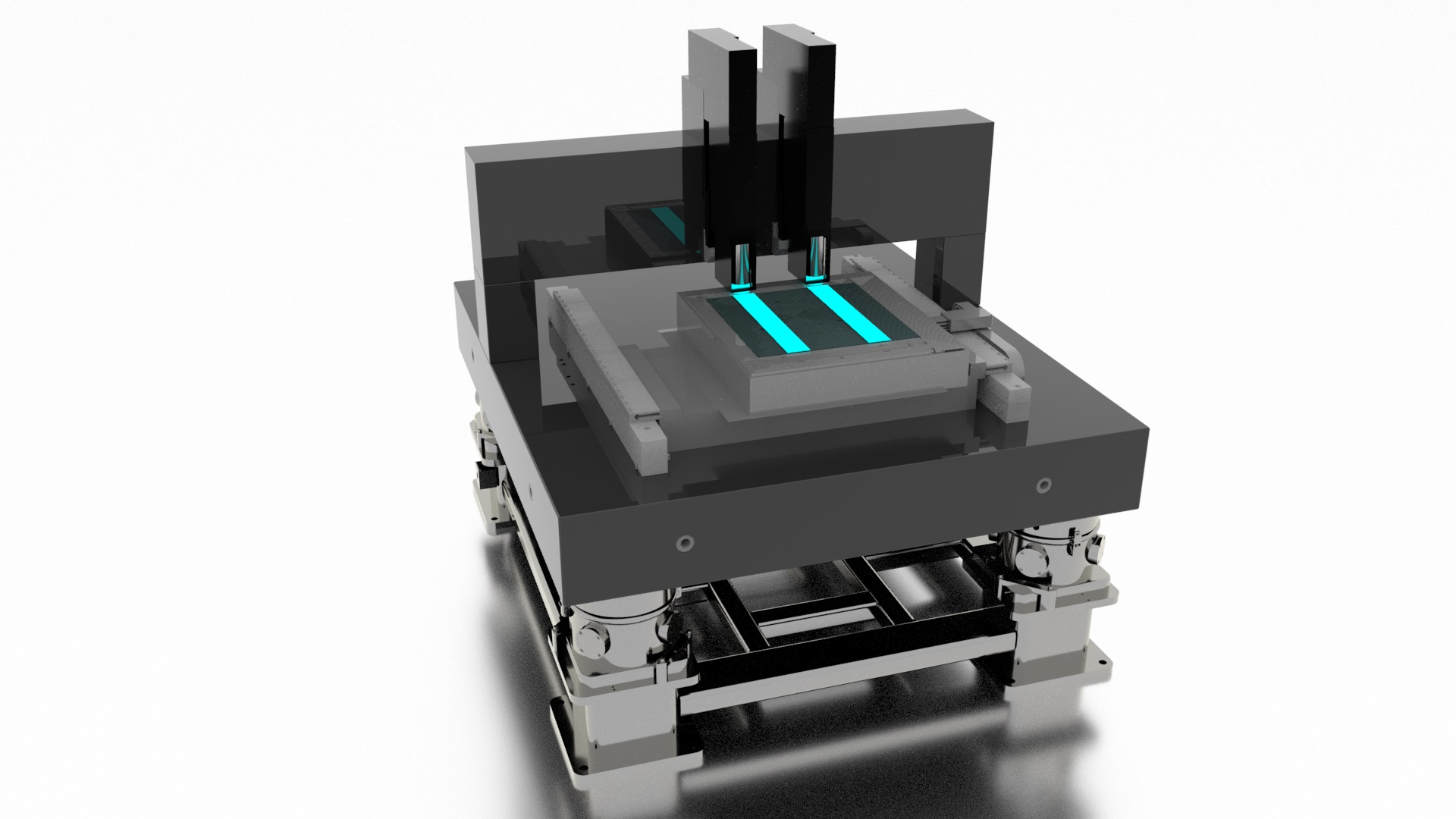
▲Applied DLT system (Photo: Applied)
Heterogeneous chiplets on large substrates based on glass and new materials
Combining Ushio's Lithography Technology for Packaging
Chip combinations possible with sub-micron-sized wiring

As AI workloads rapidly increase, the demand for semiconductor chips with superior functionality is increasing. As AI miniaturization is required at a level that cannot be handled by traditional Moore’s Law, semiconductor manufacturers are actively adopting heterogeneous integration manufacturing technology that integrates multiple chiplets into a cutting-edge package to provide performance and bandwidth equal to or greater than monolithic chips.

Applied Materials, a global leader in materials engineering solutions, today announced a strategic partnership with Ushio to accelerate the industry roadmap for heterojunction chiplet manufacturing in 3D packages.

This partnership will also see the launch of a digital lithography system specifically designed for cutting-edge substrate patterning required for the era of artificial intelligence (AI) computing.

The semiconductor industry requires large package substrates based on new materials such as glass that can implement ultra-fine interconnect pitches and excellent electrical and mechanical properties. Applied, which has technological prowess in panel processing, and Ushio, which has expertise in packaging lithography, expect this partnership to accelerate the paradigm shift toward heterojunction.

The new digital lithography technology (DLT) system delivers the resolution required for cutting-edge substrate applications and the throughput required for mass production. With the DLT system capable of patterning lines with a line width of less than 2 micrometers (µm), semiconductor manufacturers can implement chiplet architectures on all types of substrates, including wafers, glass, and large panels made of organic materials.


Applied DLT system (Photo: Applied)

The DLT system is specifically designed to address unexpected substrate warpage issues and provide overlay accuracy. The system has already been delivered to many customers in production, and 2µm patterning has been successfully implemented on a variety of cutting-edge package substrates, including glass substrates.

Applied Materials has pioneered DLT system-based technologies and plans to continue and expand its research and development for advanced packaging line widths of 1µm or less through collaboration with Ushio. Ushio has accelerated the adoption of DLT by leveraging its rich manufacturing technology and face-to-face customer infrastructure.

“Applied’s new DLT is the first patterning system to directly address our customers’ leading-edge substrate roadmap needs,” said Sundar Ramamurthy, vice president and general manager of Applied’s Heterojunction, ICAPS, Epitaxy and Semiconductor product groups. “Applied is leveraging our unparalleled expertise in large substrate processing, the industry’s broadest portfolio of heterojunction technologies, and deep R&D resources to support the next generation of innovation in high-performance computing.”

“Ushio has been building lithography systems for packaging applications for nearly 20 years, delivering over 4,000 tools worldwide,” said William F. Mackenzie, group chief executive officer and general manager of Ushio’s Photonic Solutions Global Business Unit. “With this new partnership, Ushio will expand our portfolio to accelerate the adoption of DLT and solve pressing challenges in the rapidly evolving packaging technology space with a highly scalable manufacturing ecosystem and robust field service infrastructure.”