.jpg)
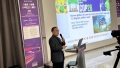
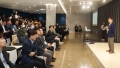
▲Professor Heo Geon-su of Hanyang University is giving a presentation on the current status and challenges of safety in autonomous driving technology.
Chinese and EU companies commercialize first with level 2 advancement, dominate the market
Autonomous driving safety requires a convergence of technology, driver acceptance, regulations, and profits
“In order for autonomous driving levels to expand to 4 or higher and for domestic manufacturers to have technological competitiveness, it is necessary to upgrade the level 2 currently installed in mass-produced vehicles and further strengthen safety to first generate revenue over the next 10 years.”
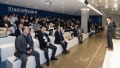
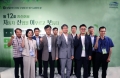
On the 21st, the Korea Automobile Research Institute held the 16th Jasan Eobo (Embracing and Supporting the Automobile Industry) event with the theme of ‘Autonomous Driving Safety’ at the COEX Startup Branch.
At the event, there were presentations on the current status and challenges of autonomous driving technology safety by Professor Heo Geon-su of Hanyang University, technical issues for improving autonomous driving safety by Lee Hyeok-gi, head of the Intelligent Transportation Control Technology Division at Hanja Yeon, and trends in autonomous driving policies and safety systems by Director Yoon Yong-won of the Korea Automobile Testing & Research Institute.
Professor Heo Geon-su said that mass-produced autonomous driving is currently commercialized up to level 2, where Hyundai Motors and most OEMs implement various sensors in cars to enhance driver assistance functions, and research is being conducted to move to levels 3 and 4. As for service-type autonomous driving, tech companies are leading the way and are advancing from level 4, but it is still at the pilot operation level and cannot be considered commercialized.He introduced it as follows.
Professor Heo Geon-su said that autonomous driving has not yet been implemented to the same extent as human driving, and that even robot taxis currently implementing Level 4 are having many accidents, requiring a lot of technological development.
However, he noted that many studies are being conducted targeting level 4 or higher because it is closely related to safety.
According to data recently released by the Insurance Association of America, Hyundai, Kia, and Tesla have announced results showing significantly inadequate safety in the Level 2 autonomous driving sector. The analysis is that this is because while Hyundai, Kia, and Tesla were researching Levels 3 and 4, Chinese and European automakers were commercializing Level 2 Plus.
Professor Heo Geon-su said that it is difficult to commercialize high-level autonomous driving technology by only researching it, because many companies fail to commercialize it during the research period, making it difficult to survive.
Accordingly, it is important to first develop the currently researched Level 4 or higher technologies into Level 2 mass-produced vehicles to gain an advantage in technological competitiveness and safety, and to first monetize them so that money can be made over the next 10 years to create a foundation for commercializing Level 4 or higher technologies.
Next, Han Ja-yeon, head of the Intelligent Transportation Control Technology Division, presented technical issues for improving autonomous driving safety.

▲Han Ja-yeon, head of the Intelligent Transportation Control Technology Division, is presenting on technical issues for improving autonomous driving safety.
Vice President Lee Hyuk-ki said that since there is no autonomous driving sensor with 100% recognition performance, there will be situations where recognition is not possible. Because of this and the resulting risks, a development process called SOTIF emerged to eliminate the risks of interference between vehicles and their surroundings, he said.
SOTIF is a driving safety development process that reduces residual risk to a certain level. It was revealed that there are many situations where the lanes on the road cannot be seen or vehicles cannot recognize the camera due to backlighting, fallen leaves, etc., and that efficient handling of such situations is being considered important.
In particular, the vulnerability is greater in the case of single sensors such as cameras employed by Tesla, and it was reported that there is a clear trend of using heterogeneous sensors such as lidar or radar to secure each sensor.
He also introduced that recently, there are increasing cases of slightly merging these and applying modules that combine cameras with radar or lidar to autonomous vehicles.
Regarding UNECE certification, it was introduced that receiving UNECE means that it can buy time for the driver to safely take basic measures even in situations where the sensor does not recognize well when a failure occurs. It was revealed that a fail-operational time of about 10 seconds is required for Level 3 and about 10 minutes is required for Level 4.
To respond to this, they revealed that they are first responding with software, and are also using a combination of hardware solutions to block problems when they arise.
He also introduced that artificial intelligence is also being used, but because artificial intelligence also has the possibility of error, there is also a method of using three types of artificial intelligence in combination.
In terms of safety, he said that ultimately, it is an area where development activities are conducted to make dangerous scenarios as safe as possible, and that an environment is being created where large-scale scenarios can be verified through simulations.
Next, Director Yongwon Yoon of the Connected Car Research Center at the Korea Automobile Testing & Research Institute said, 'Trends in Autonomous Driving Policy and Safety Systems'' was announced.

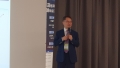
▲Director Yong-won Yoon of the Korea Automobile Testing & Research Institute is giving a presentation on autonomous driving policy and safety system trends.
Director Yoon Yong-won stated that in order to be recognized as a self-driving car in Korea, one must receive a temporary autonomous driving operation permit issued by the Ministry of Land, Infrastructure and Transport, and that as of last year, approximately 440 vehicles had received such permits.
Along with the permit, autonomous vehicle accidents are also increasing. When investigating accidents, most of them are caused by factors other than autonomous driving, and the rate for autonomous driving systems is relatively good at around 13%.
Regarding autonomous driving, acceptability is important. Since autonomous driving is not omnipotent, drivers should not assume that autonomous driving will 100% prevent an emergency situation, but should respond accordingly. However, drivers are not accustomed to this, so acceptability of autonomous driving from the driver's perspective should also be considered.
Regarding government policy, he mentioned that Korea was the first in the world to establish and implement level 3 autonomous vehicle safety standards in 2020, and that it plans to revise the Automobile Management Act to include software cybersecurity and software updates, which will be implemented starting in August of this year.
Regarding cybersecurity, vehicle manufacturers must have a certification system called the Cybersecurity CSMS. The government will first provide CSMS certification to manufacturers as a pre-certification, and then they will manufacture vehicles based on this CSMS. Then, the Korea Automobile Testing & Research Institute will do post-certification verification.