반도체 AI 인더스트리 4.0 SDV 스마트 IoT 컴퓨터 통신 특수 가스 소재 및 장비 e4ds plus

Samsung to invest 450 trillion won in semiconductors and new growth IT over 5 years

기사입력2022.05.24 15:58


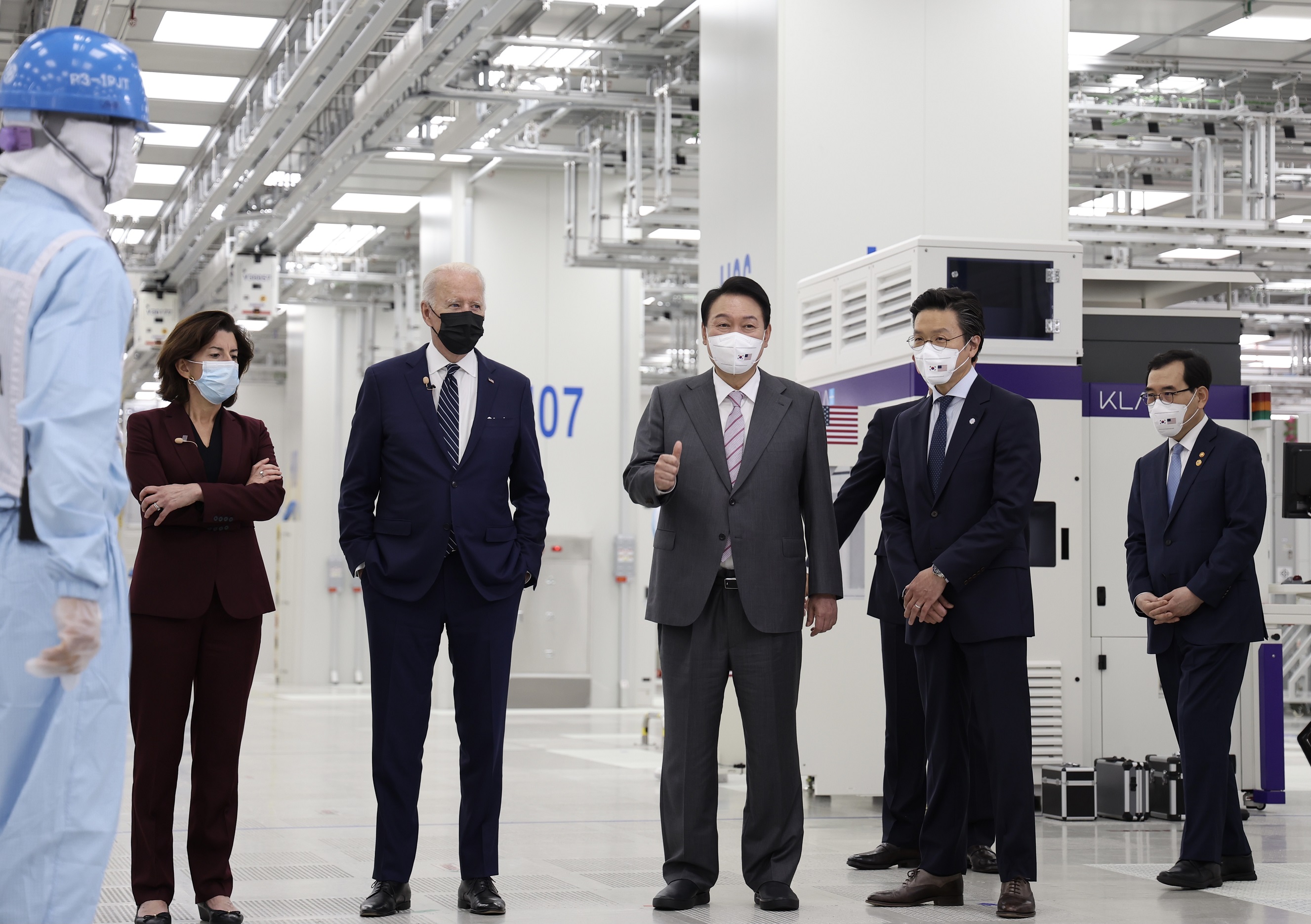
▲Two Korean and US leaders visit Samsung Electronics Pyeongtaek Campus (Photo: Office of the 20th President)
Targeting a super gap by fostering system and memory semiconductors
Investment in future food items such as AI, 6G, and bio

Samsung, whose global status has been further enhanced by US President Biden’s visit to Samsung Foundry, is drawing attention by revealing its vision for future growth. It has announced that it aims to create 1 million jobs by fostering new future growth items in addition to becoming a semiconductor superpower, raising expectations for a domestic economic stimulus.

Samsung unveiled its blueprint for future preparation for innovative growth on the 24th. Samsung announced that it will invest 450 trillion won over the next five years and focus on: △concentrating investment in future food and new growth IT, △nurturing talent and creating jobs, and △creating an industrial ecosystem where large and small businesses can grow together.

Samsung announced that it plans to invest 450 trillion won over the next five years in future new businesses such as semiconductors, bio, and new growth IT, and that it will invest 360 trillion won in Korea alone, which is an increase of 120 trillion won compared to the 330 trillion won invested over the past five years. It is expected that the annual average investment size will increase by more than 30%, which will have a positive effect on stimulating the domestic economy.

■Semiconductor Super Gap, Growing Fabless and Solidifying Foundry

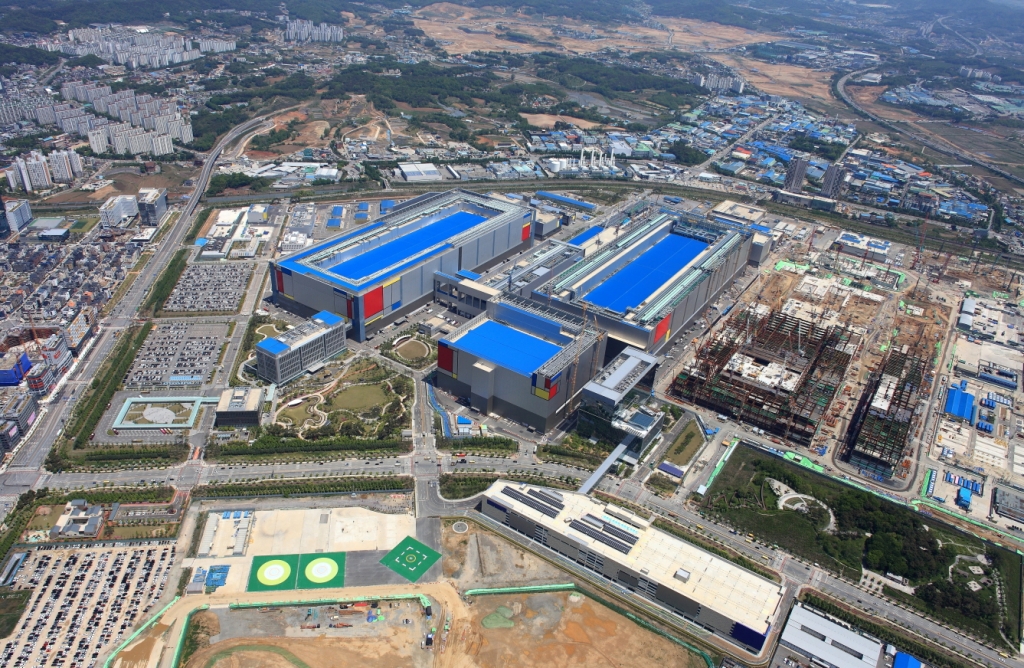
▲Samsung Electronics Pyeongtaek Campus (Photo: Samsung Newsroom)

Samsung expected that the market size in the fabless system semiconductor, foundry, and bio sectors would grow rapidly in the post-corona era. In particular, Samsung's core business and new growth IT are fields where companies and industrial ecosystems can create enormous added value through interaction.

In order to strengthen its leading position in the memory sector, Samsung announced that it plans to proactively apply cutting-edge technologies, such as strengthening R&D on new materials and structures that can overcome process miniaturization and limitations, and early introduction of EUV technology, which is advantageous for semiconductor miniaturization.

In the fabless system semiconductor sector, Samsung Electronics announced plans to secure competitiveness centered on system semiconductors and sensors essential for the 4th industrial revolution, such as high-performance, low-power APs, ultra-high-speed communications such as 5G and 6G communication modems, and high-definition image sensors.

According to market research firm Omdia, the system semiconductor market size in 2025 will be $447.3 billion, more than double the $220.5 billion memory semiconductor market. Samsung Electronics has a large market gap with the number one company in mobile SoCs, image sensors, etc., but has announced plans to catch up through investment and R&D. In addition, it is expected to lead to joint growth in the related fabless industry ecosystem, including △fabless △design house △packaging △testing.

In the foundry business, it was mentioned that it will pioneer future markets through technology development and investment centered on advanced processes. Samsung plans to mass-produce products below 3nm by applying GAA technology within the year. In addition, it is preparing to rise to the top of the industry by developing a convergence solution that includes computational chips and memory by securing next-generation packaging technology. It is expected that securing the yield of the GAA process will be the key.

Samsung explained that the reason for focusing on these industries is that it is a “future blueprint” to “open up new markets and secure sustainable growth engines by selecting core strategic businesses with high growth potential and concentrating our capabilities,” and that it is “a declaration of our will to meet the public’s expectations by injecting dynamism into society as a whole.”

■AI·6G·Bio, Samsung's new growth engine

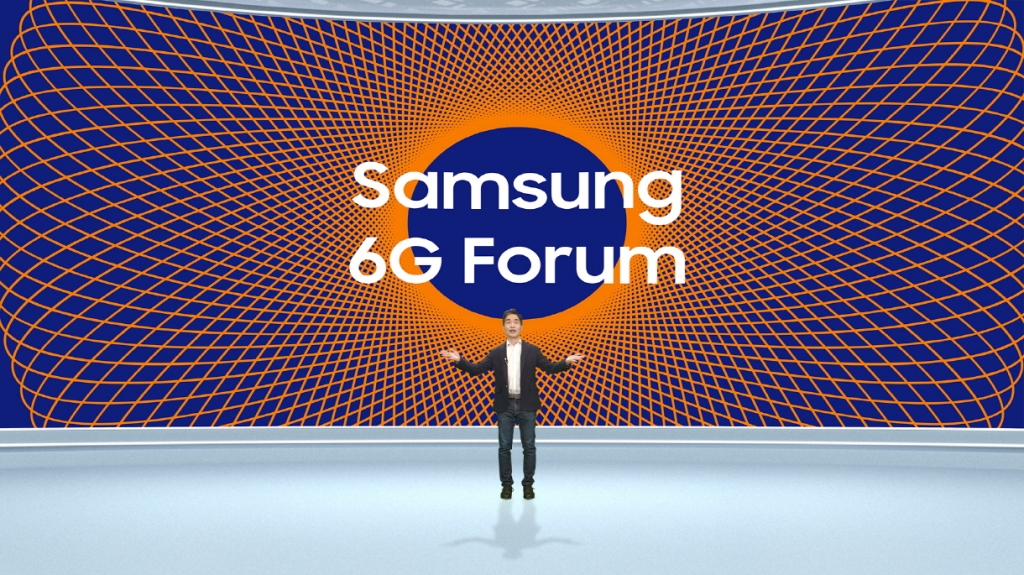
▲Samsung 6G Forum (Photo-Samsung Newsroom)

Samsung announced that it will strengthen its competitiveness in artificial intelligence and next-generation 6G communications, which will determine future industrial competitiveness. AI is a field whose scope of application is gradually expanding beyond the electronics industry to defense, basic science, and medicine. The next-generation mobile communications technology, 6G, is 50 times faster than 5G and is said to be the foundation technology for real-life implementation of services such as △hyper-realistic extended reality △high-precision mobile holograms.

Accordingly, Samsung is conducting advanced technology research through its next-generation global AI centers in seven regions, while also promoting talent recruitment and training of experts. In addition, it held the 'Samsung 6G Forum' to strengthen its leadership in next-generation communications, where Samsung expressed its ambition to "provide a new level of hyper-connected experience where everything is connected through 6G technology with the characteristics of △ultra-wideband △ultra-low latency △ultra-intelligence △hyper-spatial."

The bio industry has transformed into a national security industry since the COVID-19 pandemic, but is currently dominated by advanced small-scale countries and large pharmaceutical companies. Explosive growth is expected along with increased purchasing power due to the global aging population, but the competitiveness of the domestic bio industry is still weak.

Samsung is continuing its aggressive investment strategy to secure ‘bio sovereignty.’ It announced plans to “grow it into a ‘second semiconductor myth’ by expanding the biosimilar pipeline.”

The goal is to secure an overwhelming global No. 1 position through aggressive investment expansion in the contract development and manufacturing organization (CDMO) of biopharmaceuticals. The company plans to make investments such as expanding the 5th and 6th factories in addition to the 4th factory currently under construction, and explained that it will support the following: △enhancing production capacity such as cell line development, △expanding the biosimilar pipeline, △training specialized personnel, and △domestic production of raw materials.