인피니언 GaN
반도체 AI 보안 인더스트리 4.0 SDV 스마트 IoT 컴퓨터 통신 특수 가스 소재 및 장비 유통 e4ds plus
차세대 전력반도체 핵심 기술 – SiC와 GaN이 이끄는 전력 혁신
2026-01-13 10:30~12:00
김형우 센터장, 김승목 차장 / e4ds
  차세대 전력반도체 기술의 현주소와 미래   SiC와 GaN이 이끄는 전력 효율 혁신 전력 반도체는 이제 모든 산업의 핵심으로 자리 잡았습니다. 전기차, 신재생에너지, 산업 자동화 등 고효율·고신뢰성 전원이 필요한 곳에는 반드시 첨단 전력소자가 존재합니다. 이번 웨비나에서는 실리콘카바이드(SiC)..

Samsung Electronics, Unrivaled Channel Hole Etching Industry's Highest Single-Phase Implementation... Mass Production of 'QLC 9th Generation V-NAND'

기사입력2024.09.13 10:17


Strengthening next-generation NAND competitiveness through high-capacity QLC and high-performance TLC

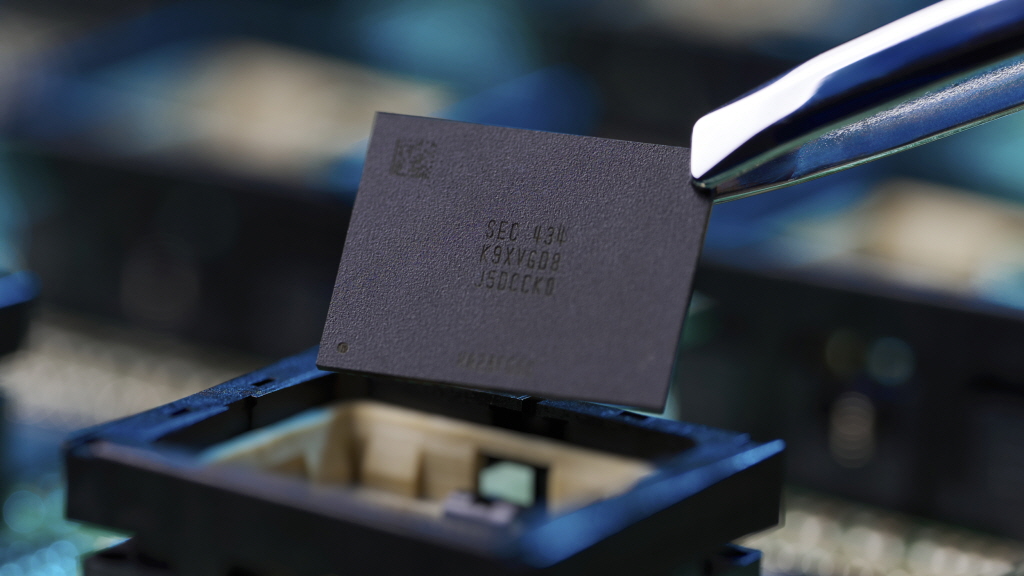
Samsung Electronics is set to begin mass production of its 9th generation V-NAND, which has the industry's highest single-chip implementation through exclusive channel hole etching, to strengthen its competitiveness in the next generation NAND.

Samsung Electronics announced on the 12th that it has mass-produced the industry's first '1Tb (terabit) QLC (Quad Level Cell) 9th generation V-NAND' for ultra-high capacity server SSDs in the AI era.

Samsung Electronics solidified its leadership in the high-capacity, high-performance NAND flash market by first mass-producing the 'TLC 9th generation V-NAND' in April and then introducing QLC products.

Samsung's 9th generation V-NAND has achieved the industry's highest density with a double stack structure utilizing exclusive Channel Hole Etching technology.

The 9th generation V-NAND is known to have 286 layers.

In particular, this 9th generation QLC V-NAND boasts the industry's highest bit density, which is approximately 86% higher than the previous generation QLC V-NAND, by minimizing the area of cells and peripherals.

As the stacking level of V-NAND increases, it becomes more important to maintain uniform cell characteristics between layers and by layer, and Samsung Electronics utilized Designed Mold technology for this purpose.

'Designed Mold'This technology controls the spacing of WL (Word Line) that operates the cell to optimize and uniformize cell characteristics, thereby improving product reliability by increasing data retention performance by approximately 20% compared to previous products.

This 9th generation QLC has improved write performance by 100% and data input/output speed by 60% compared to the previous generation QLC product through innovation of Predictive Program technology that predicts cell state changes and minimizes unnecessary operations.

In addition, power consumption for reading and writing data was reduced by approximately 30% and 50%, respectively, through low-power design technology that minimizes power consumption by lowering the voltage driving the NAND cell and sensing only the necessary BL (Bit Line).

Samsung Electronics Memory Business Division Flash Development Office Vice President Heo Sung-hoe said, “By successfully mass-producing the 9th generation QLC V-NAND just four months after mass-producing the 9th generation TLC, we now have the latest lineup required by the high-performance, high-capacity SSD market for AI,” adding, “This will further highlight our leadership in the enterprise SSD market, where demand has been rapidly increasing due to AI.”

Samsung Electronics plans to gradually expand the application of QLC 9th generation V-NAND-based products, starting with branded products, to mobile UFS, PC and server SSDs in the future.