삼성전자, 메모리 로드맵 공개…10나노 D램·1,000단 낸드 개발
기사입력 2022.10.07 10:10
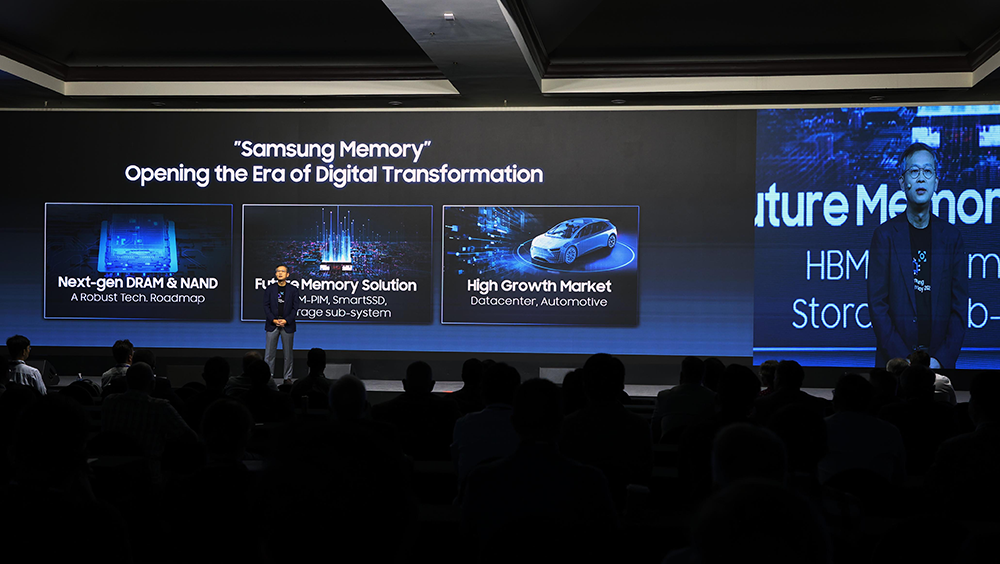
▲삼성 테크 데이 2022에서 발표하는 삼성전자 메모리사업부장 이정배 사장 (사진-삼성전자)
내년 5세대 10나노 D램 출시 예고, 미세화 한계 극복
2024년 9세대 V낸드·2030년까지 1,000단 V낸드 양산
2024년 9세대 V낸드·2030년까지 1,000단 V낸드 양산
“삼성전자가 약 40년간 만들어낸 메모리의 총 저장용량이 1조 기가바이트(GB)를 넘어서고, 이중 절반이 최근 3년간 만들어졌을 만큼 우리는 급변하는 디지털 전환을 체감하고 있다”
삼성전자 메모리사업부장 이정배 사장이 미국 실리콘밸리에서 열린 ‘삼성 테크 데이 2022’에서 한 말이다.
지난 6일 진행된 발표에서 삼성전자는 차세대 10나노미터 D램과 ‘8·9세대 V낸드플래시’ 등 차세대 메모리를 공개했다.
지난 6일 진행된 메모리 반도체 세션에서 삼성전자는 ‘5세대 10나노급(1b) D램’, ‘8세대·9세대 V낸드’를 포함한 차세대 제품 로드맵을 선보였다.
이정배 사장은 “삼성전자는 향후 고대역폭·고용량·고효율 메모리를 통해 다양한 새로운 플랫폼과 상호진화(Co-evolution)하며 발전해 나갈 것”이라고 밝혔다. 또한 기술적 한계를 극복해 품질 만족도를 높이고, 고객과 동반성장하는 새로운 비즈니스 모델을 통해 전체 산업에 기여하며 지속 가능한 사업으로 발전시켜 나갈 계획이라고 전했다.
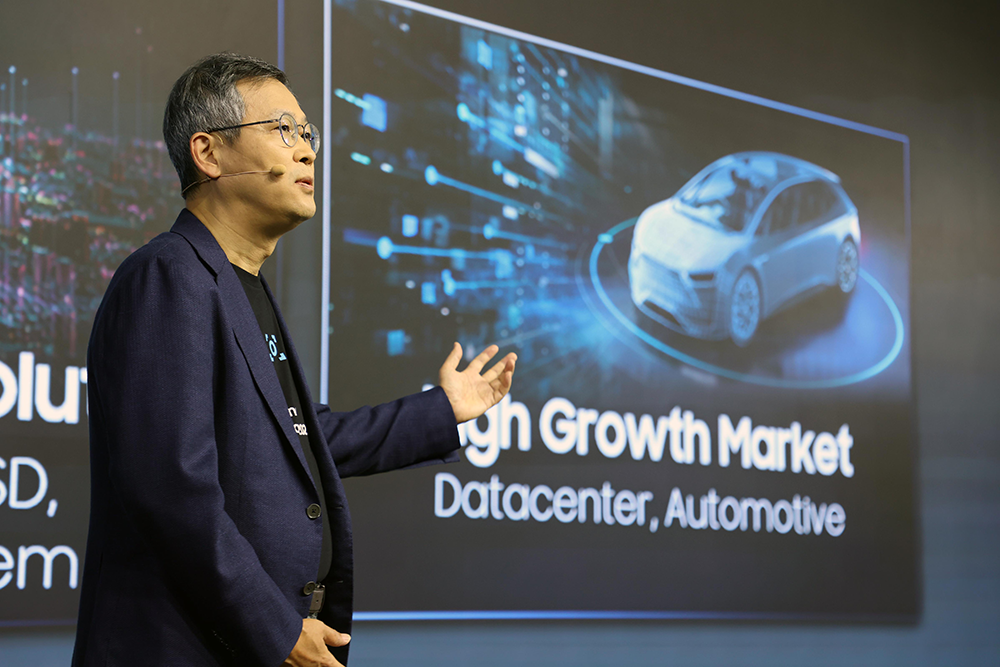
▲삼성전자 메모리사업부장 이정배 사장 (사진-삼성전자)
■데이터 인텔리전스 진화, ‘5세대 10나노급 D램’ 내년 출시
삼성전자는 데이터 인텔리전스(Data Intelligence)를 발전시킬 미래 D램 솔루션과 공정 미세화의 한계를 극복하기 위한 다양한 D램 기술을 공개했다.
폭발적으로 증가하고 있는 데이터 사용량을 감당하기 위해 글로벌 IT 기업들과 D램 기술 혁신을 협력해 나가겠다고 삼성전자는 밝혔다. 차세대 D램 기술은 △HBM-PIM(Processing-in-Memory) △AXDIMM(Acceleration DIMM) △CXL(Compute Express Link) 등 다양한 시스템 아키텍처를 지원한다.
또한, △데이터센터용 고용량 32Gb DDR5 D램 △모바일용 저전력 8.5Gbps LPDDR5X D램 △그래픽용 초고속 36Gbps GDDR7 D램 등 차세대 제품을 출시해 프리미엄 D램 시장의 리더십을 확고히 할 예정이다.
삼성전자는 2023년 ‘5세대 10나노급 D램’을 양산하는 한편, 하이케이 메탈 게이트(High-K Metal Gate) 공정 등 새로운 공정 기술 적용과 차세대 제품 구조를 통해 공정 미세화 한계를 극복해 나갈 것이라고 전했다.
■2030년 “1,000단 V낸드 개발”
삼성전자는 2024년 9세대 V낸드를 양산하고, 2030년까지 1,000단 V낸드를 개발하는 등 차세대 낸드 로드맵도 공개했다.
삼성전자는 올해 안에 8세대 V낸드 기반 1Tb TLC(Triple Level Cell) 제품을 양산할 것이라고 밝혔다. 8세대 V낸드는 7세대 대비 단위 면적당 저장되는 비트(Bit)의 수를 42% 향상한 512Gb TLC 제품으로 삼성전자는 동일 스펙에서 “업계 최고 수준”이라고 자부했다.
또한 데이터센터, 인공지능 등 대용량 데이터가 필요한 다양한 고객 니즈에 대응하기 위해 QLC(Quadruple Level Cell) 생태계를 확대하고, 전력 효율도 개선해 친환경 경영에 기여한다는 계획도 밝혔다.
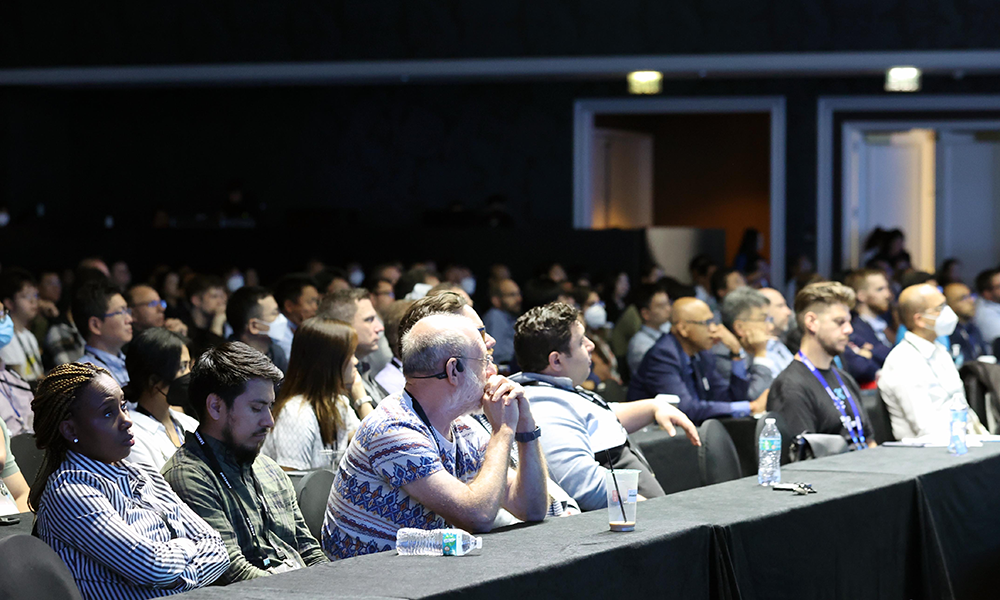
▲삼성 테크 데이 2022에 참석한 관객들의 모습 (사진-삼성전자)
■차량용 메모리·차세대 스토리지 비전
가파르게 증가하는 차량용 솔루션과 스토리지 부문에서의 시장 확보를 위한 움직임이 활발해질 전망이다.
2015년부터 차량용 메모리 시장에 진입한 삼성전자는 △자율 주행(AD) △첨단 운전자 지원 시스템(ADAS) △인포테인먼트(IVI) △텔레매틱스(Telematics) 등을 위한 메모리 솔루션을 공급해왔다. 삼성전자는 2025년 차량용 메모리 시장에서 1위를 목표로 점유율을 확대해 나갈 계획이라고 언급했다.
또한 차량의 첨단화, 전동화에 따른 고성능 메모리 필요성이 더욱 커지고 있는 상황에서 △LPDDR5X △GDDR7 △Shared Storage 등 차세대 메모리 솔루션이 모빌리티 발전에 필요한 상황이다.
엔터프라이즈부터 △클라이언트 △모바일 △차량용 브랜드까지 다양한 스토리지 라인업을 갖춘 삼성전자는 SSD 내부에 탑재되는 D램 없이 PC에 탑재된 D램과 직접 연결하는 HMB(Host Memory Buffer) 기술을 적용한 SSD ‘PM9C1a’도 이날 행사에서 공개했다.
SSD 내부 연산 기능을 강화한 컴퓨테이셔널 스토리지(Computational Storage) 개발을 지속하고 있는 삼성전자는 “인공지능에 최적화된 고성능, 저전력 제품을 통해 지속 가능한 미래를 만들어 나가겠다”고 밝혔다.
한편, 삼성전자는 고객들에게 차세대 메모리 솔루션 개발·평가를 위한 최적화된 환경을 제공하는 ‘삼성 메모리 리서치 센터(SMRC)’를 오픈하고, △레드햇 △구글 클라우드 등과 협력해 올해 4분기 한국을 시작으로, 미국 등 다른 지역으로 SMRC를 순차적으로 확장할 것이라고 예고했다.

관련뉴스
-
SK하이닉스, 세계 최고층 238단 낸드 내년 상반기 양산
낸드 200단 시대가 열리고 있다. 낸드 플래시 반도체 업체들의 적층 경쟁이 심화되며 셀을 수직으로 쌓는 최고층 경쟁이 200단대에서 이뤄지고 있다.
2022-08-03 오전 6:30:05by 권신혁 기자
-
200단 낸드 시대, 삼성·SK·마이크론 불붙은 적층 경쟁
[편집자주] 반도체 업계 낸드플래시 적층이 200단을 넘어섰다. 싱글 스택으로 128단을 쌓은 삼성전자 외에는 200단을 넘기 힘들 거라던 지난 말들이 무색하게 적층 경쟁에서 선두에 선 것은 다름아닌 232단을 쌓아 올린 미국의 마이크론이었다. SK하이닉스가 이에 질세라 238단 낸드 플래시 상용화를 예고하며 200단대 선두 싸움에 뛰어들었다. 삼성은 올 초 172단 7세대 V낸드를 UFS 4.0에 탑재하며 관망하는 모양새지만 200단대 기술 확보는 이미 완료됐다며 자신감을 내비쳤다. 200단 낸드 시대, 반도체 제조사들의 격돌을 살펴봤다.
2022-08-12 오후 1:00:42by 권신혁 기자
-
삼성전자, 시스템반도체 모멘텀 강화
반도체산업이 다운사이클에 진입했다는 시장 분위기 속에서도 미래 먹거리 모색을 위한 움직임이 활발한 상황이다. 차세대 핵심 시장인 시스템반도체 부문에서 삼성전자가 모멘텀 강화를 위해 힘을 쏟고 있다.
2022-10-07 오전 9:00:18by 권신혁 기자

.jpg)
많이 본 뉴스

[열린보도원칙] 당 매체는 독자와 취재원 등 뉴스이용자의 권리 보장을 위해 반론이나 정정보도, 추후보도를 요청할 수 있는 창구를 열어두고 있음을 알려드립니다.
고충처리인 장은성 070-4699-5321 , news@e4ds.com