반도체 AI 인더스트리 4.0 SDV 스마트 IoT 컴퓨터 통신 특수 가스 소재 및 장비 e4ds plus

Growth in wireless charging and electric vehicle technology increases demand for electromagnetic shielding

기사입력2021.09.06 15:15

Electromagnetic shielding issues emerge as the entire industry accelerates electrification
Shielding, applied differently depending on electromagnetic wave properties and environment
Wireless charging, electric vehicle technology advances increase the importance of shielding


With the development of electronic technology, we live in an environment filled with electromagnetic waves. Electromagnetic waves are waves composed of electric and magnetic fields. Changes in the intensity of electric fields cause changes in magnetic fields, and changes in magnetic fields cause changes in electric fields, and this process repeats and spreads.

Electromagnetic waves can be harmful to the human body in the long term, and in IT devices or vehicles, they cause electromagnetic interference (EMI), increasing the risk of malfunction. Recently, interest in electromagnetic shielding has been growing as electrification progresses in various fields.
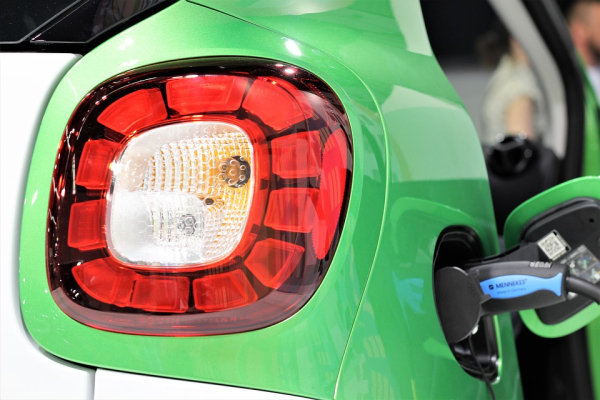
▲ Developments in wireless charging and electric vehicle technology are increasing the demand for electromagnetic shielding.
[Photo = Pixabay]

According to 'Electromagnetic shielding principles and related technology trends' written by Professor Kang Young-min of the Department of Chemical Engineering, Advanced Materials and Polymer Engineering at Korea Transport University, EMI shielding refers to preventing circuit operation problems in advance by shielding electric fields, magnetic fields, and electromagnetic waves incident from the outside.

Typically, the circuit is surrounded by metal materials such as aluminum or copper. Metals reflect most of the electromagnetic waves from their surfaces. Also, in conductors, the electric field becomes '0' due to the free movement of electrons, so it is possible to block electromagnetic waves over a wide range of bandwidths.

Shielding methods vary depending on the nature of the radio wave. Inside electronic devices, permanent magnets, coils, etc. emit direct current (DC) magnetic fields, which requires shielding to protect surrounding sensors and circuits. In such cases, it is effective to apply sheets or films of high-permeability soft magnetic materials to the shielding area to direct the magnetic flux flow in a different direction.

To shield an alternating current (AC) magnetic field, the magnetic field penetration depth must be derived from the magnetic permeability, electrical conductivity, and frequency of the AC magnetic field of the shielding material, and then the shielding material must be selected. The higher the frequency and electrical conductivity, the lower the magnetic field penetration depth, so that even a thin shielding material can block the magnetic field penetration. This is the principle of generating a magnetic field in the opposite direction to the magnetic field that is momentarily incident when an AC magnetic field is incident on a conductive material by the induced eddy current, thereby canceling it out.

When the AC magnetic field frequency is low, the shielding effect cannot be achieved with only non-magnetic metal materials, so a magnetic material with high real permeability, like a DC shield, must be used. When the frequency is high, both non-magnetic metal materials and high permeability magnetic materials can be used as shielding materials.

◇ Electromagnetic wave absorbers, what are they used for?

Electromagnetic shielding materials, or absorbers, require various materials and structures depending on the application or usage environment. Not only are properties such as insulation and heat dissipation required, but they also require production in various forms such as sheets, films, and plastic injection molded products, so research on materials is essential.

In general, materials that are composites of carbon-based conductive materials within a polymer structure are widely used. Because they have high conductivity despite their low specific gravity, they are widely used as electromagnetic wave absorbers.

Representative materials utilizing magnetic loss include ferrites with a cubic spinel structure, such as the Mn-Zn system and the Ni-Zn system. These materials have excellent absorption capabilities in the band from tens of kHz to hundreds of MHz, but their magnetic loss decreases sharply above the GHz band, making them unusable. Instead, hexagonal Sr and Ba ferrites are useful, but their practical applications are limited.

Currently, research and development is being conducted on electromagnetic wave absorbers using epoxy-modified urethane rubber and SiC fiber coatings as dielectric loss materials. Research is also being conducted on new structural materials in the form of composite materials that can be easily used as structural materials along with electromagnetic wave absorption functions.

Composite materials are classified into fiber-reinforced and laminated composites, particle-reinforced composites, etc., depending on the structure. Thermosetting/thermoplastic polymer resins are used as the support material, and depending on the intended use, silicone, rubber, paint, etc. are used as the support material, and electromagnetic wave absorbing particles are used as the filler.

◇ Increasing demand for EMI shielding in wireless charging and battlefields

Electromagnetic shielding technology is in increasing demand in various fields where electrification is progressing. In particular, in the smartphone field, the use of magnetic sheets in NFC modules is increasing due to the spread of wireless charging technology. It is used to suppress electromagnetic interference between a wireless charging system using an AC magnetic field at the level of 100 kHz and an NFC coil antenna using a frequency of 13.56 MHz, and to prevent magnetic fields from penetrating into the inside of a mobile device.

Electromagnetic wave absorbers are widely used in devices that emit electromagnetic waves. They are generally used in the form of polymer composite sheets containing conductive fillers or magnetic powders.

In the automotive sector, interest in shielding materials is increasing due to the increase in power consumption in vehicles and the increase in the proportion of electrical components due to the adoption of high-power electrical components and active safety systems. Carbon and polymer composite materials are often used as electromagnetic shielding materials for automobiles. As autonomous driving functions expand, new standards for electromagnetic compatibility (EMC) are being established, and various shielding materials are expected to be developed accordingly.

As the application of electronic technology expands, the demand for electromagnetic shielding technology is also increasing. In particular, with the development of wireless communication technology, the types and amounts of radio waves are rapidly increasing, so it is urgent to predict various shielding demands and develop material technologies suitable for shielding environments.
이수민 기자
기사 전체보기

DC/DC 컨버터의 EMC대책 - 제2편
2021-10-07 10:30~12:00
ROHM / 송오용 선임연구원