인피니언 HV GaN
반도체 AI 인더스트리 4.0 SDV 스마트 IoT 컴퓨터 통신 특수 가스 소재 및 장비 e4ds plus

[IT 인사이트] Intel Ultra 200H/HX Targeting AI Market, Competitors Sigh in Relief Despite Powerful Performance

기사입력2025.03.07 10:19

Up to 99 TOPS AI performance, but no NPU 13 TOPS Copilot Plus
Power consumption and heat generation are question marks, important variables in performance compared to competing products during high-performance work
Ultra 200H/HX series suitable for users who value AI acceleration and multi-threaded work


[Editor's Note] Recently, Intel released new Arrow Lake Intel® Core™ Ultra 200H/HX processors for notebooks that offer up to 41% better multi-thread performance than the previous-generation H-series processors. However, despite the powerful performance, competitors are reportedly sighing in relief, saying that it is not at the level they had expected. In particular, while targeting the AI market, there are voices saying that it has shown weaknesses in areas such as NPU performance and power consumption, and that in the notebook processor market, it may have to compete not only with products from other companies, but also with its own existing products such as Meteor Lake and Luna Lake. Based on the announcement, we compared the new Intel® Core™ Ultra 200H/HX processor products with competitor products.

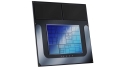
▲Intel® Core™ Ultra 200H


At the 'Intel Tech Day Media Conference' held at the Conrad Hotel in Yeouido on the 5th, Intel Korea introduced the latest Intel® Core™ Ultra 200HX and H series notebook processors and showcased new notebook products from major manufacturers equipped with these processors.

The lineup delivers enhanced AI acceleration performance with improved P-cores and E-cores and integrated NPUs, while the built-in Intel Arc™ GPU significantly improves graphics and content creation performance.

The Intel Core Ultra 200H series features up to 16 cores, delivering up to 22% improved gaming performance, up to 17% improved single-thread performance, and 19% improved multi-thread performance compared to the previous generation H series processors, and provides up to 99 TOPS of AI processing performance per platform.

Intel® Core™ Ultra 9 285H has the following specifications: 16 cores, 16 threads, 77 GPU TOPS, 8 GPU cores, 13 NPU TOPS, and up to 5.4GHz.

The Intel Core Ultra HX series features up to 24 cores, delivering up to 41% improved multi-thread performance and 10% improved single-thread performance compared to the previous generation HX series processors.

Intel® The Core™ Ultra 9 285HX has the following specifications: △24 cores △24 threads △4 GPU cores △13 NPU TOPS △up to 5.5GHz.

On the other hand, the competing AMD Ryzen AI 9 HX 370 is based on 12 cores and 24 threads (Zen 5 architecture), and offers a base clock of 2.0GHz and a maximum boost clock of 5.1GHz.

Intel has the advantage in overall multi-core performance, but AMD offers efficient compute performance through high clocks and the Zen 5 architecture.

In particular, the AMD HX 370 with its high thread count can have an advantage in multi-tasking processing, while the Intel Ultra 9 285H shows strength in applications where single-core performance is important.

AI performance has recently become an important factor in the recent laptop CPU competition.

The Intel Core Ultra 200H/HX series delivers up to 99 TOPS of AI processing performance across the entire platform, including the NPU (Neural Processing Unit).

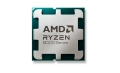
▲AMD Ryzen AI 9 HX 300 series


On the other hand, the AMD Ryzen AI 9 HX 370 is equipped with an XDNA 2-based NPU and supports AI performance of up to 50 TOPS.

Because of these differences, Intel processors are likely to perform better in tasks where AI acceleration is important.

On the other hand, officially Copilot Plus support is possible while meeting Microsoft's Copilot Plus PC criteria (40 TOPS or more).One product is the AMD Ryzen AI 9 HX 370.

This shows that not only simple computational processing power, but also NPU architectural optimization and software support are important factors.

Therefore, in terms of practical use of AI functions, AMD's HX 370 is likely to be more advantageous, while Intel can be seen as ahead in simple computational performance.

Additionally, Qualcomm's Snapdragon X Elite is a processor designed to support Copilot Plus, delivering up to 45 TOPS of NPU performance and supporting Microsoft's AI-based features through ultra-efficient power management and AI optimizations.

The powerful AI capabilities and battery efficiency provided by Qualcomm chipsets are competitive in the low-power notebook market.

Meanwhile, it will also compete with the previous generation Lunar Lake processor, which supports Copilot Plus through a low-power architecture and an optimized NPU with up to 48TOPS.

Graphics performance is also a subject of comparison.

The Ryzen AI 9 HX 370 features Radeon 890M integrated graphics based on the RDNA 3.5 architecture, delivering high graphics performance.

On the other hand, the Intel Core Ultra 200H/HX series features built-in Intel Arc GPU.

Intel's Arc graphics cover a wide range of performance capabilities, but some models may underperform AMD's high-performance Radeon 890M.

The Radeon 890M delivers excellent performance in high-end games and graphically intensive tasks, while Intel Arc Graphics is optimized for multimedia and general graphic processing tasks.

Power efficiency and heat management are also important considerations.

The Ryzen AI 9 HX 370 is designed to leverage the efficiency of the Zen 5 architecture to maintain performance while reducing power consumption. It is characterized by maintaining high performance despite relatively low power consumption.

On the other hand, the Intel Core Ultra 200H/HX series tends to consume higher power for high performance, so heat management is expected to be an important variable.

According to industry sources, the Intel Core Ultra 200HX may have relatively loose power limits for performance optimization, which is likely to increase heat generation during long-term, high-load tasks. Accordingly, efficient cooling solutions are essential for high-performance laptops.

On the other hand, the AMD Ryzen AI 9 HX 370 offers stable performance in a lower TDP (thermal design power) range and has the advantage of placing relatively less burden on the cooling system.

In conclusion, it is difficult to say which of the latest laptop CPUs from Intel and AMD is better because each product has its own unique characteristics.

The Intel Core Ultra 200H/HX series delivers excellent performance in AI computing performance and multi-core tasks, while the AMD Ryzen AI 9 HX 370 provides powerful built-in graphics and efficient performance.

Accordingly, the choice will likely vary depending on the user's needs.

The industry reports that users who value AI acceleration performance and multi-threaded tasks but do not use Copilot Plus will consider Intel Core Ultra 200H/HX series products, while users who value integrated graphics performance and power efficiency while using Copilot Plus will consider AMD Ryzen AI 9 HX 370 products.

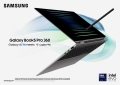
▲Laptops with Intel® Core™ Ultra 200H processors