Predicting wireless environment using deep learning, automatically setting optimal parameters
SK Telecom (CEO Yoo Young-sang) and Samsung Electronics are joining hands to optimize 5G base station quality through artificial intelligence (AI), and expectations are high that base station performance will be maximized, thereby improving consumer experience.
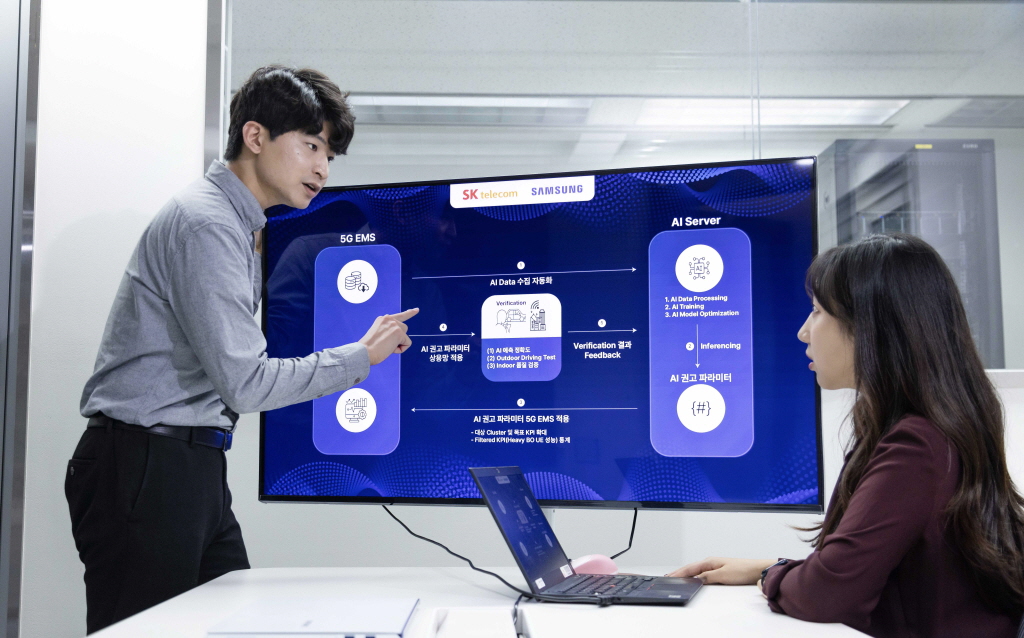
SKT announced on the 28th that it will advance wireless networks by applying AI-based 5G base station quality optimization technology (AI-RAN Parameter Recommender) to commercial networks through collaboration with Samsung Electronics.
SKT and Samsung Electronics have been working throughout the year to learn from past mobile network operation experiences using AI and deep learning, and recently completed the development of technology that automatically recommends optimal parameters for each base station environment.
In this process, the two companies systematically verified the relevant AI technology by applying it to SKT's commercial network, and confirmed that the technology can be used to draw out the potential performance of 5G base stations and improve customer experience quality.
Mobile communication base stations are affected by different wireless environments depending on their respective geographical locations and surrounding facilities. For the same reason, there can be significant differences in the quality of 5G mobile services in different regions using equipment of the same specifications.
Accordingly, SKT utilized deep learning, which analyzes and learns the correlation between statistical data accumulated in existing wireless networks and AI operating parameters, to predict various wireless environments and service characteristics and successfully automatically derive optimal parameters for improving perceived quality.
Samsung Electronics' 'Network Parameter Optimization AI Model' used in this demonstration improves the efficiency of resources invested in optimizing the wireless network environment and performance, and enables optimal management of mobile communication networks extensively organized in cluster units.
The two companies are conducting additional learning and verification by diversifying the parameters applied to the optimized AI model and expanding the application to subways where traffic patterns change frequently.
SKT is pursuing advancements in the method of improving quality by automatically adjusting the output of base station radio waves or resetting the range of radio retransmission allowance when radio signals are weak or data transmission errors occur due to interference.
In addition, we plan to continuously improve the perfection of the technology by expanding the scope of targets that can be optimized with AI, such as parameters related to beamforming in the future, and developing real-time application functions.
SKT is expanding the application of AI technology to various areas of the telecommunications network, including 'Telco Edge AI', network power reduction, spam blocking, and operation automation, including this base station quality improvement. In particular, AI-based network power saving technology was recently selected as an excellent technology at the world-renowned 'Network X Award 2024'.
Ryu Tak-ki, head of SK Telecom’s infrastructure technology division, said, “This is a meaningful achievement that has confirmed that the potential performance of individual base stations can be maximized by incorporating AI,” and emphasized, “We will accelerate the evolution into an AI-Native Network that provides differentiated customer experiences through the convergence of telecommunications and AI technologies.”
“AI is a key technology for innovation in various industrial fields, and it is also playing a decisive role in the evolution to next-generation networks,” said Choi Sung-hyun, head of the advanced development team at Samsung Electronics’ network business division. “Samsung Electronics will continue to take the lead in the development of intelligent and automated technologies for AI-based next-generation networks.”