


KAIST-Apple FinFET Semiconductor Patent Infringement Investigation Concluded
 Published2019.04.26 07:02
| Suspected use of KAIST technology in iPhone and iPad series
| KIP submitted withdrawal letter of investigation application in March due to settlement
The Trade Commission under the Ministry of Trade, Industry and Energy held its 387th meeting on the 25th at the Trade Commission conference room in the Government Sejong Building and decided to conclude the FinFET semiconductor patent infringement investigation.

The FinFET semiconductor patent infringement investigation began in December 2017 when KIP, a subsidiary of the Korea Advanced Institute of Science and Technology (KAIST) that manages intellectual property rights, filed an application for investigation of unfair trade practices with the Trade Commission, claiming patent infringement against Apple Korea Limited.
KAIST's FinFET semiconductor patent is a technology related to basic semiconductor elements used in the manufacturing of application processors (AP) that serve as the brains of smartphones and tablet PCs.
KIP claimed that KAIST's patented technology was used in the process where TSMC, a renowned foundry company in Taiwan, manufactured and supplied AP chips for the iPhone and iPad series imported by Apple Korea.
In response, Apple Korea requested invalidation trials of the KAIST patents before the Patent Trial and Appeal Board, and TSMC filed civil lawsuits against KAIST in Korean and Taiwanese courts, expanding the KAIST patent dispute that started with the Trade Commission's investigation into an international dispute among domestic and foreign companies.
While the Trade Commission had been conducting the investigation through written exchanges between the parties and technical briefing sessions to examine the validity and infringement of the patents, on March 29, KIP submitted a withdrawal letter of the investigation application to the Trade Commission citing a settlement between the parties.
Although the withdrawal letter did not specify the detailed settlement terms, the Trade Commission presumes that sufficient settlement has been reached between the two parties, including payment of patent royalties.
The Trade Commission decided to conclude the investigation in respect of the parties' wishes, and following the Trade Commission's decision to conclude the investigation, all related patent disputes pending before the Patent Trial and Appeal Board and civil courts are expected to be withdrawn.
Comments
Related news
.jpg)
The Korean ODM Server Market in 2018, which was stagnant, will be driven by the global cloud in the future
The domestic server market recorded 1.5441 trillion won in sales in 2018, representing 15.7% growth year-over-year. According to the 2018 domestic server market report recently published by Korea IDC, the growth was driven by increased expansion of semiconductor production lines and enhanced R&D due to increased production volumes in the semiconductor manufacturing industry, as well as increased IT infrastructure investment by large enterprises and cloud service providers. Breaking down sales by server type, x86 servers grew 16.1% to 1.2881 trillion won, while non-x86 servers grew 13.6% to 256 billion won.
2019.04.08by 이수민 기자
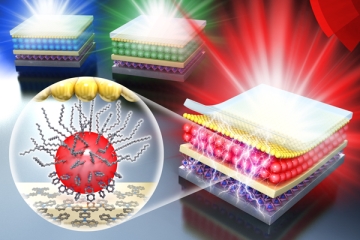
ETRI Improves QLED Efficiency with Quantum Dot Surface Substitution Technology
While OLED utilizes organic materials, QLED leverages semiconductors, specifically quantum dots, instead of organic materials. Through the development of QLED hole injection improvement technology, ETRI has developed core technology that can enhance the brightness, current, and power efficiency of QLEDs by modifying the molecular sieves that constitute the quantum dot surface. In the device that comprises a QLED display, electrons and holes injected from both electrodes meet at the quantum dots to emit light. However, while electrons move freely up and down, holes face difficulty in movement due to slower energy transfer between the electrode and quantum dots. This electron-hole imbalance problem degrades the performance of quantum dot light-emitting diodes and shortens the device lifespan, necessitating research to address this issue.
2019.04.17by 이수민 기자
.jpg)
Samsung Electronics Successfully Develops EUV-Based 5nm Foundry Process
Samsung Electronics has successfully developed a 5-nanometer process based on EUV technology. Additionally, the company plans to ship 7-nanometer products by this month and complete design of 6-nanometer products with mass production targets by the end of this year. Samsung Electronics' strategy is to strengthen foundry technology leadership and competitiveness in the system semiconductor business that will lead the fourth industrial revolution through expanding its ultra-fine process portfolio. Samsung Electronics plans to expand its MPW service to the latest 5-nanometer process, enabling customers to manufacture advanced semiconductors more conveniently. Additionally, through SAFE, a foundry support program, the company provides design infrastructure including PDK, DM, and EDA to assist with 5-nanometer process-based product design beyond design assets. Fabless customers can leverage these offerings to design products more easily and quickly, and accelerate new product launch timelines.
2019.04.17by 이수민 기자

Intel Unveils Next-Generation 'Core Ultra Series 3' and vPro Platform for Enterprise PCs
Intel has officially unveiled the "Intel Core Ultra Series 3" for next-generation enterprise PCs and the latest vPro platform, addressing a wide range of demands from enterprise notebooks to high-performance workstations.
2026.03.26by 배종인 기자

ROHM Launches ESD Protection Diode Compatible with High-Speed Interfaces of 10Gbps or Higher
Semiconductor specialist ROHM has developed the 'RESDxVx series' of ESD (electrostatic discharge) protection diodes capable of responding to next-generation high-speed data communication environments exceeding 10Gbps, simultaneously enhancing both signal quality maintenance required in high-speed interfaces and IC protection performance.
2026.03.26by 배종인 기자











