


Saenggiwon develops a hybrid heat-dissipating material that doubles thermal conductivity by combining graphite powder.
 Published2019.05.20 12:01
| Composite graphite powder with metal materials such as copper
| Achieving thermal conductivity of 600 W/mK
In order for electronic products to maintain their performance for a long time, the role of heat dissipation components that effectively control and dissipate the heat generated during operation is important.
Approximately 56% of electronic component failures are caused by excessive heat generation, and if the operating temperature rises by 10℃ above the critical value due to heat dissipation issues, the product lifespan is reduced by an average of two times.
Recently, as electronic components used in electric vehicles, IT, and home appliances have become more high-performance, high-output, highly integrated, and miniaturized, their operating temperatures are expected to rise from the current 120-200℃ to up to 400℃ in the future, and thus research on the development of high-performance heat-dissipating materials is becoming increasingly important.
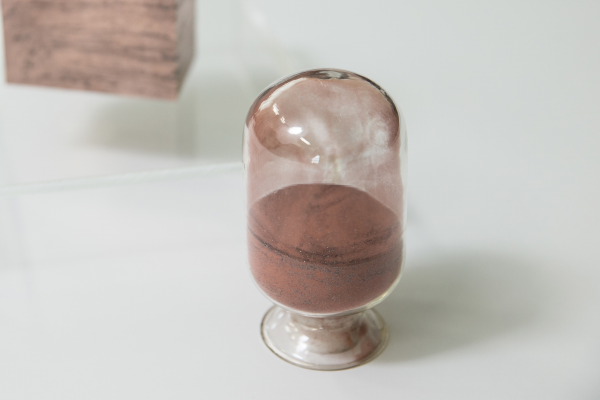
The Korea Institute of Industrial Technology (KITECH) announced on the 20th that it has developed a 'metal hybrid heat-dissipating material' that improves thermal conductivity by 1.5 to 2 times by compounding graphite powder with metal materials such as copper and aluminum, which are mainly used as heat-dissipating materials.
The heat dissipation material developed by Dr. Oh Ik-hyeon's research team in the EV Components and Materials Group has a thermal conductivity of 600 W/mK, which is 1.5 to 2 times higher than that of copper (400 W/mK) and aluminum (220 W/mK) single materials, allowing for rapid heat dissipation.
Also, compared to existing single commercial materials, it is less likely to cause component defects. The coefficient of thermal expansion is about 1.5 to 2 times lower, so there is less deformation due to heat, and the specific gravity is about 50%, which is advantageous for reducing the weight of electronic products.
The key to manufacturing the developed heat-dissipating material lies in the direction control process technology of graphite powder and the sintering process that combines metal materials and graphite powder.
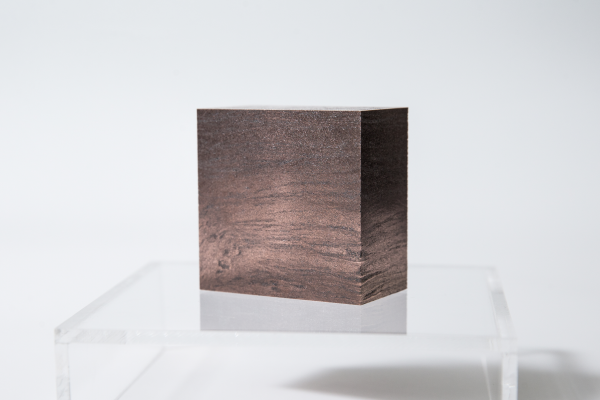
Graphite has a unique physical property called anisotropy, which means that the physical properties of the object differ depending on the direction. By utilizing the sintering process, the graphite powder can be controlled in a direction with excellent thermal conductivity to form a layered structure.
This structure not only improves thermal conductivity, but also allows heat to be dissipated in a specific direction, preventing problems such as fusing or warping when electronic components heat up.
During the three-year development period, the research team focused on expanding the usability of existing heat-dissipating materials such as copper (Cu), aluminum (Al), and silver (Ag) by studying the composition ratio with graphite, directionality control rate, and optimal process conditions.
As a result, we have secured the core technology for manufacturing heat-dissipating materials that can provide different thermal properties, such as thermal conductivity, to each material according to the specifications of electronic products.
.png)
It is expected that Cu-based heat-dissipating materials with a thermal conductivity of 550 to 640 W/mK will be widely used in the power semiconductor and system semiconductor fields, Al-based heat-dissipating materials with a thermal conductivity of 250 to 320 W/mK will be widely used in the LED field, and Ag-based heat-dissipating materials with a thermal conductivity of 550 to 600 W/mK will be widely used in the switching element field such as transistors.
The research team completed domestic patent registration in April 2019, and in May, applied for a patent in the United States, which has the world's largest heat dissipation market.
Dr. Oh Ik-hyeon said, “With pure domestic technology, we have localized heat dissipation materials that have been dependent on imports, and through process control, we have achieved world-class standards.He said, “We have succeeded in achieving high thermal conductivity,” and “We plan to focus on research and technology transfer for the commercialization of customized heat-dissipating materials that can be applied to new industries such as electric vehicles, 5G, and smart grids in the future.”
Meanwhile, the global market for heat-dissipating components and materials was formed to be approximately 4 trillion won in 2019 and is growing by more than 300 billion won annually, while the domestic market is approximately 800 billion won.
Comments
Related news
Samsung Electronics Launches Consumer NVMe SSD '970 EVO Plus'
Samsung Electronics has launched the NVMe (M.2) SSD 970 EVO Plus series in global markets across 50 countries, including South Korea, the United States, China, and Germany. The 2TB model, the maximum capacity of the 970 EVO Plus series, achieves the highest speed among M.2 SSDs based on the NVMe interface. The model is equipped with fifth-generation 512Gb 3-bit V-NAND, 2GB LPDDR4 mobile DRAM in the 10-nanometer class, a Phoenix controller with nickel coating for enhanced heat dissipation, and firmware optimized for speed improvement and autonomous temperature management functions.
2019.01.28by 이수민 기자
Saenggiwon Develops Variable Architecture EV Platform, "Even EVs Can Be Customized"
The Korea Institute of Industrial Technology has developed a "variable architecture electric vehicle platform" that enables the production of various types of industrial EVs such as shuttles, logistics vehicles, and cleaning vehicles on a single EV platform. This platform features a variable structure that allows for flexible adjustment of the wheelbase distance between the front and rear axles of the vehicle. Through this platform, manufacturers can now produce diverse types of EVs in small quantities while reflecting the intended use, driving range, and vehicle price desired by customers.
2019.01.31by 이수민 기자
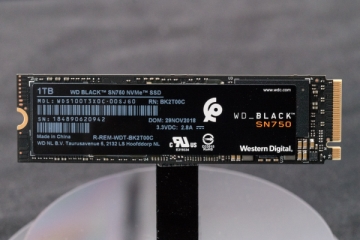
WD Launches NVMe SSD That Beats the Heat for Hardcore Gamers
NVMe SSDs require essential throttling design that regulates performance to maintain operating temperatures within acceptable ranges in order to support fast data read and write speeds. The WD Black SN750 NVMe SSD will collaborate with EKWB, a PC cooler manufacturer, to add an option enabling EKWB heatsinks on products ranging from 500GB to 2TB capacity starting from Q2 2019. The heatsink dissipates heat generated during SSD operation. Therefore, high read and write performance can be maintained over extended operating periods compared to when a heatsink is not used.
2019.03.05by 이수민 기자

Intel Unveils Next-Generation 'Core Ultra Series 3' and vPro Platform for Enterprise PCs
Intel has officially unveiled the "Intel Core Ultra Series 3" for next-generation enterprise PCs and the latest vPro platform, addressing a wide range of demands from enterprise notebooks to high-performance workstations.
2026.03.26by 배종인 기자

ROHM Launches ESD Protection Diode Compatible with High-Speed Interfaces of 10Gbps or Higher
Semiconductor specialist ROHM has developed the 'RESDxVx series' of ESD (electrostatic discharge) protection diodes capable of responding to next-generation high-speed data communication environments exceeding 10Gbps, simultaneously enhancing both signal quality maintenance required in high-speed interfaces and IC protection performance.
2026.03.26by 배종인 기자











