



Controversy Over Tada Ban Law, Impact on Autonomous Vehicles
 Published2019.12.10 18:02
Concerns of Falling Behind in Autonomous Vehicle Era
U.S. CTA Gives F Rating to Korean Vehicle-Sharing Sector
Following the 'carpooling' controversy in early this year, the 'Tada' controversy is heating up public opinion at year-end.
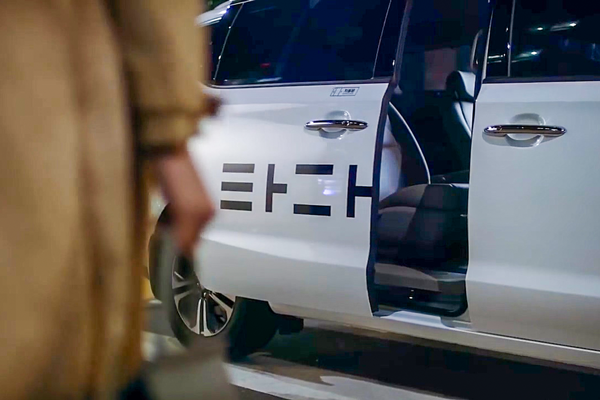
to the Passenger Transport Business Act (Image=Tada)
Tada is a rental car-based ride-sharing service operating in the Seoul metropolitan area, and if the amendment to the Passenger Transport Business Act passes the National Assembly plenary session, it will be unable to provide services as currently operated.
Escalating Controversy Surrounding Tada
The controversy began when the Ministry of Land, Infrastructure and Transport announced on July 17 the 'Taxi System Reform Plan for Innovation Growth and Co-prosperity Development'.
According to this plan, platform operators like Tada must obtain business permission while paying a portion of revenues as social contribution funds. These contribution funds are used to purchase existing taxi licenses and reduce vehicle numbers, and Tada's contribution amount would be approximately 100 billion won even by simple calculation.
In response, VCNC, which operates Tada, held a one-year anniversary press conference on October 7 announcing plans to expand service nationwide by increasing vehicles to 10,000 units and drivers to 50,000 by 2020. VCNC CEO Park Jae-wook stated, "If taxi licenses are obtained by paying per-vehicle contribution funds, there will be limitations in satisfying users."
The Ministry of Land, Infrastructure and Transport warned it would revise the enforcement ordinance of the Passenger Transport Business Act that serves as the basis for Tada's service to clarify exceptional allowance ranges.
On October 28, the prosecution indicted Lee Jae-woong, CEO of Socar, VCNC's parent company, without detention for violating the Passenger Transport Business Act. This followed a complaint filed in February by current and former executives of the Seoul Individual Taxi Association against Lee and Park to the Seoul Central District Prosecutors' Office for violations of the Passenger Transport Business Act.
Tada Ban Law Implementation Imminent
The controversy intensified as the amendment to the Passenger Transport Business Act, called the Tada ban law, passed through the Road Transport Division and full session of the National Assembly's Land, Infrastructure and Transport Committee on the 5th and 6th. If it passes the National Assembly plenary session, Tada will be unable to provide services as currently operated from the second half of 2021, after the 18-month implementation grace period expires.
Tada operated based on enforcement ordinances that, while the current Passenger Transport Business Act prohibits rental car operators from arranging drivers when renting vehicles, exceptionally permit the rental of 'passenger cars with seating capacity of 11 to 15 persons'.
If the amendment passes, the exceptional allowance range will be significantly reduced. Businesses operated in the same manner as Tada will be limited to consumers renting vehicles for 6 hours or more for tourism purposes, and vehicle rental and return locations will be restricted to airports and ports.
For Tada to continue providing services as it currently does, it has no choice but to contract with existing taxi operators for franchise operations or purchase taxis and hire drivers to transition into a taxi operator.
Words, Words, Words
CEO Lee Jae-woong appealed on the 9th through SNS to stop the Tada ban law. Lee stated, "No matter how we say this is not a Tada ban law, if this law passes, Tada must shut down," and called the amendment to the Passenger Transport Business Act a "Tada ban law, mobility ban law, innovation ban law, red flag law."
He further argued, "Tada has no intention of becoming a taxi service," and stated, "Telling a new industry that it isn't innovative after just one year and asking it to come under a system designed by politicians is an abuse of power. It is the people, not members of Congress or ministers, who judge whether something is innovative or not."
On the 10th, Kim Sang-do, director of integrated transportation policy at the Ministry of Land, Infrastructure and Transport countered, "Don't lead a dichotomous debate asking whether Tada will kill or save innovative industries, but present concrete co-prosperity alternatives with taxi operators."
Policy Director Kim stated, "We asked the taxi industry to refrain from collective action against Tada, and the taxi industry was in a position to accept the situation until the system is institutionalized by year-end," and added, "If Tada increases its fleet numbers without institutionalization, conflict with the taxi industry is absolutely inevitable."
He continued, "The current operating model of Tada is difficult to ensure sustainability and scalability due to illegality concerns and conflicts with taxi operators." The government argued that if the bill is not institutionalized as Tada claims, Tada may have to discontinue its current business operations, and the government has prepared an improvement plan to prevent such a situation and allow Tada to operate under regulatory framework.
Unproductive Debate Must Now End
Tada is currently under attack from the executive, legislative, and judicial branches.
This suggests the government's policy is to allow vehicle-sharing services only for the number of taxis reduced through emissions reductions. The question is whether such a policy will actually help resolve the controversy surrounding Tada and further promote activation of the vehicle-sharing industry.
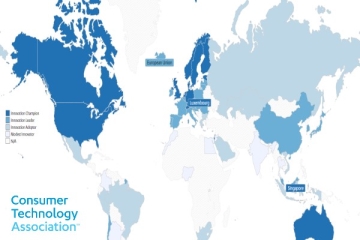
The Consumer Technology Association (CTA) announced the '2019 International Innovation Scoreboard' announced at CES 2019 in January, selecting 16 countries as innovation champions. Korea was not included. While Korea received an A+ in R&D, it received an F, a failing grade, in the vehicle-sharing sector.
Autonomous vehicles are also linked to this issue. If autonomous vehicles become activated, the vehicle-sharing industry will become even more activated. Numerous companies in sectors including complete vehicles, parts, and IT, as well as governments of various countries, view autonomous vehicles as future growth engines and are sparing no investment.
It is important to develop technological capabilities, but equally important to create a venue where technological capabilities can be demonstrated.
Our government also announced the '2030 Future Vehicle Industry Development Strategy' on October 15, promoting the launch of Level 4 autonomous vehicles in 2024 and infrastructure development for Level 4 autonomous driving on major national roads by 2027 to achieve world-first commercialization.
While opinions vary on whether Tada is truly an innovative service, many agree that it is a transitional model for the sharing economy. If autonomous vehicles become commercialized, they may operate under models similar to current Tada. Autonomous vehicles require neither drivers nor licenses. However, there are no specific regulations announced regarding this, unlike Tada.
Some critics argue that the government is hindering new industry development while failing to address chronic problems in the taxi industry. Policy Director Kim's statement asking Tada to present concrete co-prosperity alternatives with taxi operators is also being criticized. The argument is that co-prosperity alternatives between the vehicle-sharing and taxi industries should come from the government, not from a single company like Tada.
The Ministry of Land, Infrastructure and Transport will discuss follow-up institutional improvement measures with platform-related companies starting on the 12th. At this meeting, discussions and input gathering will be held regarding contribution fund calculation standards, annual number of taxi permits, and other matters. The ministry also announced it will provide convenience and benefits to startup companies with insufficient capital compared to Tada, to the extent that entry costs are almost nonexistent.
The government must not allow itself to lose future growth industries while attempting to protect the taxi industry from short-term revenue declines.
Comments
Related news
[CES 2019] CTA Unveils 16 Innovation Champion Countries: “Korea Is Not On the List”
The Consumer Technology Association announced the 16 countries with the most excellent innovation environments among 61 countries worldwide during the keynote address at 'CES 2019'. According to the 2019 International Innovation Scorecard released by the CTA, 16 countries including Australia, Canada, Denmark, Estonia, Finland, Germany, Israel, Luxembourg, Netherlands, New Zealand, Norway, Singapore, Sweden, Switzerland, United Kingdom, and United States made the list as 2019 Innovation Champions. South Korea was ranked in the Innovation Leaders category, which follows the Innovation Champions.
2019.01.14by 이수민 기자
South Korea aims to have Level 4 autonomous driving infrastructure in place by 2027.
The automotive market is undergoing changes toward eco-friendliness, intelligence, and service-oriented business models due to the Fourth Industrial Revolution and strengthened environmental regulations. The government held a declaration ceremony for a national vision on future automobiles and announced the 2030 Future Vehicle Industry Development Strategy in coordination with related ministries. After holding a total of 21 discussion sessions with automobile OEMs and parts suppliers, telecommunications, software, and semiconductor companies, automotive-related labor unions, and academic societies, the government established the 2030 Future Automobile Industry Development Strategy.
2019.10.30by 이수민 기자

The autonomous vehicle market will grow explosively starting in 2025
Recent advances in AI technology have been significantly driven by deep learning technology. Accordingly, big data based on high-quality data has emerged as an important factor, and major advanced nations are strengthening policy support by incorporating the big data sector into their AI technology development strategies. On the 29th, IRS Global published a report analyzing domestic and international core technology development trends and business analysis for artificial intelligence (AI) in the automotive and robotics sectors. According to the report, AI technology is growing into a core technology that will transform not only industry but human life itself, and the ability to secure and leverage AI technology will now determine the competitiveness of companies, nations, and individuals.
2019.10.30by 이수민 기자

[Technical Contribution] Caltera: "Evolution of Precision Sensing, UWB Infrastructure Enhances Parking Safety"
Discussing new possibilities in parking assistance and precision sensing with UWB, Lee Sang-min, Korea Branch Manager at Caltera.
2026.10.23by 편집부
Professor Jeong Gu-min from Kookmin University, "QNX RTOS will become an important foundational technology in the physical AI era"
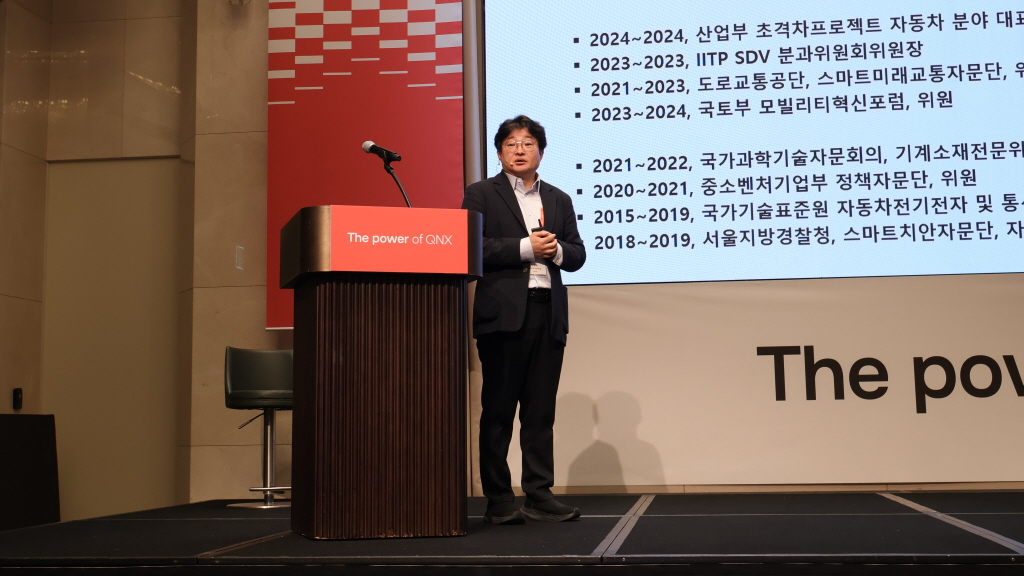
As software-defined vehicles (SDV) establish themselves as a new standard in the automotive industry, forecasts indicate that future competitiveness will be determined not by vehicle hardware but by software platforms and AI utilization capabilities. With the automotive industry rapidly transitioning to centralized architecture and AI-based development systems, an analysis suggests that how effectively vehicle platforms can be simplified and operated cost-efficiently will become core competitiveness for next-generation SDV and AI-defined vehicles. Professor Jeong Gu-min from Kookmin University emphasized at QNX TechForum Korea 2026 that "the automotive industry is now shifting from hardware competition to software ecosystem competition," highlighting that API-centric platforms and AI utilization will determine success or failure in the future automotive industry.
2026.10.23by 배종인 기자











