


WD, Fifth-Generation 3D NAND 'BiCS5' Products Launch in H2 2020
 Published2020.02.04 09:32
Across Wafers with Second-Generation
Multi-tier Memory Hole Technology
Full-Scale Commercial Production in H2 2020
Western Digital (WD) announced on the 4th that it has successfully developed BiCS5, fifth-generation 3D NAND technology.
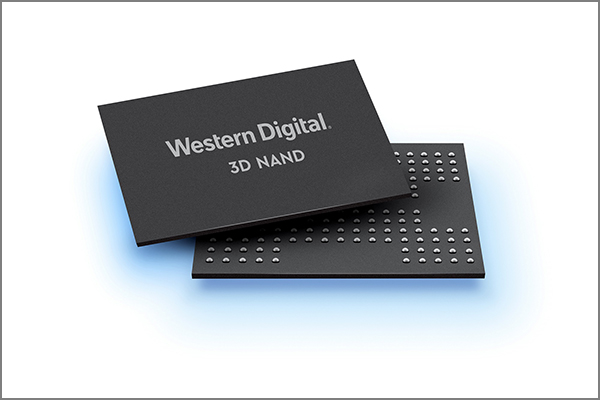
BiCS5, based on TLC and QLC technology, addresses the increasing volume of data related to connected cars, mobile devices, and AI.
WD has begun initial production of 512 gigabit (Gb) BiCS5 TLC chips. Full-scale commercial production of BiCS5 is expected to commence in H2 2020. BiCS5 TLC and BiCS5 QLC will be offered in various capacities including 1.33 terabit (Tb).
BiCS5 is the highest-density, most advanced 3D NAND technology developed by WD to date. Through second-generation multi-tier memory hole technology and improved engineering processes, as well as enhancements to 3D NAND cells, it significantly increases the horizontal density of cell arrays across wafers.
By combining this lateral scaling technology with 112-layer vertical memory technology, BiCS5 can store 40% more bits per wafer compared to WD's 96-layer BiCS4 technology. Performance is also enhanced, with BiCS5 delivering 50% faster input/output (I/O) performance compared to BiCS4.
Comments
Related news
Dell Launches High-End Storage with Intel Optane SSDs
Dell Technologies has launched a new PowerMax high-end storage system. The new Dell EMC PowerMax is equipped with dual-port Intel Optane SSDs, marking the first application of Storage Class Memory technology in persistent storage. The Dell PowerMax consists of PowerMax 32Gb Fibre Channel I/O modules, 32Gb Connectrix switches, 32GB NVMe host adapters, and various directors. Dell EMC PowerPath software is also integrated, being the first enterprise-class SAN multipath software to support NVMe-oF.
2019.09.25by 이수민 기자
WD Launches 6 New SanDisk Mobile Storage Models
As an era has arrived where anyone can produce high-quality 4K content and similar materials, the demand for fast and secure storage of large-capacity data is growing. Western Digital announced six types of SanDisk mobile storage solutions catering to both professional and general users on the 30th. New product lines including the SanDisk Extreme Pro CF Express Card Type B and SanDisk Ultra USB Type-C Flash Drive were unveiled on this occasion.
2020.01.30by 이수민 기자
SK Hynix Announces 2019 Earnings: "Demand is Recovering"
SK Hynix announced on the 31st that it achieved annual sales of 26.99 trillion won and operating profit of 2.71 trillion won for the past year. As global economic uncertainty expanded due to global trade conflicts, increased customer inventories and conservative purchasing policies led to weakened demand and price declines, resulting in decreased operating performance compared to the previous year. Although recent demand trends are improving, elevated complexity and uncertainty persist compared to the past, and the company plans to implement a prudent production and investment strategy for 2020.
2020.01.31by 이수민 기자

Intel Unveils Next-Generation 'Core Ultra Series 3' and vPro Platform for Enterprise PCs
Intel has officially unveiled the "Intel Core Ultra Series 3" for next-generation enterprise PCs and the latest vPro platform, addressing a wide range of demands from enterprise notebooks to high-performance workstations.
2026.03.26by 배종인 기자

ROHM Launches ESD Protection Diode Compatible with High-Speed Interfaces of 10Gbps or Higher
Semiconductor specialist ROHM has developed the 'RESDxVx series' of ESD (electrostatic discharge) protection diodes capable of responding to next-generation high-speed data communication environments exceeding 10Gbps, simultaneously enhancing both signal quality maintenance required in high-speed interfaces and IC protection performance.
2026.03.26by 배종인 기자











