


Teledyne DALSA Launches Machine Vision Camera with Enhanced Detection Capabilities through Real-time Image Upconversion
 Published2020.02.21 15:33
Reduce system costs with a maximum line rate of 150KHz
Enhanced detection capability through real-time upward image changes
One of the biggest challenges in the field of machine vision is increasing resolution while maintaining or reducing system-level costs.
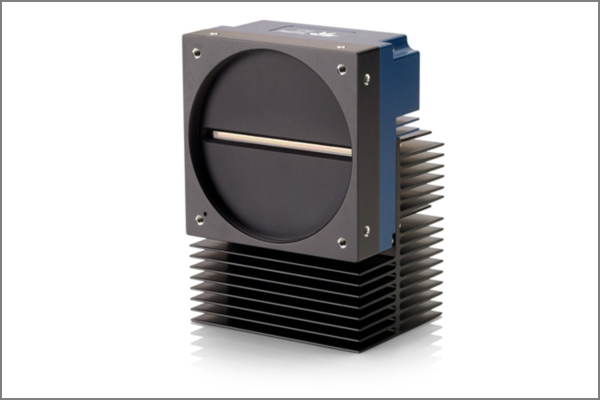
Accordingly, Teledyne DALSA announced on the 21st that it has launched the 'Linea HS 32k TDI Camera,' a charge domain CMOS TDI camera utilizing pixel offset technology.
Linea HS 32k uses two 16k/5μm TDI arrays with pixel offsets. Two 16k/5μm images are captured in real time and then reconstructed to produce a high-resolution 32k/2.5μm image. Through this up-conversion, the detection capability of fine pixel defects is significantly improved.
Teledyne DALSA’s patent-pending pixel offset technology allows for the use of conventional lighting and 16k/5μm lenses while maintaining MTF and responsiveness with a small physical pixel size.
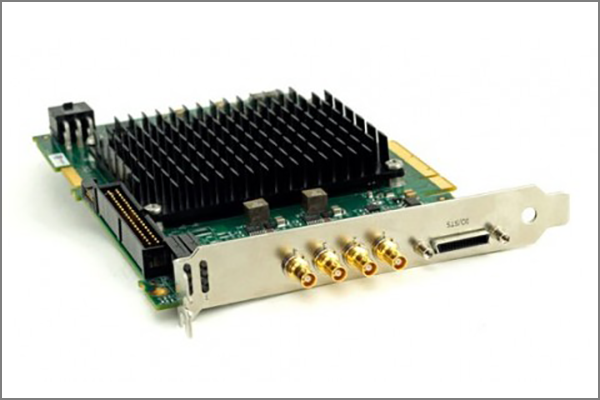
Using the new camera together with Teledyne's 'Xtium 2 CLHS high-performance frame grabber series' can significantly improve data throughput. The next-generation CLHS fiber interface provides reliable, high-throughput data transmission.
Fiber optic cables reduce costs, have a maximum cable length of 300m, and are unaffected by electromagnetic radiation in industrial environments. The Xtium 2 product family features a PCI Express Gen 3 x8 platform.
Comments
Related news
Silicon Labs Launches Si834x Family of Isolated Smart Switches
Silicon Labs has launched a portfolio of isolated smart switches designed to drive any load in harsh industrial environments. The Si834x product family is suitable for driving resistive and inductive loads such as solenoids, relays, and lamps used in industrial control systems including PLCs, I/O modules, relay drivers, and servo motor controllers. For safety, the Si834x product family employs CMOS-based isolation technology and provides superior reliability and performance compared to conventional optocoupler-based isolation technology, including CMTI characteristics of 100kV/μs or higher. It also supports high-side and low-side switch options, low on-resistance, continuous current up to 700mA compliant with IEC 61131-2 standard, comprehensive protection and diagnostic reporting, advanced configuration, and monitoring and control functions for industrial automation systems.
2019.08.29by 이수민 기자
ON Semiconductor ADAS Image Sensor Shipments Surpass 100 Million
OmniVision Technologies announced that shipments of the AR0132AT image sensor for driver assistance applications have surpassed 100 million units. In particular, Subaru has adopted OmniVision's 1.2-megapixel CMOS sensor for its ADAS solution EyeSight. OmniVision and Subaru plan to continue collaborating on the development of camera-based ADAS technology in accordance with their shared vision of improving safety and achieving zero traffic fatalities in the near future.
2019.10.30by 최인영 기자
.jpg)
Mouser and TI to Supply the IWR1843 Industrial Radar Sensor
Mouser Electronics supplies TI's IWR1843 industrial radar sensor. An ultra-wideband millimeter-wave sensor produced on 45nm RFCMOS technology, it is utilized in robotics, traffic monitoring, people detection and counting, factory automation, and material handling. A frequency-modulated continuous-wave radar sensor integrated on a single chip, it operates in the 76–81 GHz millimeter-wave spectrum.
2020.01.20by 최인영 기자
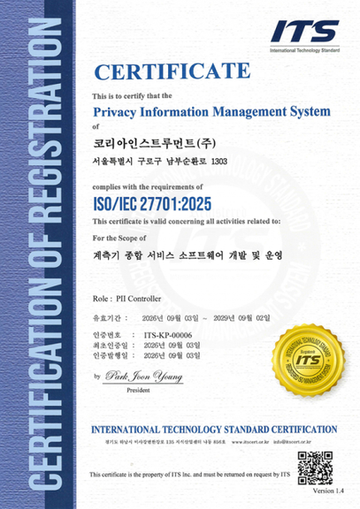
Korea Instrument, KOLAS Accredited Calibration Agency First to Simultaneously Acquire ISO/IEC 27,001·27,701
Korea Instrument has become the first among KOLAS accredited calibration agencies to simultaneously acquire ISO/IEC 27,001 and ISO/IEC 27,701 certifications. Through its proprietary platforms CWIZ Enterprise and CWIZ Partners, the company has embedded information security and personal data protection requirements across all business processes including customer information, equipment data, and calibration reports, with plans to continuously advance its management system through regular audits and security inspections.
2026.10.12by 배종인 기자
TeamViewer One, IT Incident Automation Workflow and Resolution Center Enhanced
TeamViewer has added IT incident automation capabilities and an advanced Resolution Center to its integrated digital workplace management platform 'TeamViewer ONE'. Recurrent service disruptions, configuration errors, and capacity shortages are automatically handled according to preset policies, and device status verification through script deployment can be managed in a unified interface, significantly reducing repetitive tasks for IT teams.
2026.10.12by 배종인 기자











