



Cybersecurity Crisis Response Drill, Participating Companies Respond Faster
 Published2022.01.17 14:33
DDoS Attack Response, Large Enterprises Respond Faster Than SMEs
The Ministry of Science and ICT announced the results of the second half cybersecurity crisis response drill conducted in November last year.
In the hacking email response drill, the infection rate of returning participating companies was 3.6%, lower than the 8.0% of newly participating companies, confirming that response capabilities have improved.
It was found that large enterprises respond to DDoS attacks faster than SMEs.
Among 50 companies that participated in simulated hacking infiltration training, 32 companies were confirmed to be capable of critical information theft, and related vulnerabilities were immediately removed.
As cyber threat crises have recently intensified, the Ministry of Science and ICT conducted simulated drills targeting private enterprises in the same manner as actual cyber attacks in cooperation with the Korea Internet & Security Agency (KISA).
The second half 2021 simulated drill was conducted from November 1st last year for approximately three weeks, with the participation of 285 companies and 93,257 employees.
The simulated drill consisted of △checking response procedures following hacking email transmission △DDoS attack and recovery checking △simulated infiltration targeting companies' websites and servers.
■Checking Response Procedures Following Hacking Email Transmission
The hacking email transmission and response procedure checking drill was conducted targeting employees.
The drill was conducted by sending hacking emails impersonating recent issues or internal employees such as △program update notices △guidance on in-house COVID-19 vaccination targets, and inducing employees to install malware by reading the emails and clicking on attachments.
The hacking email open rate was 16.7% and the infection rate was 5.4%, each decreasing by 9.1%p and 2.2%p compared to the first half of the year.
The infection rate of returning participating companies was 3.6%, lower than the 8.0% infection rate of newly participating companies, indicating that response capabilities have improved.
The Ministry of Science and ICT additionally conducted information security training including ransomware cases, prevention measures, and recovery procedures.
■DDoS Attack and Recovery Checking
The DDoS drill was conducted by performing actual DDoS attacks on the websites of 44 participating companies.
Detection time and response time of each company's security equipment were measured, and response capabilities against database load attacks and other threats were checked.
Large enterprises showed relatively superior performance compared to SMEs (detection shortened by 4 minutes, response by 7 minutes).
Accordingly, the Ministry of Science and ICT provided guidance on response capability enhancement training for SME security personnel who showed insufficient DDoS attack response, and information on utilizing KISA's DDoS Cyber Evacuation Center.
■Simulated Infiltration Targeting Companies' Websites and Servers
The simulated infiltration drill was conducted by having white hat hackers attempt to infiltrate company servers to verify security threat exposure.
Among a total of 45 companies, 40 companies discovered and removed 163 hidden web vulnerabilities, preventing hacking threats in advance.
In particular, simulated infiltration attempts were conducted targeting companies' web servers and business servers.
Among 50 participating companies, 32 companies (exceeding 60%) were confirmed to be capable of acquiring system control rights and stealing critical information, and related vulnerabilities were immediately removed.
Hong Jin-bae, Director of Information Protection Network Policy, stated: "Following the discovery of critical vulnerabilities in Apache Log4j, cyber threats are escalating globally," and emphasized that "many companies actively participate in government-conducted simulated drills to minimize damage."
Meanwhile, the Ministry of Science and ICT plans to develop scenarios such as increased threats targeting IoT, theft of metaverse user information, and illegal sales following privilege theft related to NFTs, which were derived from this year's cyber threat outlook analysis.
Additionally, it announced plans to establish a customized continuous hacking simulated drill platform and guide companies participating in the drills to note corporate activities for information protection in information protection disclosures.

Related news
.png)
Databricks Unveils Open AI Security Monitoring 'Lakewatch'
Databricks entered the security market on March 24 by unveiling LakeWatch, an open-source agentic SIEM. The core functionality of this product is to integrate and analyze security, IT, and business data in a single environment to support AI-based threat detection and investigation. The company explained that it reduces the limitations of existing security operations centers, which have had to forgo some data due to high cost structures, and enables large-scale data analysis and automation based on open formats and ecosystems. LakeWatch is currently offered as a private preview, with Adobe and Dropbox mentioned as early customers. Databricks also announced an expanded partnership with Anthropic as well as the acquisition of Antimatter and SiftD.ai.
2026.03.26by 배종인 기자
Kaspersky Unveils Revamped 'NEXT' Combining SOC Integrated Management and AI Analytics
As enterprises increase demand for integrated management and automation in the construction and operation of Security Operations Centers (SOC), Kaspersky has disclosed updates to its B2B security product suite 'Kaspersky Next'. This update expands EPP, EDR, XDR, and SIEM integration through a single console based on OSMP, incorporates AI capabilities such as DLL hijacking detection and suspicious account takeover behavior identification, and includes integration with generative AI assistant tool KIRA. The company stated that in large-scale deployment environments, EDR Expert can reduce resource requirements by up to 30%, and XDR Expert by up to 60%.
2026.03.25by 배종인 기자
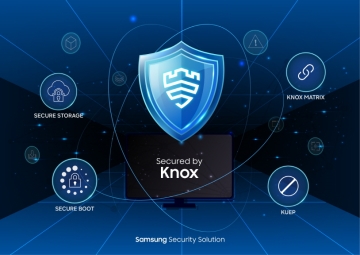
Samsung Electronics Smart Monitor Acquires First International Certification… Expanding Application Scope Following TVs
Samsung Electronics has received Common Criteria (CC) certification for 'Samsung Knox,' a security solution applied to its 2026 smart TVs and smart monitors. The smart TV has achieved certification for 12 consecutive years, while the smart monitor obtained industry-first certification this time. The evaluation was conducted focusing on core functions including kernel integrity monitoring, phishing site blocking, and unauthorized execution prevention. The company plans to expand the scope of security certification beyond TVs to monitors, responding to growing personal information protection requirements as connected devices proliferate.
2026.03.25by 배종인 기자

Teori Selected as AI Voucher Supplier… Supplying LLM Security Solutions
Cybersecurity company Theori has been selected as a supplier for the 2026 AI Voucher Support Program. The company plans to address information leakage and regulatory compliance issues that arise during generative AI adoption through its LLM security solution 'AlphaPrism'. The solution is designed to analyze the context of prompts and source code to identify sensitive information such as personal data and authentication keys, and to continue AI utilization through masking methods rather than simple blocking. The government's AI Voucher Program supports demand enterprises with up to 200 million won per project for solution purchase costs. Based on recent application cases at POSCO DX, Theori plans to respond to expanding demand for enterprise AI security.
2026.03.24by 명세환 기자
Cisco Unveils Agentic AI Security Framework at RSAC 2026
Cisco announced security capabilities targeting the entire process of enterprise AI agent adoption at RSAC 2026 held in San Francisco, USA. The core approach involves applying identity management and the principle of least privilege to AI agents similar to humans, testing for attack vulnerabilities before deployment, and automating threat detection and response through Splunk-based security monitoring during operations. Cisco also unveiled the "AI Defense: Explorer Edition" security validation tool for developers, the open-source framework "DefenseClose," and agent-type SOC functionality. As pilot deployments are increasing but actual operational transitions remain limited, this announcement is interpreted as focusing on how enterprises can implement security frameworks during the commercialization process of AI agents.
2026.03.24by 명세환 기자











