


ASML: "Collaboration within the semiconductor ecosystem is essential."
 Published2022.02.09 16:29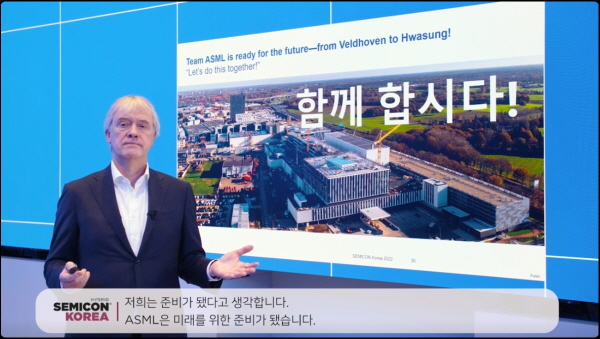
Semicon Korea 2022 Keynote Speech
Large-scale investment in DUV research and development planned
In his keynote address, ASML CEO Peter Wennink emphasized the importance of an ecosystem of collaboration in the increasingly complex modern semiconductor industry.
Peter Wennink, CEO of ASML, gave a keynote speech on the topic of “Innovation through Collaboration” at “SEMICON Korea 2022” on the 9th.
He expressed his commitment to collaboration, saying that to secure new solutions, academia should collaborate with suppliers to share risks and rewards, enabling suppliers to invest in and pursue innovation and secure profitability.
Peter Bennink said ASML will align its R&D programs to support customers in achieving their roadmaps through collaboration with customers and early insights into their innovation requirements for lithography and geometric scaling.
The importance of digital transformation is growing, and discussions on cloud computing, 5G infrastructure, and the intelligent edge that will drive AI are also hot topics.
Five years ago, in 2016, the estimated number of Internet-connected devices in 2020 was 25 billion, but the actual number is estimated to be around 40 billion.
It is estimated that by 2030, it will reach approximately 350 billion.
In addition, semiconductors are expected to have an average annual growth rate of about 7-8% until the end of the 2020s. The manufacturing industry is worth approximately $1 trillion.
In line with market trends, ASML announced that it will invest more in DUV research and development (R&D) than ever before in 2022.
We introduced the DUV equipment NXT:2050i with overlay improvement, reliability, and productivity as our core.
Eighteen days after its introduction, daily production wafers reached 5,000, demonstrating the maturity of the 2050i.
The DUV roadmap is driven by continuous improvement in innovation, productivity, and overlay.
ASML said it plans to merge its dry systems and bring its dry products, ArF and KrF, onto the NXT platform.
KrF productivity on the NXT platform is expected to reach 400 wafers per hour, with subsequent improvements in overlay.
One of the reasons for expanding DUV production capacity is that dry DUV solutions are required for and account for the majority of IoT applications.
In the case of EUV, the current WPD (wafers per day) is significantly exceeding 2,000 due to HVM (high volume manufacturing).
System availability is approximately 88%, but reaches 90% for most ASML systems.
He said that the reason for the high volatility is that EUV technology is not yet mature enough, and that it will soon improve, ultimately reaching a level where it can exceed 95% availability, similar to DUV.
Meanwhile, ASML has been strengthening its presence in Korea with offices in Cheongju, Icheon, Pyeongtaek, and Hwaseong.
The company plans to increase its workforce from the current 1,400 to over 2,000 by 2029 and announced that it will invest between $180 million and $200 million in its new Hwaseong campus.
Office and Global Education CenterIncludes local repair center facilities.
Comments
Related news
Dutch Government Halts ASML EUV Equipment Exports to China: "Why?"
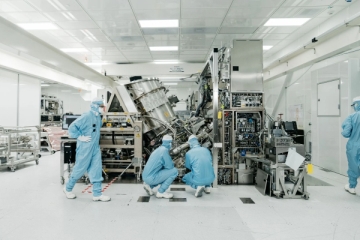
ASML, the world's second-largest semiconductor equipment manufacturer, is facing restrictions on EUV equipment exports to China due to a hold on authorization from the Dutch government. This authorization hold came about because the U.S. administration under President Joe Biden requested sales restrictions from the Dutch government citing national security concerns. The U.S. is reportedly continuously conveying a message to the Dutch government that "restricting EUV equipment exports to China may only create trade friction with China, but it strengthens the alliance with the United States."
2021.07.19by 이수민 기자
ASML to Invest ₩240 Billion in Hwaseong Semiconductor Cluster
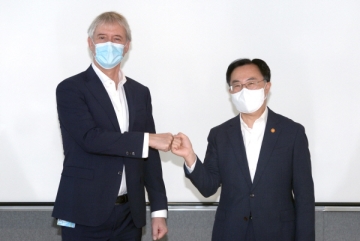
Netherlands-based ASML, the world's leading semiconductor exposure equipment manufacturer, is investing 240 billion won in the Hwaseong semiconductor cluster, and this is expected to strengthen the supply stability of domestic advanced equipment, materials, and components.
2021.11.18by 배종인 기자
ASML Fire, EUV Supply Disruption
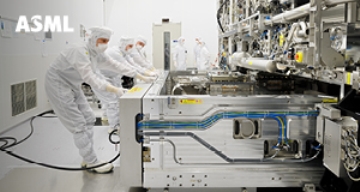
A fire at ASML's facility has caused damage to EUV equipment production facilities, increasing the likelihood of partial delays in EUV equipment adoption by Samsung Electronics and SK Hynix, which are in the process of introducing EUV equipment. ASML announced that a fire occurred at its Berlin plant on the 3rd, causing disruptions to some production facilities.
2022.01.10by 성유창 기자
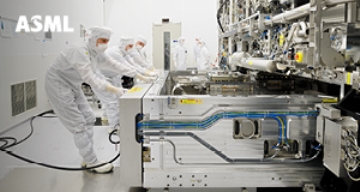
ASML Announces Intel as First Hign-NA Customer
Intel, which had announced plans last July to produce products based on '18A' in 2025, has moved a step closer to realizing those plans by placing an order for ASML's High-NA production equipment.
2022.01.20by 성유창 기자
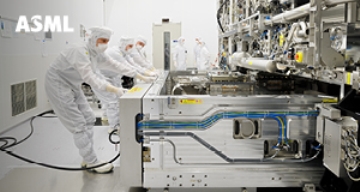
ASML's 2021 revenue reached €18.6 billion, up 33% year-over-year.
ASML, which supplies extreme ultraviolet (EUV) lithography equipment to Samsung Electronics and SK Hynix, achieved high growth exceeding 30% in 2021 as semiconductor equipment supply increased amid a global semiconductor investment boom.
2022.01.20by 성유창 기자











