

.png)

Hynet to raise hydrogen charging fee to 9,900 won/kg from the 15th
 Published2022.12.15 15:23
Causes of increased hydrogen production, purchase, and transportation costs due to energy price fluctuations
Existing 8,800 won/kg → 9,900 won/kg Self-charging 9,400 won/kg, 12.5% ↑
Hynet announced that it will raise the hydrogen sales price to KRW 9,900/kg (self-charging KRW 9,400/kg) as of December 15 to reflect the increase in cost due to fluctuations in international energy prices.
This price adjustment is the first since Hynet began selling hydrogen in August 2020, and is due to the sharp increase in the cost of hydrogen production and purchase due to factors such as rising energy prices caused by the ongoing Russia-Ukraine war and rising exchange rates caused by instability in the international financial market, as well as the increase in hydrogen transportation costs due to the cargo solidarity strike in June 2022.
The factors determining the hydrogen sales price are linked to international oil prices and exchange rates, raw material prices such as LPG, LNG, naphtha, and diesel, and transportation costs.
Looking at the energy price situation in November 2022 compared to October 2019 when the current hydrogen sales price (KRW 8,800/kg) was determined, △Oil prices increased by 61.0%, △Exchange rate increased by 22.2%, and △Naphtha, a raw material, increased by 22.2%.△LNG increased by 29.4% △LPG increased by 132.3% △Diesel increased by 32.9% △Gas oil increased by 36.5%.
In addition, the cost of hydrogen transportation, which accounts for a significant portion of hydrogen distribution, has also increased, with an average transportation cost increase of 25.1% for charging stations located 25 km to 150 km away from Hynet's Dangjin Distribution Center.
According to the results of the Ministry of Environment's fuel subsidy support project for the first half of 2022, more than 90% of the 128 hydrogen charging stations nationwide (excluding research charging stations, etc., 207 hydrogen charging machines) are operating at a loss.
This is believed to be due to the recent surge in hydrogen purchase costs, and the gap between hydrogen purchase and sales costs is narrowing due to rising international energy prices and increased transportation costs.
HyNet has been leading the expansion of stable hydrogen charging infrastructure in Korea and has continuously worked to form a consensus with the government and related organizations on stabilizing hydrogen prices and establishing measures related to hydrogen supply and demand so that hydrogen charging-related businesses can smoothly expand under the private sector in the future.
On November 9, Hynet held a meeting with hydrogen electric vehicle users to listen to consumers’ opinions and conduct preliminary opinion collection work for adjusting hydrogen charging rates.
Hynet announced on the 14th that it plans to sell starting December 15 at 9,900 won/kg (self-charging 9,400 won/kg), a 12.5% increase from the existing 8,800 won/kg, by minimizing the increase in price by taking into account various review factors derived from consultations with relevant organizations and hydrogen consumer meetings, long-term policy judgments, and the positions of consumers who use eco-friendly vehicles.
HyNet plans to build and expand more than 100 hydrogen charging stations by 2024 and build a future comprehensive energy station at the War Memorial of Korea in Yongsan in the first half of 2023.
Also, cost reduction measures through self-charging pilot project at hydrogen charging stations We plan to continuously promote the use of Mosok, Blue Members payment, etc. to expand consumer convenience and fulfill our role as a leading domestic hydrogen platform company.

관련뉴스
A single misaligned light means 'defect'… Vehicle interior lighting now guarded by semiconductors and software
Automotive interior lighting is moving beyond its role as 'auxiliary lighting.' As it becomes a core element of user experience (UX) that expresses brand identity through color and animation while reflecting driver preferences, the LED interior ambient lighting market is growing rapidly. In connection with this, we met in advance with Choi Young-jae, Research Director at Dabo Corporation, who will present a technical webinar session on "Intelligent LED Interior Lighting Solutions Illuminating Future Vehicles," to hear about market trends and changes in design requirements.
2026.08.28by 명세환 기자
TI, HEV·EV 트랙션 인버터용 다축 코어리스 전류 센서 TMCS2100-Q1 공개
Texas Instruments가 HEV·EV 트랙션 인버터용 다축 코어리스 홀 효과 전류 센서 TMCS2100-Q1을 공개했다. 수평·수직 자기장을 동시에 측정하는 다축 센싱 기술로 기존 단일 축 센서 대비 최대 20배 높은 정확도를 달성하며, 버스바 무개조 설계로 기계 설계 유연성을 확보했다. 800V 아키텍처 확산에 따른 고정확도 요구 충족과 소형화를 동시에 구현한다.
2026.08.27by 배종인 기자
Vector Korea Launches New Version of 'CANoe' with AI Agent and MCP
Vector Korea has released a new version of CANoe 20 SP2 equipped with an AI agent and MCP. With a single natural language prompt, it automates the entire process from CAPL test code generation to execution and error correction, completing tasks that previously took several hours to days in just minutes. The Vector-RAG technology suppresses LLM hallucination phenomena, and it is compatible with existing LLMs such as GitHub Copilot and Claude, provided free of charge on CANoe 20 SP2 and higher versions.
2026.08.27by 배종인 기자
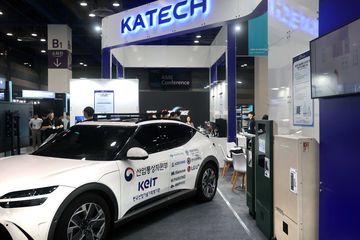
자동차연구원, ‘2026 자율주행모빌리티산업전’ 참가
한국자동차연구원이 2026 자율주행모빌리티산업전에 참가해 AI 기반 자율주행, 고성능 컴퓨팅, 시스템 안전·보안 기술 연구 성과를 공개한다. 산학연 협력을 통해 자율주행 기술을 고도화하고 우주모빌리티 분야로 연구 영역을 확장 중이다.
2026.08.25by 배종인 기자
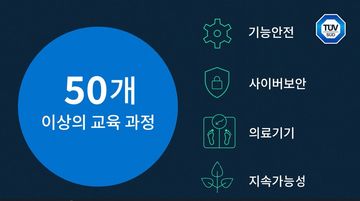
TUV SUD, 자동차 AI 안전·CBAM·방폭 등 5개 전문교육 확대
TUV SUD가 자동차 AI 안전, 탄소국경조정제도(CBAM), 생성형 AI, 품질경영, 국제 방폭 등 5개 분야 전문교육을 9~11월 순차 개설한다. ISO/PAS 8800 기반 자동차 AI 안전성 확보 과정, CBAM 실무 과정, IECEx CoPC 국제 방폭 인증 자격 교육 등이 최신 국제표준과 산업 현장 사례를 반영한 실무 중심으로 구성된다.
2026.08.24by 명세환 기자











