


[Op-Ed] Kim Pil-soo, Professor at Daelim University, “GM’s 880 Billion Won Investment Signals GM Korea’s Resurgence”
 Published2026.04.13 10:24
Call for Incentive Policies to Make the Korean Market Attractive to Global Companies
.jpg) GM (General Motors) has made a massive investment of $600 million, or approximately 880 billion won, in GM Korea.
GM (General Motors) has made a massive investment of $600 million, or approximately 880 billion won, in GM Korea.This additional investment follows the first investment in December of last year, and it can be said to be a decision that holds significance beyond simple facility investment.
Given the scale of this move, it is reasonable to view it as a reflection of GM headquarters' heightened trust in its Korean operations and its strategic determination to regard Korea as a hub responsible for both production and engineering in the compact SUV segment.
In particular, this investment holds significant meaning compared to other cases.
It can also be seen that the fact that the company has maintained a continuous surplus structure for three years from 2022 to 2024 as a result of efforts to build a sustainable business in Korea based on the business normalization plan launched in 2018 served as an important background for this investment decision.
It is estimated that a surplus was also recorded in 2025. This is significant not only because it has overcome deficits, but also because it has established a structurally stable business foundation.
As global automakers recently adjust the pace of their electrification transition and shift from volume growth to profitability-oriented strategies, additional investment in GM Korea, which is generating stable profits, can be viewed as a strategic result of 'selection and concentration' rather than mere 'expansion'.
The overwhelming global success of the Chevrolet Trax crossover produced in Korea proved its long-term viability in Korea, and this can be considered a prime example of a virtuous cycle that eventually led to an additional investment of 880 billion won.
It is also important to note that investment is continuing even in a challenging trade environment surrounding the company.
The Trax crossover produced by GM Korea in Changwon, Gyeongnam, and the Trailblazer produced in Bupyeong, Incheon, have established themselves as key export models by achieving consistent results in the global market, and their production systems and quality competitiveness have also been fully verified.
However, given the high proportion of exports to the U.S. for those models, analysis followed that GM Korea would suffer a major blow as discussions last year were held regarding the imposition of a 15% tariff on Korean automobiles.
However, considering that GM headquarters directly stated during global earnings conference calls in the second and fourth quarters of last year that models produced in Korea are contributing significantly to GM's profitability despite the uncertainty of tariff imposition, and that this investment decision was made subsequently, the previous concerns can be seen as unfounded.
Rather, this investment can be interpreted as a 'signal of stability' demonstrating that GM Korea possesses a stable profit structure.
Furthermore, this investment is significant in that it goes beyond a simple expansion of production facilities. It needs to be understood as a process in which global automakers reorganize their strategies around proven competitive hubs and expand the role of those hubs.
In particular, GM Korea holds significant strategic value as a hub equipped with full-cycle capabilities that combine not only production but also engineering and design functions.
GM Korea is on a completely different level from a simple assembly plant because it possesses both production facilities and an engineering organization that participates in the entire vehicle development process.
It is significant in that it serves as an important foundation for responding to future next-generation vehicles and securing technological competitiveness, as well as a structure capable of simultaneously ensuring the quality and development speed required by the global market.
This status as a global production and engineering hub is expected to be further solidified through this investment.
Of course, discussions on future tasks are also necessary.
In particular, strengthening responsiveness to the domestic market and diversifying the product portfolio are areas that require continuous consideration.
However, considering GM's current global strategy, it is difficult to expect an expansion of electrified model production in Korea in the short term.
In this regard, it would be more realistic to view future eco-friendly vehicle strategies as a possibility to be considered in the mid-to-long term while monitoring the demand for electric vehicles in the global market.
Furthermore, as Minister of Trade, Industry and Energy Kim Jeong-kwan welcomed the investment announcement by stating, “Just as GM has made a bold decision despite difficult conditions, the government will respond with results,” the government also needs to align with GM Korea’s plans.
In particular, now is the time when efforts are needed to create a so-called 'business-friendly environment and structure.'
It is said that the possibility of labor-management disputes caused by militant unions is increasing due to the current implementation of the Yellow Envelope Law. It is necessary to re-examine the fact that discussions on bills raising concerns about a hard landing, such as the third amendment to the Commercial Act, are underway, and that various corporate regulations, including high corporate taxes, remain in place.
Now is the time for concrete incentive policies to make the Korean market attractive to global companies.
GM's investment in the Korean market will serve as an important starting point, as it is a key decision that will further solidify GM Korea's position in the domestic market.
Amidst the stagnation of domestic industries and the persistence of uncertainty in the global market, this large-scale investment can be seen as a welcome decision that adds stability to the export-driven national economy.
We wholeheartedly welcome this decision, which demonstrates a virtuous cycle where performance in the global market leads to domestic investment and employment. As GM Korea is currently implementing plans to introduce GMC and even Buick to domestic customers, in addition to Chevrolet and Cadillac, we look forward to another leap forward through this investment.
Comments
Related news
.jpg)
[Contribution] Professor Kim Pil-su of Daerim University, “Apartment slow charger charging control is essential”
We spoke with Professor Kim Pil-soo from Daelim University College about replacing existing slow chargers in apartment basement parking lots with "controlled charging chargers."
2025.06.17by 명세환 기자
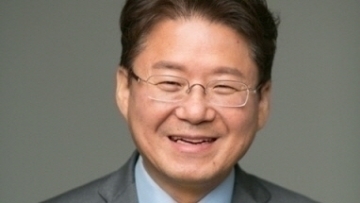
[Contribution] Professor Kim Pil-soo of Daerim University: "We must find a solution that benefits all of GM Korea."
We heard from Professor Kim Pil-soo of Daelim University about strategies for domestic survival amid reports of General Motors Korea's withdrawal.
2025.06.23by 명세환 기자
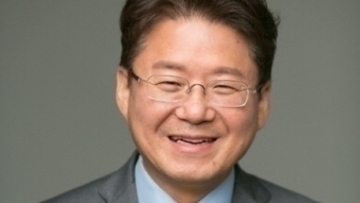
[Contribution] Professor Kim Pil-su of Daerim University, “Trump Tariffs Require Genuine Persuasion”
As the Trump tariff negotiations deadline approaches, we heard from Professor Kim Pil-soo of Daelim University College on the stance our country should take.
2025.07.28by 명세환 기자
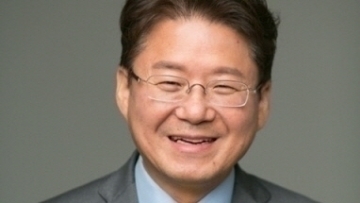
[Contribution] Professor Kim Pil-su of Daerim University: "Replacement of Offshore Diesel Vessels with Eco-Friendly Ships Is Essential"
We listened to the story of Professor Kim Pil-soo from Daelim University about the transition of coastal diesel ships to eco-friendly vessels.
2025.08.04by 명세환 기자
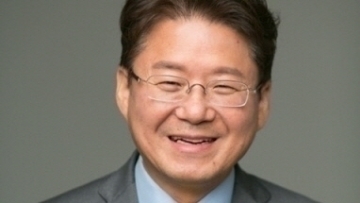
[Contribution] Professor Kim Pil-su of Daerim University: "'ISG Promotion' Kills Two Birds: Reducing Carbon and Easing Government Fiscal Pressures"
We heard from Professor Kim Pil-soo of Daelim University regarding the dissemination of idle-stop systems (ISG) in relation to carbon reduction for commercial internal combustion engine vehicles.
2025.08.08by 명세환 기자











