
Keysight Adds PAM-4 Support to M8000 Series BER Test Solutions
 Published2015.10.20 18:45
Keysight Technologies Korea announced the expansion of its PAM-4 measurement solutions with support for the PAM-4 data format and built-in error counters in the M8000 Series BER Test Solution. The PAM-4 capability and built-in error counters enable R&D and test engineers to easily test and characterize high-speed digital receivers used in data center networking, storage, and computing industries.
R&D and verification engineers characterizing next-generation digital designs face the following challenges: As data rates continue to increase, data center standards such as OIF CEI and IEEE802.3 Ethernet are moving to PAM-4 multilevel signaling formats, and many ASIC designs are also using built-in self-test (BIST) features such as built-in error counters. Accordingly, engineers can access error count information only through vendor-specific interfaces and remote commands.
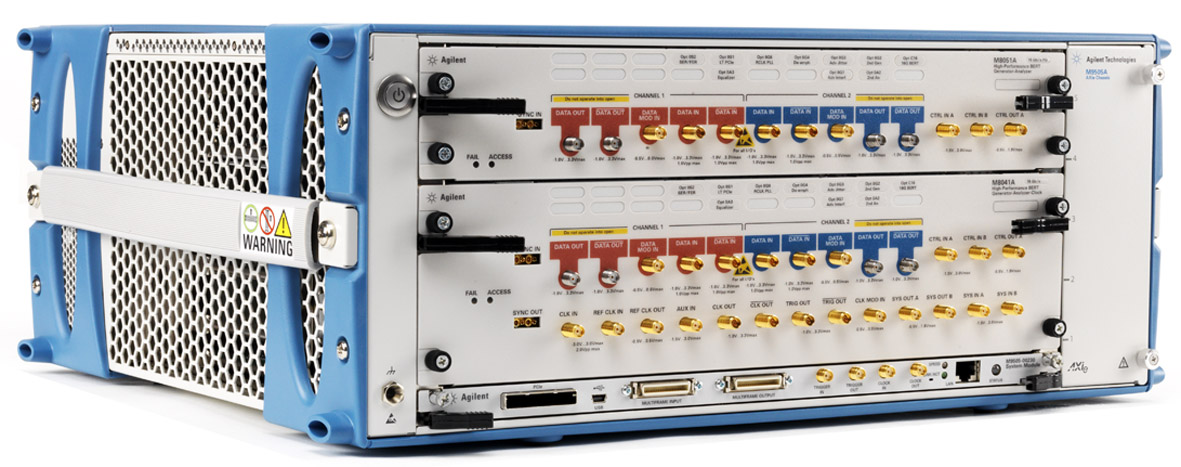
“The M8000 Series is a high-performance, integrated BER test solution for digital receiver characterization and certification test,” said Juergen Beck, Vice President and General Manager of the Digital and Photonic Test Division. “By supporting PAM-4 and built-in error counters in a common user interface, it will enable engineers to overcome the challenges they face in next-generation, high-speed digital designs.”
The M8000 Series BER test solution enables fast and accurate receiver characterization for single- and multi-lane devices, providing faster insight into digital designs. This solution consists of an AXIe-based high-performance BERT and an arbitrary waveform generator controlled by common user interface software.
Using the M8070A system software of the M8000 series, up to four channels of PAM-4 patterns at symbol rates of up to 32 Gbaud (corresponding to a 64 Gbit/s bit rate) can be generated with the M8195A arbitrary waveform generator, and NRZ patterns can be generated using the J-BERT M8020A high-performance BERT from a common user interface. Additionally, test efficiency can be accelerated by integrating access to device status registers and built-in error counters from the M8000 user interface via IronPython scripts.
Comments
Related news
European Patent Applications Surpass 200,000 for the First Time… South Korea Maintains 5th Place, Led by Batteries and Telecommunications
According to the European Patent Office (EPO)'s 'Technology Dashboard 2025', European patent applications last year reached 201,974, surpassing 200,000 for the first time. Korean companies and inventors filed 14,355 applications, representing a 9.5% increase from the previous year and maintaining 5th place by country. Battery, digital communication, and semiconductor technologies led the growth, with Samsung ranking as the top EPO applicant for the second consecutive year and LG reaching 3rd place. The presence of major domestic cities such as Seoul, Suwon, and Yongin was also confirmed. It was also revealed that Korea's European patent strategy is expanding beyond individual technologies to span the entire industry.
2026.03.24by 명세환 기자

SK Telecom First Applies AI-Based Network Operations at Gwanghwamun K-Pop Concert
SK Telecom announced that it applied an AI-based network operation system for the first time at a large-scale K-pop concert held in the Gwanghwamun area of Seoul on March 21st, managing communication quality throughout the event. Mobile data usage during the three hours before and after the concert reached 12.15TB, approximately doubling compared to the same time slot the previous weekend. SK Telecom monitored traffic using the AI system 'A-One' in five-minute and 50-meter units to respond to potential overload situations, while also operating temporary communication facilities and on-site personnel in parallel. This case is interpreted as confirmation of the practical applicability of AI-based autonomous network operation in an environment where demand from dense events and foreign users increases simultaneously.
2026.03.23by 명세환 기자
ETRI Develops 200Gbps Photodetector… Initiates Localization of Optical Receivers for AI Data Centers
The Electronics and Telecommunications Research Institute (ETRI) has developed a photodetector device that processes optical signals of approximately 200Gbps per channel for the first time in Korea. This device is a component that converts optical signals into electrical signals and determines the reception performance of AI data centers and 5G/6G communication networks. ETRI achieved bandwidth of 70GHz or higher and optical responsivity of 0.75A/W or higher, and integrated an indium phosphide lens on the rear of the chip to enhance optical reception efficiency and alignment convenience. The technology was presented at OECC 2025 and was recently published in the international academic journal 'Optics Express'.
2026.03.19by 명세환 기자

SKT and Ericsson Expand Joint Research on AI Networks… Preparing for 6G Beyond 5G Advancement
SK Telecom and Ericsson are expanding AI-based mobile network collaboration. On the 19th, the two companies signed a memorandum of understanding covering 5G advancement through 6G standardization, and agreed to undertake joint research and verification in the areas of AI-RAN, open and autonomous networks, security, and future communication technologies. This collaboration is interpreted as a move to enhance current 5G operational efficiency while preparing for a 6G environment where AI becomes embedded throughout the network. The scope also includes network operations automation, multi-vendor environment response, energy efficiency improvements, and review of communication-sensing fusion technology.
2026.03.19by 배종인 기자
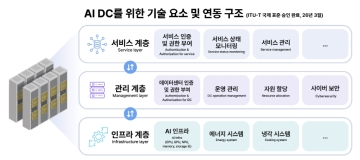
SKT Receives International Standard for AI Data Center Interconnection Structure… Establishes Operating System Standards
SK Telecom's proposed AI data center interworking architecture has received final approval as an international standard at the International Telecommunication Union Telecommunication Standardization Sector (ITU-T) conference. The core of this standard is the classification of AI data centers into three layers—service, management, and infrastructure—and the organization of signaling requirements between layers. As AI service proliferation increases the importance of interworking among various systems within data centers such as computation, power, cooling, storage, and security, this standard is significant in that it presents a common architecture for operations and service delivery. SK Telecom stated that it initiated the relevant standardization project in 2024 and achieved this approval following approximately two years of discussion.
2026.03.18by 명세환 기자