



Development of key materials for next-generation MRAM that drastically reduce power consumption
 Published2016.07.21 14:19
Simultaneous improvement in speed and integration of next-generation magnetic memory (MRAM)
The Ministry of Science, ICT and Future Planning (Minister Choi Yang-hee) announced that researchers at domestic universities have succeeded in developing material technology that simultaneously improves the speed and integration density of next-generation magnetic memory (MRAM).
The research results of a joint research team led by Professor Park Byung-kook (KAIST) and Professor Lee Kyung-jin (Korea University) were published in Nature Nanotechnology, the most prestigious journal in the field of nanotechnology, on July 11.
Unlike conventional silicon-based semiconductor memory, Magnetic Random Access Memory (MRAM) is a new non-volatile memory device made of thin magnetic films. It can retain information without an external power supply and enables high-speed operation and increased integration density. Due to these characteristics, it is a next-generation memory technology poised to change the memory paradigm, and semiconductor companies worldwide are currently competing to develop it.
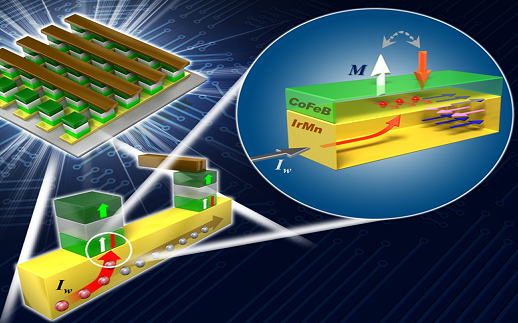
One of the core technologies at the center of the development competition is the technology to simultaneously achieve high density while increasing memory operating speed. According to magnetic memory (MRAM) technology developed to date, there was a problem where integration density dropped significantly when maintaining the maximum operating speed.
The research team developed a new technology that can achieve high integration and an operating speed more than 10 times faster than existing magnetic memory (MRAM) technology.
In the case of conventional spin-orbit torque-based magnetic memory (MRAM), which is attracting attention as a next-generation memory, spin-orbit coupling of heavy metals and ferromagnetic materials is used for information recording. However, there was a limitation in that an external magnetic field had to be applied for the platinum (Pt) or tungsten (W) materials used in the past. The research team introduced a new antiferromagnetic material, such as an iridium-manganese (IrMn) alloy, and developed a technology capable of high-speed, low-power operation without an external magnetic field by utilizing the exchange coupling of antiferromagnetic and ferromagnetic materials.
High potential for use as memory for mobile devices, wearables, or the Internet of Things (IoT)
Spin-orbit torque magnetic memory (MRAM) can reduce power consumption by more than 10 times compared to SRAM used in computers or smartphones, and due to its non-volatile characteristics, it has high potential for use as memory for mobile, wearable, or Internet of Things (IoT) applications that require low power.
Professor Park Byung-kook stated, “This research is significant in that it has advanced the feasibility of magnetic random access memory (MRAM), which is gaining attention as a next-generation memory, by one step. We plan to focus on developing new materials with excellent recording performance through further research.”
관련뉴스
.jpg)
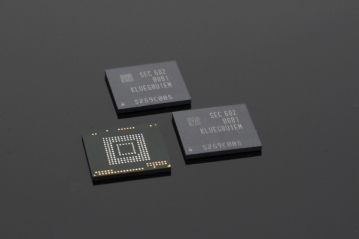
Samsung Electronics to Mass-Produce 256GB UFS Internal Memory for Smartphones
Samsung Electronics will begin mass producing the industry's first 256-gigabyte UFS (Universal Flash Storage) embedded memory for next-generation smartphones starting this month. The 256GB UFS is nine times faster than high-performance microSD cards (based on sequential read speed) and nearly twice as fast as entry-level SSDs for notebooks, and is expected to elevate the memory storage market's growth paradigm from capacity-centric to performance-centric.
2016.02.25by
Ecolab and K-water Discuss Innovation Collaboration in Advanced Industry Water Management
Ecolab and the Korea Water Resources Corporation jointly discussed cooperation directions for maximizing water use efficiency in advanced industries such as semiconductors and data centers and establishing sustainable water circulation. The two companies agreed to gradually develop a long-term cooperation model that combines water resource infrastructure and water management technology to promote water efficiency optimization, water reuse, and carbon reduction.
2026.08.28by 명세환 기자
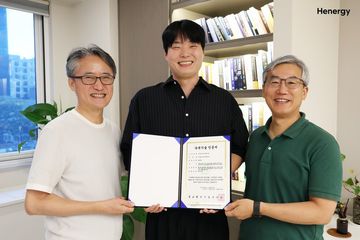
에이치에너지, 녹색기술인증 획득…솔라온케어 가동률 99.82%
에이지에너지가 태양광 발전예측 및 I-V커브 이상진단 기술로 중소벤처기업부 녹색기술인증을 획득했다. AI 기반 자산관리 플랫폼 솔라온케어는 전국 3,000개 이상 발전소에 적용되어 99.82%의 시스템 가동률과 3.7% 발전성능 개선을 달성했다. 실시간 데이터 분석을 통해 모듈 노화와 부분 음영 등 미세한 손실을 조기에 감지하고 관리함으로써 발전 수익을 보호한다.
2026.08.25by 명세환 기자
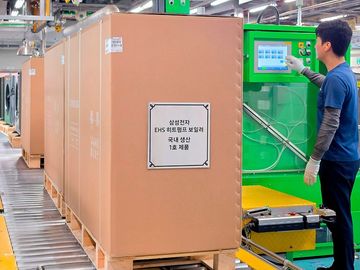
삼성전자, EHS 히트펌프 보일러 광주서 국내 생산…연 10만 대 규모
삼성전자가 난방 전기화 추진에 맞춰 광주사업장에서 EHS 히트펌프 보일러 국내 생산 체제를 구축한다. 2,132㎡ 규모 전용라인에서 이달 시험생산을 시작해 9월 말 본격 양산에 돌입할 예정이며, 연간 10만 대 이상 생산 능력을 갖춘다. 투입 전력 대비 약 5배 열을 생성하는 이 제품은 계절성능계수 4.9를 기록하며 화석연료 기반 보일러 대비 에너지 효율이 높고 탄소 배출을 줄인다.
2026.08.24by 명세환 기자











