


[2017 Security Outlook] Respond with an Intelligent Next-Generation Security Platform
 Published2016.12.19 20:31
Increase and evolution of phishing attacks, rising risk of medical data loss incidents
Palo Alto Networks announced its 2017 security outlook.
Palo Alto Networks identified the following as key points to watch in the security industry in 2017: the increase and evolution of phishing attacks; the need to secure effective security strategies based on threat intelligence capable of automated and rapid response; the introduction of a 'playbook' sharing model containing information on specific attack methods; the increased risk of medical data loss incidents due to the spread of SaaS app usage; and the growing importance of security due to the expansion of the public cloud.
Palo Alto Homepage
René Bonvanie, Chief Marketing Officer at Palo Alto Networks, stated, “Not only is the damage caused by evolving cyber attacks increasing, but new, unknown security threats are also continuously emerging. Furthermore, with expanding connectivity, web or email security alone can no longer keep enterprises safe from future cyber attackers.” "It is time to analyze the lifecycle of how cybercriminals infiltrate and execute attacks to gain an accurate understanding of this and to equip ourselves with an optimal intelligent next-generation security platform capable of responding to it," he said.
Phishing methods are still a welcome attack method for hackers
Phishing, a method that has caused various damages over a long period, is expected to remain a welcome attack tool for hackers. According to the 2016 Verizon Data Breach Report, 30% of phishing messages sent to targets are opened, and the average time taken to click on a malicious attachment is within 3 minutes and 45 seconds. These figures demonstrate that it is a highly effective and high-success-rate attack method. According to the Anti-Phishing Working Group (APWG)'s Q2 2016 Phishing Trends Report, 466,065 phishing sites were discovered during the second quarter of 2016, representing a 61% increase compared to the first quarter. Attackers are expected to be even more active in 2017, using increasingly realistic emails and landing pages as weapons.
Actionable intelligence measures must be taken
Security vendors and conscientious white-hat hackers are making continuous efforts to identify new indicators that signal a breach has occurred. Once these indicators are identified, they switch to defensive mechanisms to explore ways to control the attack and apply them to security tools, thereby taking measures to terminate the attack's lifecycle as quickly as possible. This process is referred to as actionable intelligence. In the past, it took network security companies anywhere from a few days to several weeks or even months to execute this entire process. Automation is necessary to shorten this process. Instead of analysts reading and analyzing intelligence reports to apply appropriate defense mechanisms and directly controlling the system, an automated system at the network level replaces this entire process, thereby enhancing network stability and securing effective security strategies.
Introduction of a 'playbook' sharing model containing information on specific attack methods
In the past, the network security community established best practices by sharing indicators of compromise. However, this approach has limitations in that, in many cases, it fails to identify situational correlations between the collected indicators. Typically, network security vendors have collected malicious IPs, URLs, and file hashes to block, but this data is limited to specific points in an attacker's lifecycle. Configuring blocking systems based on these indicators leaves room for bypassing them using other methods. As an alternative to this methodology, some network security communities share indicators through playbooks targeting specific attack groups.
Playbooks contain all indicators related to specific attack methods, and based on this, network security vendors can build defense mechanisms for every stage of an attack rather than blocking a single point in the attack's entire lifecycle. Previously, once an attacker discovered a blocking point, they could continue to attempt methods to bypass it; however, the playbook model leaves no room for the attacker to choose other options. To succeed in an attack, an entirely new attack must be redesigned. By adopting a playbook model, network security companies can establish defense mechanisms for all points an attacker might attempt, rather than simply defending a single point.
Increased risk of medical data loss due to the spread of SaaS app usage
As the use of cloud-based SaaS applications by various medical institutions to effectively share information increases, the likelihood of security incidents during this process is also expected to rise. This is because data can be leaked through users with file access permissions when sharing Personal Health Information (PHI). While some of these services allow free version users to access their enterprise versions, they also support administrators in strictly managing permissions. Even if medical institutions provide file sharing services to internal and external users through legal means and prohibit the use of unauthenticated sites, the risk of medical data leakage due to excessive information sharing remains high.
Increased importance of security due to the proliferation of public cloud
The financial market is reportedly at the final threshold of public cloud computing adoption. While most financial institutions remain hesitant to use public clouds due to concerns about information security, successive adoption cases of Amazon Web Services (AWS) and Microsoft Azure by financial institutions are being revealed. It is known that throughout 2016, various projects such as testing, evaluation, and PoC were conducted with a focus on cybersecurity cases, and 2017 will be a year in which the financial industry's challenge regarding cloud computing bears fruit.
It is analyzed that while the initial phase will focus on applications with minimal use of sensitive data, concerns regarding cloud usage in the financial market are expected to gradually diminish. With the benefits of cloud computing—such as resilience, scalability, and cost-efficiency—becoming established, the use of public cloud is projected to increase as security technologies are integrated into the architecture rather than merely added to services.
관련뉴스

Symantec Announces Next-Generation AI-Powered Endpoint Integrated Security Solution
Symantec Korea (CEO Park Hee-beom) has announced Symantec Endpoint Protection 14 (hereinafter SEP 14), a next-generation integrated endpoint security solution that presents a new future for endpoint security. SEP 14 is a security solution that applies artificial intelligence (AI) to endpoints and the cloud to provide strong multi-layered protection. It integrates advanced endpoint protection technologies including ▲industry-first integration of machine learning into endpoint security technology ▲memory exploit attack blocking technology for zero-day detection ▲real-time intelligent threat cloud lookup in a single agent, enabling organizations to block and respond to advanced intelligent security threats (APT).
2016.11.16by 신윤오 기자
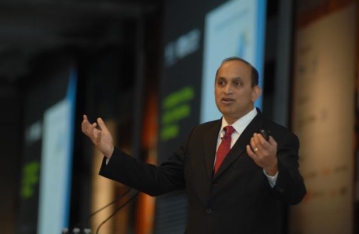
VMware Faces Serious Issues of Increased Costs and Security Threats Due to Decentralization of IT Department Work
VMware Korea successfully held its annual virtualization cloud conference vFORUM 2016 at the COEX Grand Ballroom in Samseong-dong, Seoul. Under the theme 'be_Tomorrow,' the event introduced core strategies for accelerating business innovation in the rapidly changing digital era and related VMware solutions. During the keynote speech, Sanjay Poonen, VMware Headquarters Chief Operating Officer of Business Operations, presented on "ways to strengthen enterprise competitiveness in the multi-cloud era." This was followed by Guido Appenzeller, VMware Chief Strategy and Technology Officer for Network and Security, who introduced VMware's cross-cloud architecture.
2016.11.17by 김수지 기자
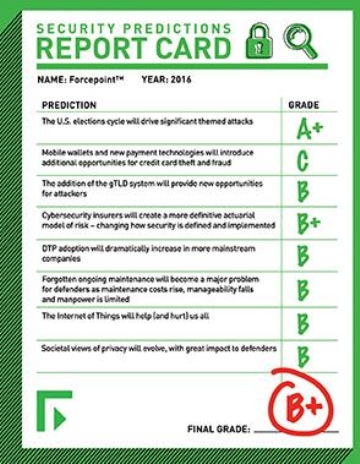
"2017 will see increased security risks due to the rapid integration of digital and physical domains"
Fortis Point (Korea Branch Manager Lee Sang-hyuk) has released its 2017 Cybersecurity Outlook Report. This report focuses on the expanding integration of technical and physical domains, and addresses the long-term impact that such a new digital ecosystem will have on organizations and institutions worldwide. The outlook report was developed in collaboration with cybersecurity experts from Fortis Point and Raytheon.
2016.12.01by 신윤오 기자
.png)
Databricks Unveils Open AI Security Monitoring 'Lakewatch'
Databricks entered the security market on March 24 by unveiling LakeWatch, an open-source agentic SIEM. The core functionality of this product is to integrate and analyze security, IT, and business data in a single environment to support AI-based threat detection and investigation. The company explained that it reduces the limitations of existing security operations centers, which have had to forgo some data due to high cost structures, and enables large-scale data analysis and automation based on open formats and ecosystems. LakeWatch is currently offered as a private preview, with Adobe and Dropbox mentioned as early customers. Databricks also announced an expanded partnership with Anthropic as well as the acquisition of Antimatter and SiftD.ai.
2026.03.26by 배종인 기자
Kaspersky Unveils Revamped 'NEXT' Combining SOC Integrated Management and AI Analytics
기업들이 보안관제센터(SOC) 구축과 운영에서 통합 관리와 자동화 수요를 키우는 가운데, 카스퍼스키가 자사 B2B 보안 제품군 ‘카스퍼스키 넥스트’의 개편 내용을 공개했다. 이번 업데이트는 OSMP 기반 단일 콘솔로 EPP·EDR·XDR·SIEM 연계를 넓히고, DLL 하이재킹 탐지와 계정 탈취 의심 행위 식별 같은 AI 기능, 생성형 AI 보조도구 KIRA 연동을 담았다. 회사는 대규모 배포 환경에서 EDR Expert는 최대 30%, XDR Expert는 최대 60%까지 자원 요구량을 낮출 수 있다고 밝혔다.
2026.03.25by 배종인 기자











