


Global IoT spending to grow at an annual average of 15.6% through 2020, with China and the U.S. accounting for more than half.
 Published2017.01.16 06:38
The manufacturing ($178 billion), transportation ($78 billion), and utilities ($69 billion) sectors are driving investment.
According to a recent research report by IT market analysis firm IDC, global IoT spending reached $737 billion last year, up 17.9% from the previous year, driven by increased investment in IoT-related hardware, software, services, and connectivity.
In addition, the report (Worldwide Semiannual Internet of Things Spending Guide) stated that global IoT spending is projected to reach $1.29 trillion in 2020, growing at a compound annual growth rate (CAGR) of 15.6% during the forecast period from 2015 to 2020.
In 2016, the rankings for IoT investment by industry were manufacturing ($178 billion), transportation ($78 billion), and utilities ($69 billion). The consumer IoT sector, which ranked fourth in 2016, is projected to become the third-largest market by 2020. Cross-industry IoT investment, corresponding to common industry use cases such as connected cars and smart buildings, is also expected to rank high during the five-year forecast period. Meanwhile, spending in the insurance, consumer, healthcare, and retail sectors is expected to be the fastest-growing industry sectors.
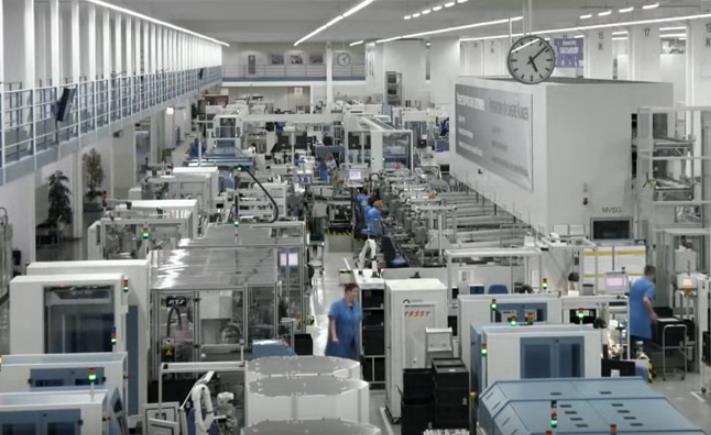
▲ Siemens is transforming its 'physical products' into 'smart products' and attempting to evolve beyond a product supplier into a software and solution provider. (From the Siemens Smart Factory introduction video)
With the manufacturing sector leading the IoT industry, manufacturing operations were identified as the IoT use case that received the largest investment ($102.5 billion) in 2016. Other IoT use cases in the manufacturing sector include production asset management, maintenance, and field services. The second largest use case was freight monitoring ($55.9 billion), which is expected to further boost IoT spending in the transportation industry. In the utilities sector, investment in smart grids for electricity and gas reached $57.8 billion in 2016.
Consumer investment in smart homes is expected to more than double during the forecast period, reaching $63 billion in 2020. In the insurance industry, telematics is expected to be a major use case, while in the healthcare sector, investment in remote health monitoring is anticipated to be the largest. The retail industry is already investing in various use cases, including omnichannel operations and digital signage.
By technology, hardware is expected to remain the largest spending segment throughout the forecast period, followed by services, software, and connectivity. Hardware spending is projected to reach $400 billion in 2020, with the volume expected to nearly double over the five-year forecast period. However, growth is expected to be the slowest among IoT technology groups.
Spending on software and services is expected to grow faster than that of the hardware and connectivity sectors. Modules and sensors connecting endpoints and networks are expected to drive the hardware sector, while application software is projected to account for more than half of total IoT software investment.
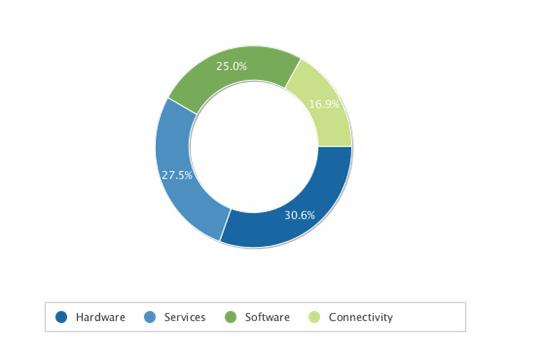
▲ 2016 Market Share by Top Technology (Source: IDC)
The Asia-Pacific region (excluding Japan) is expected to have the largest IoT spending volume throughout the forecast period, followed by the United States, Western Europe, and Japan. The manufacturing sector is projected to account for approximately one-third of IoT purchases in the Asia-Pacific region (excluding Japan). In the United States as well, while the manufacturing sector is expected to represent the largest share of IoT investment during the forecast period, its share of total spending (approximately 15%) is projected to decrease. In Western Europe, consumer IoT spending is expected to surpass the transportation and utilities sectors, becoming the second-largest IoT market in 2020.
Vernon Turner, Senior Vice President and Head of the IoT Research Group at IDC, stated, "The Internet of Things is expected to continue driving business transformation and the development of innovative markets such as robotics, cognitive computing, and virtual reality," adding that IoT presents a high-potential opportunity for both vendors and end users.
He added, "IoT investments in China and the U.S. account for more than half of total IoT spending and are driving the growth of the IoT market's two-party index."
Comments
Related news

2017 will see increased progress in industrial IoT in smart buildings and industrial automation.
There has been significant growth in the automotive sector, Internet of Things (IoT), and industrial applications such as motor control and building automation. One of the defining factors of 2016 was mergers and acquisitions among manufacturers. In the relatively flat semiconductor market, several companies' M&A activities, including ON Semiconductor's acquisition of Fairchild Semiconductor, enabled major players in the industry to maintain continuous growth. Through these efforts, companies made substantial investments in product development to realize more complex integrated solutions and products required by the industry and consumers.
2016.12.28by 신윤오 기자
Decision to invest 17 trillion won in 12 new industries, including autonomous vehicles and IoT home appliances
The Ministry of Trade, Industry and Energy (Minister Joo Hyung-hwan) announced measures for export recovery and new industry creation in its 2017 New Year's business report. In the report, the ministry presented 9 key promotion tasks across 4 core areas: ▲export conversion to positive growth, ▲acceleration of structural adjustment and response to the 4th Industrial Revolution, ▲establishment of growth ladder for small and medium-sized enterprises and vitalization of small business owners, and ▲construction of energy security and eco-friendly supply base.
2017.01.05by 신윤오 기자

LG Electronics Vice Chairman Cho Sung-jin: "IoT and robotics are key pillars of our future businesses."
LG Electronics Vice Chairman Cho Sung-jin held his first press briefing since taking office as CEO on the 7th (Korean time) in Las Vegas, United States, and stated, "I will create a business structure where profitability and growth form a virtuous cycle in a progressive manner." Vice Chairman Cho remarked, "I feel a heavy sense of responsibility in taking on the role of CEO during a challenging business environment," and emphasized, "I will instill the DNA of being number one across all LG Electronics businesses and transform the LG brand into a truly leading brand that customers aspire to."
2017.01.09by 신윤오 기자
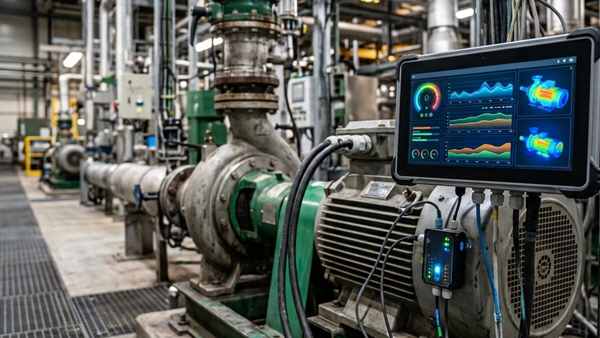
[Technical Contribution] Mouser: "AI Agents Help Accelerate and Standardize Industrial Field Maintenance Operations"
Abhishek Jadhav from Mouser Electronics discusses how to leverage agentic AI for predictive maintenance in industrial automation.
2026.10.23by 편집부
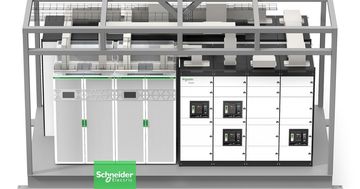
Schneider Electric Unveils Modular Power Solution for AI Data Centers
Schneider Electric has launched prefabricated power modules and power skids for AI data centers, jointly developed with NVIDIA. Based on the GB300 NVL72 reference design, the solution applies standardized design and factory pre-fabrication methods to build power infrastructure in as little as 6 months. Galaxy VXL UPS technology is integrated, with capacity options ranging from 2MW to 2.5MW.
2026.10.23by 배종인 기자











