

.png)

Can domestic power semiconductors with 1% global market share be increased to 10%?
 Published2017.04.04 14:18
Overcoming 70% Technology Gap, Commercialization of Core Devices such as SiC and GaN is Key
As demand for power semiconductors (power devices) surges alongside market expansion in Internet of Things and electric vehicles, the government is launching full-scale power semiconductor development efforts this year.
The Ministry of Trade, Industry and Energy will conduct commercialization projects from 2017 to 2023 over a 7-year period with an investment of approximately 83.6 billion won, targeting power semiconductor research and development (56.4 billion won) and research platform construction (27.2 billion won).
Power semiconductors, which are key semiconductors that improve energy efficiency by processing or regulating electrical power, are becoming increasingly important in line with global trends emphasizing eco-friendliness and energy efficiency. High-efficiency power semiconductors that enable efficient utilization of electrical power and minimize power loss are gaining attention, as the adoption of power semiconductors in hybrid electric vehicles is increasing and the demand for low-power consumption in electronic devices such as Internet of Things and wearables is also rising.
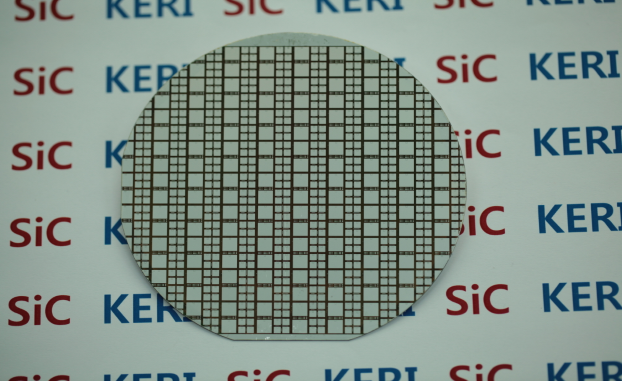
Power semiconductors are thus driving high value-added development in major industries such as automobiles, home appliances, wireless communication devices, and displays, and are emerging as key components in next-generation markets including electric vehicles, wearables/IoT, and semiconductors.
However, the domestic power semiconductor industry is in a very poor condition. Unlike the rapidly growing market, the scale and technology level are inadequate. When comparing South Korea to the United States as the leading power semiconductor country, South Korea's technology level stands at approximately 69% with a technology gap of 1.6 years. In comparison, Japan shows a technology level of 92% with a technology gap of 0.6 years, while Europe shows 93% and China shows 55%. There are pointed out criticisms that South Korea has lacked follow-up measures in research and development following various announcements of power semiconductor plans.
Accordingly, the government is closely monitoring examples of advanced countries that are actively promoting government-led technology development and commercialization. The strategy is to provide substantial government support for products such as SiC, which are in early commercialization stages in Japan and the United States, and GaN, which is expected to launch initial products within three years.
The commercialization project will first concentrate on fields where commercialization is possible within 4 years to secure commercialization technologies for global market entry. Subsequently, it plans to construct platform infrastructure that will consolidate IPs obtained through device technology development and develop them into business ventures, while establishing systems for professional workforce development and cooperation between domestic supply and demand companies.
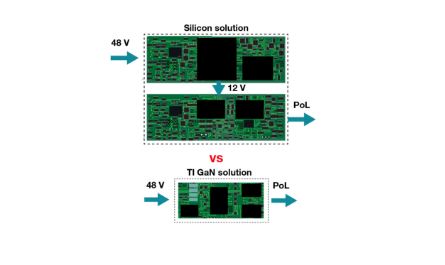
The commercialization project to be conducted over the next 7 years will focus on research and development fields including power semiconductor devices, modules, gate drive IC, and power management SoC technology development for IoT, as well as research platform construction fields including comprehensive process support platforms for SiC power semiconductors, characteristic analysis and reliability evaluation platforms for power semiconductors, and comprehensive process technology development for SiC power semiconductors. In particular, there is a need for early development of four major commercialization technologies with high originality and ripple effects such as SiC and GaN for opening new large markets, and super-junction IGBT and super-junction MOSFET for capturing various existing markets.
Early Development of Four Major Commercialization Technologies: SiC, GaN, Super-Junction IGBT, and Super-Junction MOSFET
As such, major new projects this year include a total investment of 4 billion won in development of 1200V/150A-class Trench-type SiC MOSFET devices and gate drive IC (~2019), a total of 2 billion won (~2019) in development of 100V/10A high-speed, low-loss GaN-on-Si power FET devices, and a total of 1.5 billion won (~2019) in development of 650V/50A low-resistance Super-Junction power MOSFET. Additionally, a total of 2.1 billion won (~2020) will be invested in 1200V Super-Junction Trench-type IGBT development, 750 million won (~2018) in 100V/600A MOSFET module development, and a total of 3.5 billion won (~2020) in development of an energy hub system for IoT devices including wireless charging transmitter/receiver and BPMU.
The government projects that if such commercialization projects succeed, it will achieve 5.8 billion dollars in domestic production by 2028, thereby expanding the global market share to 10% and creating 20,000 jobs.
Son Gwang-jun, Intelligent Semiconductor PD of KEIT, stated, "Our country currently shows a 1% market share in power semiconductors as technology development has been delayed, and by expanding the global market share to 10%, we can also strengthen the competitiveness of the domestic automobile industry." He continued, "For SiC, we are planning to construct research and development facilities by modifying the MEMS Center at Pusan National University. If the R&D project reaches commercialization, we should be able to sufficiently achieve the target," expressing his expectations.
Related news
Semiconductor industry in full recovery, expected to grow 7.2% this year from 1.5% last year
Gartner Inc., a leading global IT consulting firm, announced that worldwide semiconductor revenue is expected to reach $364.1 billion in 2017, representing a 7.2% increase compared to the previous year. The semiconductor market, which recorded 1.5% growth in 2016, is showing a complete recovery this year. According to preliminary results announced by Gartner Inc., worldwide PC semiconductor revenue in 2016 reached $339.7 billion, a 1.5% increase compared to $334.8 billion in 2015. The total revenue of the top 25 semiconductor suppliers increased 7.9% year-over-year, accounting for 75.9% of the overall market.
2017.01.25by 신윤오 기자

Fabless Industry: “Government Support for High-Growth Potential Intelligent Semiconductors Urgently Needed”
The Ministry of Science, ICT and Future Planning (Minister Choi Yang-hee, hereinafter "MSIP") held the 10th ICT Policy Forum for leading the intelligent information society on the 21st, chaired by Vice Minister Choi Jae-yu, at the Global R&D Center (located in Pangyo). The policy forum was attended by representatives of fabless companies and experts from small and medium-sized semiconductor enterprises, academia, and research institutions, where recent technology trends and government support policy measures were discussed and challenges from industry were heard.
2017.03.24by 신윤오 기자
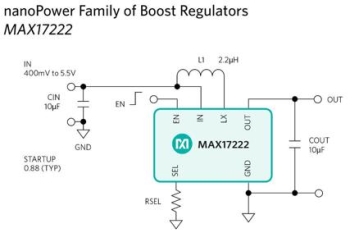
The power component you need when designing ultra-small devices is 'this'
It is now quite common to see people carrying portable electronic devices and charging them with auxiliary batteries. Carrying a backup battery has become a natural part of daily life. As a result, battery life and weight have become important considerations when purchasing notebooks, smartphones, and other portable electronic devices. New wearables, smartwatches, earphones, video game controllers, IoT, mobile, and other connected products are becoming increasingly miniaturized, and battery life duration is becoming a key selection criterion. In particular, for devices that must operate reliably over extended periods, battery life is even more critical. What factors determine this battery life?
2017.03.27by 김지혜 기자

Intel Unveils Next-Generation 'Core Ultra Series 3' and vPro Platform for Enterprise PCs
Intel has officially unveiled the "Intel Core Ultra Series 3" for next-generation enterprise PCs and the latest vPro platform, addressing a wide range of demands from enterprise notebooks to high-performance workstations.
2026.03.26by 배종인 기자

ROHM Launches ESD Protection Diode Compatible with High-Speed Interfaces of 10Gbps or Higher
Semiconductor specialist ROHM has developed the 'RESDxVx series' of ESD (electrostatic discharge) protection diodes capable of responding to next-generation high-speed data communication environments exceeding 10Gbps, simultaneously enhancing both signal quality maintenance required in high-speed interfaces and IC protection performance.
2026.03.26by 배종인 기자











