



3D NAND on the Rise, Finding Processes and Materials to Solve Stacking Challenges
 Published2017.05.22 18:12
With 3D NAND supply volumes expected to surpass 2D NAND this year, interest is growing in the processes and materials required for stacking 3D NAND.
On the 18th, the Semiconductor Electronic Materials Technology Conference (SMC, Strategic Materials Conference), hosted by the International Semiconductor Equipment and Materials Institute, was held under the theme "Scaling Challenges-The Future of Materials," discussing semiconductor material challenges for next-generation memory, market outlook for semiconductor materials, key process material technologies, and DRAM prospects.
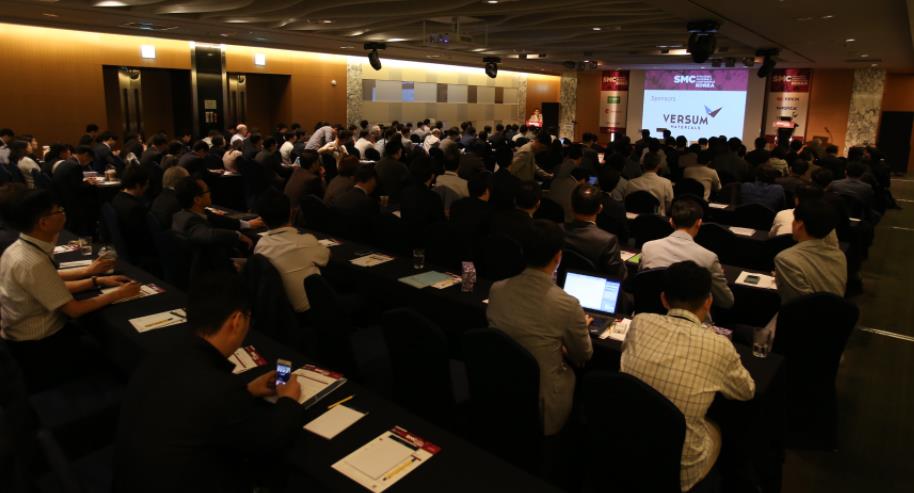
Sung-hyun Hong, Executive Director of Ram Research Korea, who presented, addressed the problems that arise as 3D NAND is stacked: "As the number of layers increases, the height becomes extremely high. If the structure is not harmonious, stress changes become severe. When stress becomes severe, the wafer bends, making handling difficult in subsequent processes."
He added, "From a materials perspective, the hardmask has the most significant impact. It is important which hardmask is used," and noted another issue: "Currently, tungsten is being filled using CVD methods, but in subsequent processes, physical damage occurs or diffusion happens, degrading device characteristics." He explained that improvements in processes and materials are necessary for managing stress in stacked structures, and that new processes are being developed.
The conference also addressed current trends in the memory market as an important topic. Professor Sung-chul Hwang from the Department of Materials Science and Engineering at Seoul National University stated, "The current memory market is dominated by DRAM and NAND flash, and this will continue in the future," expressing a negative view on the possibility of alternatives for next-generation memory. "Because the performance gap between DRAM and NAND flash is large, computers cannot be designed efficiently. Although many efforts are being made to overcome this gap, there is no memory to replace DRAM, and it does not seem to be easy in the future. NAND flash also has no memory capable of replacing it, and development will proceed in a direction to complement it," he said.
Next-generation memory technologies with high commercialization potential include ferroelectric RAM (FeRAM), resistive RAM (ReRAM), phase-change memory (PCRAM), and spin-transfer torque magnetic RAM (STT-MRAM). Among these, STT-MRAM is a next-generation memory that has the advantage of preserving memory without power supply like NAND and the high processing speed of DRAM.
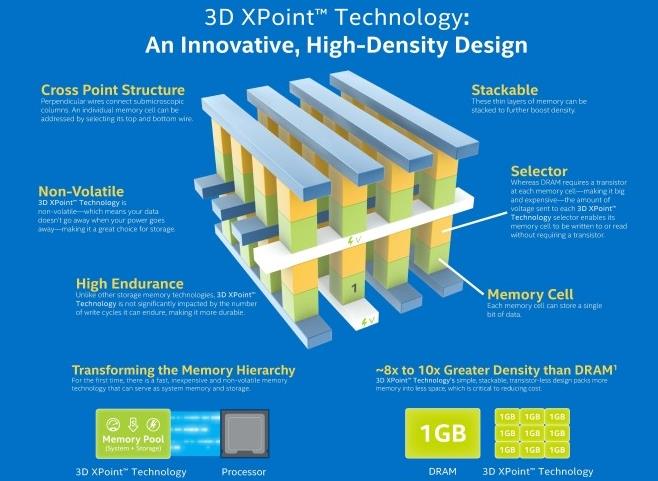
Products featuring "3D XPoint" memory, a type of PCRAM developed through a collaboration between Intel and Micron, are awaiting launch. Samsung has decided to apply STT-MRAM to its foundry business, and NXP will produce using Samsung's technology for Internet of Things semiconductors.
Comments
Related news

SEMI Holds Semiconductor Electronic Materials Technology Conference
The International Semiconductor Equipment and Materials Association SEMI will hold SMC (Strategic Materials Conference) Korea, a semiconductor and electronic materials technology conference, on May 18th at COEX in Samseong-dong, Seoul. The conference will address the theme "Scaling Challenges-The Future of Materials" and will provide in-depth coverage of topics including ▲semiconductor materials challenges for next-generation memory, ▲market outlook for semiconductor materials, ▲key process materials technology, ▲DRAM outlook, and ▲specialty gas contamination analysis and management.
2017.05.16by 김지혜 기자
Global semiconductor sales rose 2.6% last year; will this trend continue this year?
Last year, global semiconductor market revenue increased 2.6% compared to the previous year. According to final results announced by Gartner, an IT advisory firm, global semiconductor revenue in 2016 reached $343.5 billion, up from $334.9 billion in 2015, while total revenue of the top 25 semiconductor companies grew 10.5%.
2017.05.17by 신윤오 기자
30% Sales Growth: What Is the Secret Behind Mouser, the Unstoppably Growing Semiconductor Distribution Channel?
Amid fierce competition in the global 9 billion dollar semiconductor electronic components distribution market, Mouser Electronics has garnered industry attention by announcing a 30% increase in revenue last year. Mouser, a subsidiary of Berkshire Hathaway owned by renowned investor Warren Buffett, currently distributes over 4 million products supplied from more than 600 manufacturers.
2017.05.19by 신윤오 기자

Intel Unveils Next-Generation 'Core Ultra Series 3' and vPro Platform for Enterprise PCs
Intel has officially unveiled the "Intel Core Ultra Series 3" for next-generation enterprise PCs and the latest vPro platform, addressing a wide range of demands from enterprise notebooks to high-performance workstations.
2026.03.26by 배종인 기자
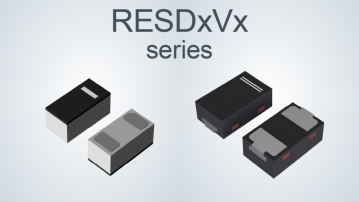
ROHM Launches ESD Protection Diode Compatible with High-Speed Interfaces of 10Gbps or Higher
Semiconductor specialist ROHM has developed the 'RESDxVx series' of ESD (electrostatic discharge) protection diodes capable of responding to next-generation high-speed data communication environments exceeding 10Gbps, simultaneously enhancing both signal quality maintenance required in high-speed interfaces and IC protection performance.
2026.03.26by 배종인 기자











