



[Discussion] The Core of the Much-Debated IoT Security: Hardware or Software?
 Published2017.08.23 06:24
Reluctance to share data will make crisis prediction (Thread report) difficult
Experts discussed IoT security at the Samsung Security Tech Forum (SSTF) hosted by Samsung Electronics.
An IoT security industry professional voiced the limitations. While applying hardware based on academic opinions that hardware security is robust is expensive, software offers low performance. Consequently, the industry's stance is that they have no choice but to adopt software that can meet the price point, even if it means lower performance.
How should we view investments in contentious security?
Professor Baek Yun-heung of Seoul National University
The determining factor for hardware pricing is mass production. Mass production lowers prices. We must develop universally applicable IoT and find a way to standardize it. We need to consider not only performance but also services.
Professor Kim Yong-dae of KAIST
It is a misconception that companies view security as a separate solution. Incorporating security into the design phase lowers the cost. Adding it later, after the design is complete, increases the expense. If a product requires security, it is crucial to include it during the design phase. Just look at Kakao Bank; security and usability improve together. It is a loss if you do not secure it now.
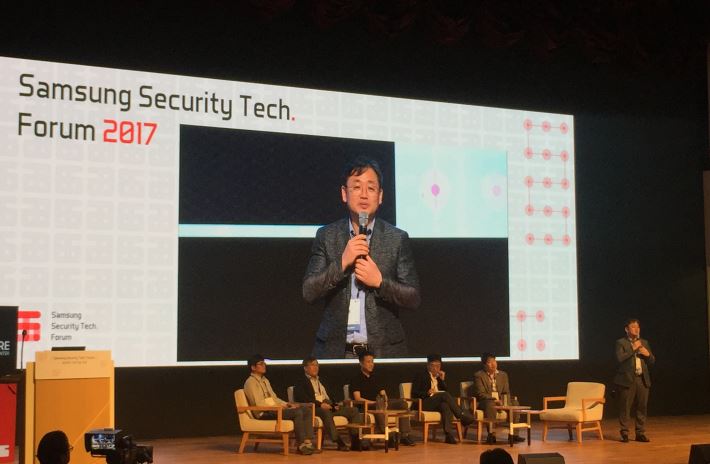
How to Evaluate the Security of IoT Devices with a Wide Range of Issues
Executive Vice President Giljun Ahn, Head of Security Team at Samsung Electronics Software Center (Chairperson)
As the range of IoT devices is so wide that existing requirements cannot be met, the European Union (EU) announced it would release standards, while the U.S. stated that Consumer Reports would release labels.
What kind of movements are taking place domestically?
Professor Kim Yong-dae of KAIST
It is difficult to evaluate hardware because its source code is not disclosed. When new equipment is released, researchers evaluate its security. It is still too early to assess product safety.
Professor Kim Hyung-sik of Sungkyunkwan University
Standards organizations will each create their own test criteria. I am skeptical whether they can guarantee product security, but they can be created based on checklists. I read the security evaluation report published by KISA (Korea Internet & Security Agency). I believe it is appropriate for the government to share examples and research what kind of warnings to issue to companies that do not adhere to security protocols, rather than intervening technically.
Issue: Has security become intelligent in the era of the Fourth Industrial Revolution?
Executive Vice President Giljun Ahn, Head of Security Team at Samsung Electronics Software Center (Chairperson)
With big data and artificial intelligence gaining attention in the Fourth Industrial Revolution, 'Thread Report,' which predicts and responds to crises, is being mentioned as a key term in security.
How prepared do you think we are for this kind of intelligence?
Professor Kim Yong-dae of KAIST
To predict crises, one needs a lot of information, but even when new types of malware emerge overseas, it takes a long time for them to reach Korea. I am not sure how to improve this. It seems to be because we do not have a culture of paying for information. In the U.S., the military and government work together, but in our country, isn't the private sector providing data out of necessity?
Raon Security CEO Yang Jeong-gyu
“We talk about the sharing spirit of hacking groups, but sharing does not take place even within the groups themselves. Since collecting data itself is difficult, efficient sharing is also challenging. To collect data, one must install honeypots on overseas servers or distribute user nodes, which is practically difficult. To solve this, we must first create an organization capable of sharing, but the outlook is not bright as it does not seem likely to happen domestically.”
In addition , the importance of training experts to address the security challenges facing artificial intelligence and big data was also mentioned.
Professor Baek Yun-heung of Seoul National University
It is difficult to sift through massive amounts of data to extract the information necessary for security. It is a situation where rules do not apply to machine learning. We need to use artificial intelligence to detect attacks that bypass the rules, but AI lacks the critical insights. The training of experts is necessary.
관련뉴스
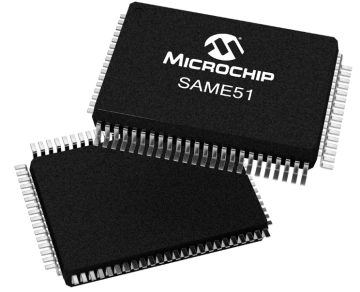
Microchip Launches MCU Providing Hardware-Based Security Suitable for Automation and IoT
마이크로칩테크놀로지는 SAM D5x 및 SAM E5x 마이크로컨트롤러(MCU) 제품군을 출시했다고 발표했다. 이 새로운 32비트 MCU 제품군은 광범위한 애플리케이션을 위한 폭넓은 커넥티비티 인터페이스와 강력한 성능, 견고한 하드웨어 기반 보안을 제공한다. SAM D5/E5 마이크로컨트롤러는 ARM Cortex-M4 프로세서의 성능과 FPU(Floating Point Unit)가 결합된 제품이다. 이는 CPU(Central Processing Unit)의 부하를 덜어줌으로써 시스템 효율을 증가시키고 프로세스 집약적인 애플리케이션을 저전력 플랫폼에서 실행할 수 있게 한다. 최대 120MHz에서 동작하는 D5x 및 E5x MCU는 ECC(Error Correction Code) 기능이 있는 최대 1MB의 듀얼 패널 플래시를 내장해, 실행 중인 시스템을 중단하지 않고서도 손쉽게 실시간 업데이트를 실행할 수 있다. 또한 이 제품군들은 ECC 기능이 있는 최대 256KB SRAM을 내장하고 있으므로, 동작이 중단되어서는 안 되는 필수적인(mission-critical) 의료기기나 서버 시스템 등의 애플리케이션에 적합하다.
2017.08.02by 김지혜 기자
Korea's Largest Electronics Show: 3 Key Points to Watch This Year
국내 최대 IT 전자 행사인, 한국전자전(KES2017)이 오는 10월 17일 개막을 앞두고 전시회 키워드를 공개했다. 이번 한국전자전 측이 제시한 키워드는 '4차 산업혁명'과 '중소벤처 성장지원', '일자리 창출'이다. 주최 측은 글로벌 융합기업들이 참가하여 4차 산업혁명을 촉진하는 초지능·초연결 기술(AI, IoT, 5G 등)을 확산하고 신산업을 선도하는 미래전략을 제시한다는 방침이다. 대표적으로 메르세데스 벤츠가 독일 본사차원에서의 한국전자전 최초 전시참가를 통해 엔터테인먼트, 메카트로닉스, 인공지능(AI) 등이 결합된 모바일 플랫폼 기술을 보여주는 한편 기조연설을 통해 이종기술·분야 융합의 글로벌기업 미래상을 보여준다.
2017.08.16by 신윤오 기자
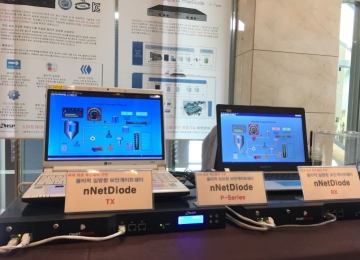
[이슈] 산업용 IoT 보안, IT와 OT 따로 생각하면 '뚫린다'
“산업용 IoT에 관심이 높아지며 IoT 본연의 기능에 충실했고 보안은 미흡했다. IT와 OT가 만나는 IoT에 책임 소재를 나누면 보안이 어렵다. 어떻게 파트너십을 구축해 생태계를 형성할지가 시장을 주도할 수 있는 열쇠가 될 것이다” 프로스트앤설리반의 최승환 시니어디렉터는 산업제어시스템 보안 콘퍼런스에서 아태지역 산업제어 시스템을 전망했다. “보안 관련 비즈니스는 라이프사이클이 있다. 모르는 것에 대한 두려움과 허구와 실질적인 것을 나누고, 교육 컨설팅 서비스가 생긴다. 그 뒤 서비스를 인증해주는 기관이 생기고 나면 실질적 매출로 창출된다. 현재 ICS(Industrial Control Systems) 보안은 교육 컨설팅 시기 같다”
2017.08.21by 김자영 기자

Ecolab and K-water Discuss Innovation Collaboration in Advanced Industry Water Management
Ecolab and the Korea Water Resources Corporation jointly discussed cooperation directions for maximizing water use efficiency in advanced industries such as semiconductors and data centers and establishing sustainable water circulation. The two companies agreed to gradually develop a long-term cooperation model that combines water resource infrastructure and water management technology to promote water efficiency optimization, water reuse, and carbon reduction.
2026.08.28by 명세환 기자
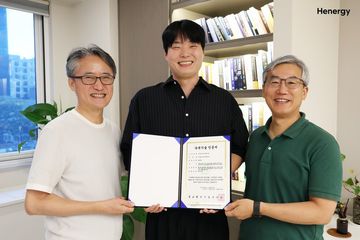
에이치에너지, 녹색기술인증 획득…솔라온케어 가동률 99.82%
에이지에너지가 태양광 발전예측 및 I-V커브 이상진단 기술로 중소벤처기업부 녹색기술인증을 획득했다. AI 기반 자산관리 플랫폼 솔라온케어는 전국 3,000개 이상 발전소에 적용되어 99.82%의 시스템 가동률과 3.7% 발전성능 개선을 달성했다. 실시간 데이터 분석을 통해 모듈 노화와 부분 음영 등 미세한 손실을 조기에 감지하고 관리함으로써 발전 수익을 보호한다.
2026.08.25by 명세환 기자











