



Akamai Korea Releases Report Analyzing Global Cloud Security Threats
 Published2017.08.30 13:16
Akamai Korea (CEO Son Bu-han) has released the '2017 Q2 Internet Security Status Report', which analyzes the global cloud security and threat environment based on the Akamai Intelligent Platform.
The increase in DDoS and web application attacks in Q2 was largely due to the resurgence of the PBot DDoS malware. PBot, a small DDoS botnet leveraging decades-old PHP code, was used in the largest DDoS attack observed by Akamai in Q2, reaching 75 Gbps. Despite comprising a relatively small network of 400 nodes, PBot generated a significant amount of attack traffic.
In the second quarter, 4,051 DDoS attacks occurred globally, a 28% increase from the previous quarter. For the first time in years, no large-scale DDoS attacks exceeding 100 Gbps were observed. Targeted sites experienced an average of 32 DDoS attacks during the quarter, with infrastructure attacks (Layer 3 and 4) accounting for 99% of all DDoS attacks. The top sources of DDoS attacks were Egypt (32%), the United States (8%), and Turkey (5%). The most common DDoS attack techniques in the second quarter were UDP fragmentation (27%), DNS (15%), and NTP (15%).
The number of web application attacks increased by 5% compared to the previous quarter. The United States (33.8%) continued to be the leading source of web application attacks, followed by China (10.2%), Brazil (8.2%), the Netherlands (6.4%), and India (3.3%). SQLi, LFI, and XSS accounted for approximately 93% of web application attack techniques.
“Attackers are constantly looking for vulnerabilities in enterprise security systems,” said Martin McKeay, senior security analyst and editor of the Akamai State of the Internet / Security report. “They are pouring more effort and resources into vulnerabilities that are more effective and frequently discovered. The Mirai botnet, WannaCry, Petya attacks, the continued rise of SQLi attacks, and the resurgence of Pivot demonstrate that attackers are using not only new tools, but also tools that have proven effective in the past.”
Akamai's threat research team analyzed the way malware command and control (C2) infrastructure utilizes the Domain Generation Algorithm (DGA), a reuse of existing technology. DGA was first discovered in the Conficker worm in 2008 and has been widely used as a malware communication technique ever since.
Akamai's threat research team has confirmed that infected networks generate approximately 15 times more DNS lookup traffic than legitimate networks. The majority of domains randomly generated by malware on infected networks are unregistered, resulting in a massive amount of traffic when attempting to access these domains. Analyzing the characteristics of infected and legitimate networks is a key method for identifying malware activity.
Comments
Related news
Daou Technology Unveils Integrated Email Security Solution to Defend Against Ransomware
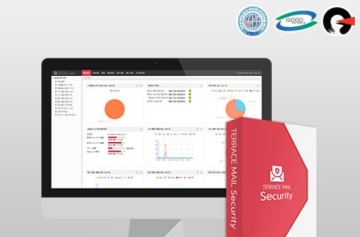
Daou Technologies (CEO Kim Yun-deok) will participate in the "11th International Cyber Security Conference (Information Security Conference 2017, ISEC 2017)" held at COEX in Samseong-dong, Seoul on September 5-6, and introduce its integrated mail security solution "TERRACE MAIL Security." TERRACE MAIL Security is an integrated mail security solution that provides essential mail security functions for enterprises in one package, including not only blocking spam and virus emails but also defending against ransomware and APT attacks, preventing corporate information leakage, and securing outgoing mail. Generally, such functions are provided through separate equipment, but TERRACE MAIL Security is provided through a single device, which has the advantage of significantly reducing construction and management costs. Additionally, through organic linkage of functions and policy configuration, it helps establish an optimal protection system from the beginning to the end of email.
2017.08.28by 김지혜 기자

VMware Announces Digital Workspace Updates for Unified Endpoint Management
VMware announced updates to its digital workspace solution for effective endpoint management at VMworld 2017 held in Las Vegas, United States. The announcement includes Workspace ONE, which integrates the unified endpoint management (UEM) solution AirWatch, and Horizon Cloud, a cloud service for the deployment and management of virtual desktops and applications. Workspace ONE, first unveiled in the first half of 2016, is the industry's first digital workspace platform that delivers consistent user experience, operations, management, and security regardless of specific mobile devices. Workspace ONE provides self-service capabilities. In other words, users can rapidly deploy desktops or applications they need regardless of the type of mobile device. Additionally, it maintains enhanced security levels, enabling enterprises to operate and manage their work environments more safely. The corresponding service model is equally applied to Windows 10 and macOS through this update.
2017.08.30by 김지혜 기자

Juniper Networks Launches Integrated Cybersecurity Platform with Automated Threat Detection
Juniper Networks has unveiled a new security solution, Juniper Contrail Security. The new security solution is designed to enable enterprises and SaaS (Software-as-a-Service) cloud providers to protect applications running across diverse cloud environments through microsegmentation. Juniper Networks is innovatively transforming how enterprises and SaaS cloud providers protect and manage cloud-native applications in multi-environment settings through Contrail Security. By combining Contrail Security with the automated threat detection and enforcement capabilities of Juniper's SDSN (Software-Defined Secure Networks) platform, it evolves into a truly integrated cybersecurity platform, enabling proactive response to any security threats.
2017.08.30by 김지혜 기자
.png)
Databricks Unveils Open AI Security Monitoring 'Lakewatch'
Databricks entered the security market on March 24 by unveiling LakeWatch, an open-source agentic SIEM. The core functionality of this product is to integrate and analyze security, IT, and business data in a single environment to support AI-based threat detection and investigation. The company explained that it reduces the limitations of existing security operations centers, which have had to forgo some data due to high cost structures, and enables large-scale data analysis and automation based on open formats and ecosystems. LakeWatch is currently offered as a private preview, with Adobe and Dropbox mentioned as early customers. Databricks also announced an expanded partnership with Anthropic as well as the acquisition of Antimatter and SiftD.ai.
2026.03.26by 배종인 기자
Kaspersky Unveils Revamped 'NEXT' Combining SOC Integrated Management and AI Analytics
As enterprises increase demand for integrated management and automation in the construction and operation of Security Operations Centers (SOC), Kaspersky has disclosed updates to its B2B security product suite 'Kaspersky Next'. This update expands EPP, EDR, XDR, and SIEM integration through a single console based on OSMP, incorporates AI capabilities such as DLL hijacking detection and suspicious account takeover behavior identification, and includes integration with generative AI assistant tool KIRA. The company stated that in large-scale deployment environments, EDR Expert can reduce resource requirements by up to 30%, and XDR Expert by up to 60%.
2026.03.25by 배종인 기자











