



Smart healthcare devices held back by medical device classifications must be classified differently according to their intended use.
 Published2017.09.01 06:44
As devices for smart healthcare are successively embroiled in controversies over whether they are medical devices, there are growing calls for different classification standards based on their intended use.
On the 30th, a meeting was held at the Yangjae El Tower, organized by the Korea u-Health Association and the Korea Testing Laboratory (KTL), to discuss changes in the smart healthcare market, certification procedures and methods for medical devices, IHE standards, FDA-510K certification, and CE (MDD_TCF) certification.
Lim Sang-guk, a team leader at KB Securities, analyzed that "with the advent of the Fourth Industrial Revolution, the role of intermediaries that analyze diagnostic data and connect them with doctors will grow," and that as the personalized treatment market expands, the number of companies providing such services will increase.
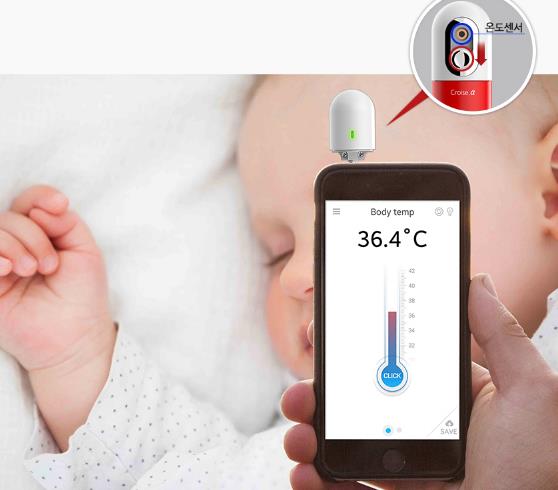
Non-contact body temperature measuring device (Source: Patron website)
He stated, “The market for disease prediction, such as Watson’s genomics and Illumina’s genomic analysis, will grow the most,” adding, “The usability of mobile medical devices is low in the domestic market.” "Fear and regulations stemming from a lack of experience in utilizing mobile medical devices and data are the problem," they said, predicting that the market for medical device utilization will only grow once there is experience.
Park Ho-jun, Director of the KTL Medical Device Research Center, stated, “The scope of medical devices referred to in Article 2 of the Medical Devices Act is broad, so smart healthcare devices are often included,” adding that “the purpose of use is important.”
"Medical devices" as defined in the Medical Devices Act are instruments, machines, devices, materials, or similar products used on humans or animals. Products used for the purpose of diagnosing, treating, alleviating, managing, or preventing diseases; products used for the purpose of diagnosing, treating, alleviating, or correcting injuries or disabilities; products used for the purpose of examining, replacing, or modifying structures or functions; and products used for the purpose of controlling pregnancy are all classified as medical devices.
In other words, since all products for the diagnosis and prevention of disease are included, there is a high likelihood that they will be classified as medical devices unless they are fitness products. This means that the classification criteria vary depending on the intended use.
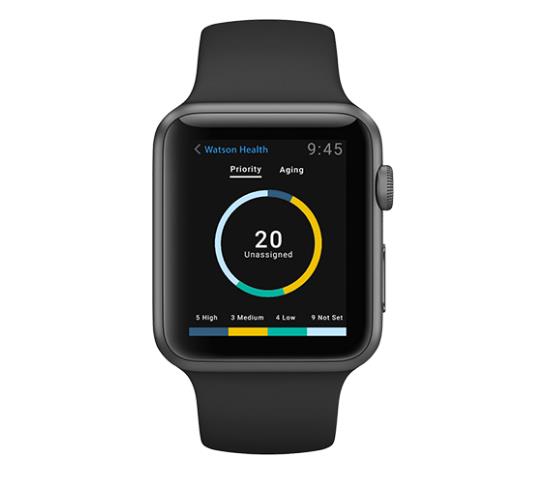
For example, in Europe, oxygen saturation measuring devices used to check for the use of oxygen tanks during climbing are not classified as medical devices. However, in Korea, there was controversy over whether attaching an oxygen saturation device to the Galaxy Note 4 constitutes a medical device. The Ministry of Food and Drug Safety interpreted non-medical pulse oximeters as being for leisure purposes and did not classify them as medical devices.
Director Park stated, “While efficacy, economic efficiency, and safety are important for medical devices, safety is paramount for electronic medical devices,” adding, “To export medical devices overseas, there are many standards to adhere to, including management, medical device safety, and clinical trials.”
He noted the difficulty in complying with risk management standards among the many criteria, stating, “In the past, passing was granted if the deliverables met the standards, but with the revision of IEC 60601 to the 3rd edition, the number of items has increased from 379 to over 1,260.” He added, “In addition to this, manufacturers must add requirements if they deem something risky. Since the evaluation focuses on documenting the process rather than the results, it has become difficult to meet the regulations.” He explained that it is important to check standards related to how medical devices are classified, their scope of application, and their purpose.
관련뉴스
[Issue] Healthcare Influence Concentrated on Doctors: Must We Abandon Domestic B2C?
4차 산업혁명 시대의 유망 비즈니스 중에 하나인 ‘스마트 헬스케어’ 산업이 국내 법 제도와 미흡한 표준화에 발목이 잡혀 여전히 답보 상태에 머물고 있다는 지적이다. 한국u헬스협회와 한국산업기술시험원의 주최로 지난 12일 열린 ‘4차 산업혁명 준비를 위한 헬스케어 산업의 대응방안’ 토론회에서 참가자들은 스마트 헬스케어 서비스를 확대하기 위해 법 제도를 개선하고 민간 주도로 시장이 확대되어야 한다고 한 목소리를 냈다. 토론회에 앞선 주제 발표에서는 테크앤로 법률사무소의 구태언 변호사가 현재 건강정보보호법의 체계와 헬스케어 서비스를 확대하기 위해 필요한 법제도 개선 문제에 대해 얘기했고, 경희대학교 컴퓨터공학과 신수용 교수는 ‘헬스케어 인공지능의 표준화 로드맵’을 소개했다. 이 자리에서 신 교수는 “우리가 가진 헬스케어 데이터를 합쳐야 하는데 그러려면 반드시 표준화가 되어야 하고 데이터 저장 방식을 통일해서 외부에 공개해야 한다”며 표준화의 중요성을 언급했다.
2017.06.19by 김지혜 기자
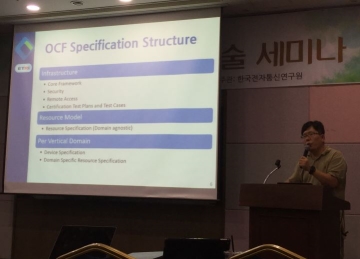
Easy and fast connectivity is key to IoT healthcare as well; how is standardization progressing?
A discussion on smart healthcare was held on the 18th at the Science and Technology Hall. At the event "Healthcare Internet of Things Technology for the Fourth Industrial Revolution," hosted by the Ministry of Food and Drug Safety and organized by the Electronics and Telecommunications Research Institute, participants discussed △cloud for healthcare IoT application development △healthcare IoT device development processes and Web RTC technology for remote healthcare services △OCF standards △healthcare patent trends and demonstration project status.
2017.07.18by 김자영 기자
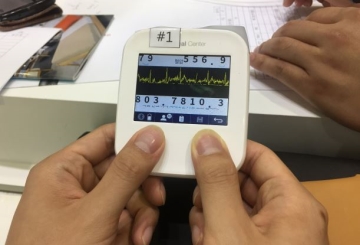
[KITAS Video Coverage] Healthcare? Non-contact thermometers and touch-sensitive blood pressure monitors!
When a baby is sick, wouldn't it be nice to measure body temperature 'gently' without waking a soundly sleeping baby. It is a non-contact thermometer that can measure temperature without direct contact. It is safe and hygienic. It can measure temperatures from -10°C to 200°C, making it capable of measuring temperatures of metals, plastics, water, glass, baby formula, wine, and ambient environmental temperature. Connect the 3.5mm earphone jack to a smartphone, install the app, and use it by pressing the temperature measurement button. Additionally, the app sends alarms at regular intervals to indicate when temperature should be measured.
2017.08.14by 김자영 기자
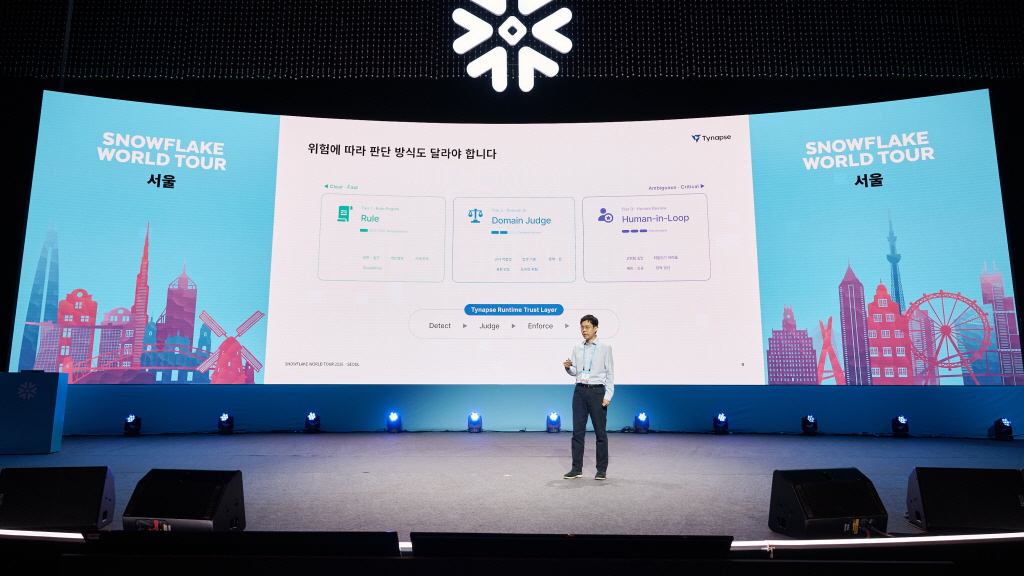
The Problem with AI is Not Performance, but Trust
CEO Kang Min-seung emphasized at Snowflake's World Tour Seoul that generative AI has entered a phase where "trust" rather than accuracy becomes the key competitive advantage. As AI is applied to various tasks including consultation, risk management, and operational automation, incorrect data, erroneous responses, and bias are creating actual business risks. He pointed out that enterprises must build a trust layer above AI. To achieve this, accurate data management, semantic structuring, governance, and prompt security are essential. He explained that AI is not merely an automation tool but a technology that reorganizes the entire organization's workflows and decision-making systems. Snowflake provides a platform that supports this trust-based AI operation, emphasizing that enterprises should build "trustworthy AI" rather than "intelligent AI."
2026.08.28by 배종인 기자
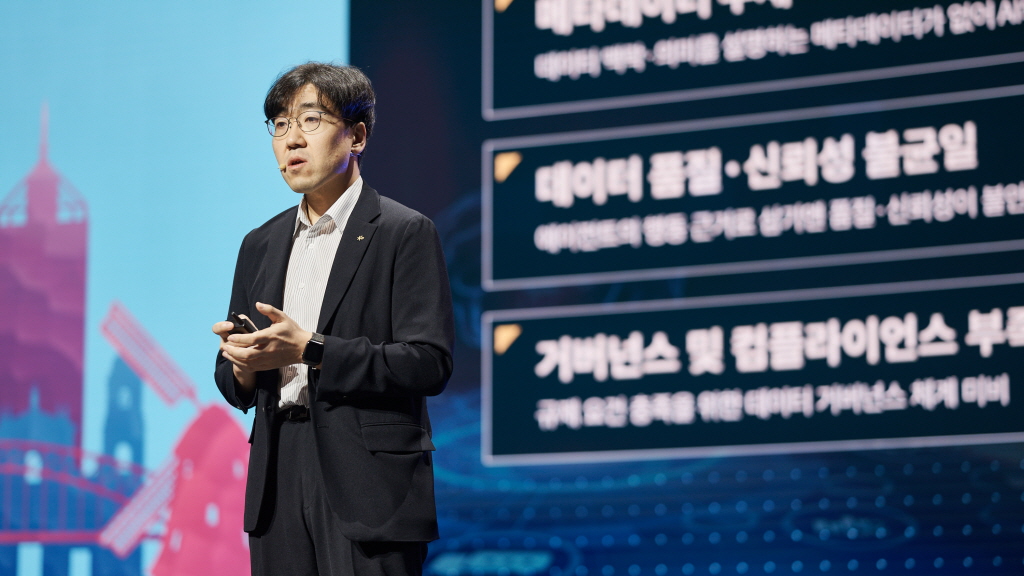
The Decisive Factor for AI Agents in Finance: "Trustworthy Data Infrastructure"
The key to spreading AI agents in the financial sector is establishing a trustworthy data system. KB Kookmin Bank is operating over 100 AI agents by 2025 and is promoting expansion to 300. AI is automating repetitive tasks across various areas such as consultation, risk management, wealth management, and relationship management. However, if data quality, governance, and semantic structuring are insufficient, errors and risks increase. KB is building an AI-Ready organization through a multi-model strategy of GPT, Gemini, and Claude, as well as a Snowflake-based data system. The bank emphasized that AI has entered a phase where it restructures not just simple automation but the entire work process and decision-making system.
2026.08.28by 배종인 기자











