



Mentor Enables VersaPoint Testpoint Technology While Maintaining ISO26262 Compliance
 Published2017.11.14 17:24
Mentor, a Siemens business, announced the availability of VersaPoint test point technology in its Tessent ScanPro and Tessent LogicBIST products, which maintain ISO 26262 qualification, the automotive semiconductor safety standard.
VersaPoint test point technology reduces manufacturing test costs and improves the quality of in-system test. Both requirements are essential for achieving reliable ICs in automotive and other industries. Mentor also announced that Renesas Electronics has adopted VersaPoint technology in its automotive ICs to meet safety-critical test requirements and achieve ASIL (Automotive Safety Integrity Level) C and D certification.
Digital circuits in automotive ICs are typically tested using a hybrid solution of on-chip compression/ATPG technology and logic-built-in self-test (LBIST) technology, which achieves very high fault coverage in manufacturing test and enables in-system self-test and power-on self-test (POST).
Test points are dedicated design structures used to improve test results. Traditional LBIST test points provide improved results by addressing the "random pattern resistance" problem within the IC. Mentor's more recent test points specifically developed for on-chip compression/ATPG reduce the number of ATPG patterns by two to four times compared to what can be achieved with on-chip compression alone. Tessent VersaPoint test point technology combines and enhances these technologies.

“Renesas is leveraging test points to help meet stringent IC test requirements to deliver industry-leading automotive ICs,” said Hisanori Ito, vice president of the Automotive SoC Business Unit at Renesas Electronics. “With Tessent VersaPoint test point technology, separate solutions are no longer needed for different IC types. This results in improved quality and reduced costs for both manufacturing and in-system test. The streamlined DFT implementation flow also shortens development cycles and time-to-market.”
Adopting Tessent VersaPoint technology increases LBIST test coverage compared to conventional LBIST test points, while reducing the number of ATPG patterns compared to using on-chip compression/ATPG test points. This technology is designed to help test engineers using Tessent Hybrid ATPG/LBIST achieve cost savings and improved test quality, particularly in ICs targeting automotive applications.
“Our customers are constantly looking for ways to reduce the cost of test as design sizes increase and quality requirements become more stringent,” said Brady Benware, marketing director for Mentor’s Tessent product line. “At the same time, high-reliability applications are driving the need for efficient in-system test. “With the availability of VersaPoint test point technology, customers have a more effective way to meet both manufacturing test requirements and in-system test requirements,” he said.
관련뉴스

Mentor, TSMC CoWoS Packaging Technology Support
Mentor, a Siemens Business, announced that it has significantly enhanced its Calibre® nmPlatform, Analog FastSPICE™ (AFS™) Platform, Xpedition® Package Integrator, and Xpedition Package Designer tools to support TSMC's innovative InFO integrated fan-out advanced packaging and CoWoS (chip-on-wafer-on-substrate) packaging technology. Through TSMC's InFO and CoWoS 3D packaging technologies, customers can achieve higher levels of integration and capacity compared to traditional one-dimensional ICs by mixing multiple silicon dies into a single device. Mentor currently offers a comprehensive InFO verification and analysis suite spanning from design to package based on the Mentor Calibre and Xpedition platforms. Key benefits include a rapid hierarchical design prototyping environment in Xpedition Package Integrator that enables fast flow from design to tape-out, which is integrated into Xpedition Package Designer and Calibre sign-off verification suite. Through additional collaboration, cross-probing functionality between Calibre 3DSTACK and Xpedition tools has been expanded, and results can be reviewed within the Calibre RVE interface. TSMC and Mentor have also enabled Mentor's thermal analysis products (including Mentor AFS and Calibre xACT™ products) to support thermal-aware simulation for customers' InFO designs.
2017.09.29by 김지혜 기자

멘토, 돈 밀러 어워드 열유체 설계 수상자 발표
멘토, 지멘스 비즈니스는 제 3회 연례 돈 밀러(Don Miller) 어워드 시스템 수준 열유체 설계 최우수작 수상자를 발표했다. 이 어워드는 영국 BHR(British Hydromechanics Research, 현 BHR Group)의 전 연구소장이자 Internal Flow Systems의 저자인 돈 밀러(Don Miller)의 이름을 따서 명명되었다. 그의 저서인 Internal Flow Systems는 Mentor Flowmaster 소프트웨어 기술의 기반이 되고 있다. 2017년 돈 밀러(Don Miller) 어워드 수상자들은 다양한 열유체 설계 애플리케이션에서 그 우수성을 입증함으로써 선정되었다. 이 콘테스트는 인도, 한국 및 호주를 비롯한 전세계로부터 참여 신청이 이루어졌다. 1등 한 팀과 2등 두 팀은 각각 폐수 재활용을 위한 열유체 애플리케이션, 가스 터빈 날개의 냉각, 우주 발사체(SLV)의 연료공급 기술로 수상했다.
2017.10.12by 김지혜 기자

멘토, 지멘스 비즈니스, 자동차 전자 시스템 반도체 진단 솔루션 출시
멘토, 지멘스 비즈니스가 자동차 전장 시스템 반도체 테스트 및 진단 솔루션인 ‘티센트 미션모드(Tessent® MissionMode)’를 출시한다고 발표했다. 이 제품이 제공하는 자동화 기능과 온칩 IP의 조합을 통해 자동차 전장 시스템 전반의 반도체 칩들을 차량의 어떠한 기능적 작동 시점에서도 테스트 및 진단할 수 있다. 이는 ISO 26262 표준이 요구하는 안전성 및 장기적인 신뢰성 요건을 달성하는 데 있어서 기본적인 기능이다. Tessent MissionMode는 상용 솔루션으로는 유일하게 오토모티브 칩에 통합된 어떠한 테스트 및 진단 기능이라도 시스템 소프트웨어를 기반으로 액세스할 수 있는 인프라를 제공한다. 이 칩에 통합되어 있는 인시스템 테스트(IST) 컨트롤러는 내부의 IEEE 1687 (IJTAG) 액세스 네트워크를 구동해 어떠한 IJTAG-호환 IP와도 통신할 수 있다.
2017.11.08by 김지혜 기자

A single misaligned light means 'defect'… Vehicle interior lighting now guarded by semiconductors and software
Automotive interior lighting is moving beyond its role as 'auxiliary lighting.' As it becomes a core element of user experience (UX) that expresses brand identity through color and animation while reflecting driver preferences, the LED interior ambient lighting market is growing rapidly. In connection with this, we met in advance with Choi Young-jae, Research Director at Dabo Corporation, who will present a technical webinar session on "Intelligent LED Interior Lighting Solutions Illuminating Future Vehicles," to hear about market trends and changes in design requirements.
2026.08.28by 명세환 기자
TI, HEV·EV 트랙션 인버터용 다축 코어리스 전류 센서 TMCS2100-Q1 공개
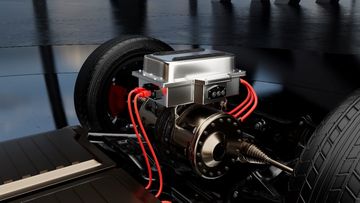
Texas Instruments가 HEV·EV 트랙션 인버터용 다축 코어리스 홀 효과 전류 센서 TMCS2100-Q1을 공개했다. 수평·수직 자기장을 동시에 측정하는 다축 센싱 기술로 기존 단일 축 센서 대비 최대 20배 높은 정확도를 달성하며, 버스바 무개조 설계로 기계 설계 유연성을 확보했다. 800V 아키텍처 확산에 따른 고정확도 요구 충족과 소형화를 동시에 구현한다.
2026.08.27by 배종인 기자











