



Ansys Launches Modeling Program to Resolve Design Complexity
 Published2018.02.01 11:23
ANSYS announced the release of 'ANSYS 19,' which dramatically reduces the cost and time to market for innovative products ranging from autonomous vehicles to smart devices.
Ansys 19 helps resolve design complexity and address these challenges by supporting tools that improve reliability, performance, speed, and ease of use for all engineers across industries. It also enhances engineer productivity by providing solutions that create a seamless workflow at every stage.
Ansys 19 has completed updates aligned with the latest industry trends across product families, including embedded software, fluid, structural, and electrical/electronic. In the embedded product family, Ansys 19 supports Architecture Analysis and Design Language (AADL)-based modeling. This helps enterprises control system costs and maximize critical performance metrics such as system reliability, integration, security, and availability.
Ansys 19, capable of modeling software and hardware components, provides tools to support the design of electronic device systems for military applications compliant with the U.S. aerospace technology standard, FACE (Future Airborne Capability Environment). In addition, Ansys 19 enables engineers to design and implement state-of-the-art embedded HMIs (Human Machine Interfaces). This enables engineers to rapidly develop, deploy, and test safety-critical HMIs, ranging from the control of aircraft cockpit displays to automotive infotainment and dashboard displays, and room displays for industrial applications.
In addition, Ansys 19 provides a solution for Multirate (Multi-scheduled Multi-threaded application on Multi-core processors) applications commonly used in embedded software. These applications faced several challenges in processing data between functions scheduled at different speeds. With the newly provided solution, users can receive a seamless flow to identify and verify Multirate application architectures within qualified code, thereby significantly reducing the time required for certification and qualification.
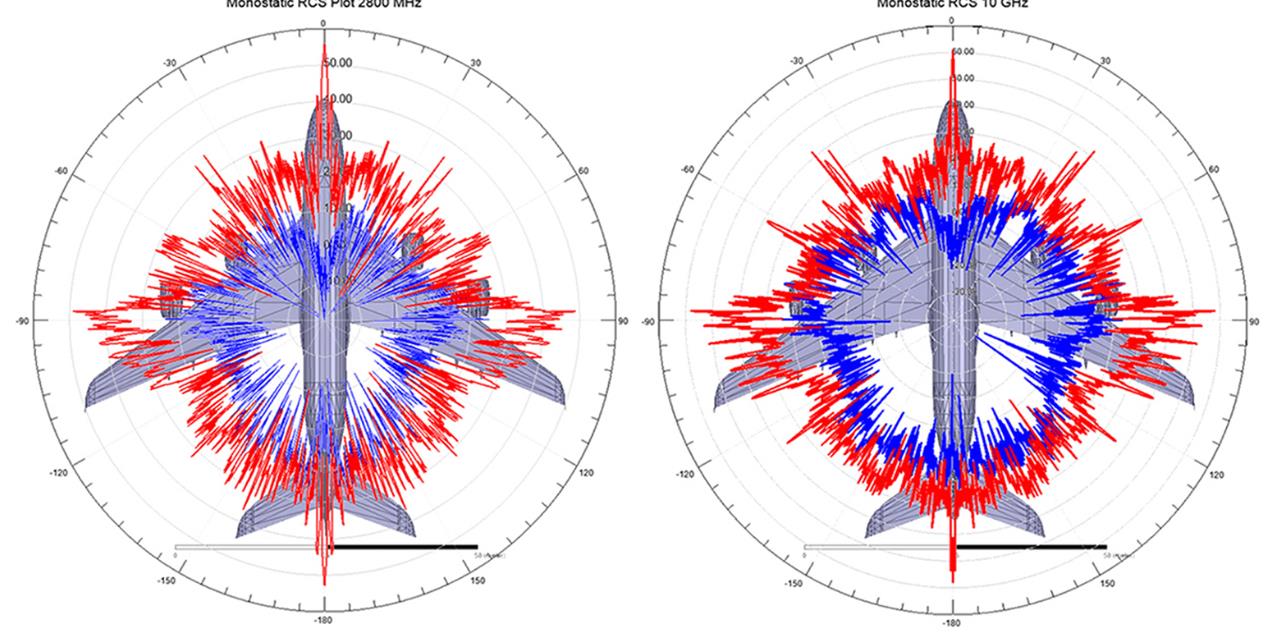
The Mechanical and Electromagnetics product family has introduced Radar Cross Section (RCS) analysis using HFSS SBR+. Useful for engineers designing autonomous vehicles, advanced detection systems, and stealth technologies, this technology optimizes numerous designs by digitally iterating and exploring them in a short period of time. Additionally, Ansys 19 provides a robust and integrated 'Electromagnetic-Thermal Coupled Analysis' workflow that predicts the thermal effects critical to the development of high-performance electronics. In addition, it provides enhanced computing power and additional capacity through high-performance computing (HPC) cores increased from the existing two to four.
ANSYS Medina Analyze, a new system product family, can be used for functional safety analysis in the automotive, aerospace and defense, rail, nuclear, and other safety-critical industries. By implementing a step-by-step modeling, analysis, and verification process that aligns with applicable safety standards, it simplifies and automates the analysis of failure modes and their scope through safety mechanisms across a wide range of operational scenarios.
In the semiconductor field, Ansys 19 provides a comprehensive simulation solution that simultaneously addresses various design characteristics, such as power noise, thermal characteristics, reliability, and performance, across the entire spectrum of chip package systems. Furthermore, Ansys 19's big data simulation platform enables rapid design iteration under various operating conditions and prioritizes design modifications through analysis, thereby significantly reducing time-to-market.
New features in the upgraded fluid product family significantly reduce the computational effort required by spray nozzle designers to optimize product performance. Unlike previous methods that calculated droplet distribution sizes, Ansys 19 directly tracks interfacial instability and surface tension effects that cause ligament and droplet formation based on the fluid model's capacity. This enables fast and accurate spray fragmentation resolution and droplet ejection.
In the structural product family, Ansys 19 provides enhanced speed and remeshing automation with groundbreaking updates to the remeshing methods for disintegration, deformation, adaptation, and disintegration. The industry's first Material Force Fracture Parameter helps users gain insights that go beyond the assumptions of typical linear elastic fracture mechanics. Thus, engineers can overcome non-linear problems in applications such as sealing and forming materials using Ansys 19's non-linear adaptivity capabilities.
The 3-D design product family provides engineers of all levels with the opportunity to use simulation as a new approach when designing products. Engineers using Ansys 19 can produce lighter and more robust designs in a short timeframe through enhanced topology optimization capabilities. Furthermore, Ansys continuously provides geometry optimization updates to allow engineers to gain additional control over the final design in a short period. In addition, improvements in printing capabilities enable engineers to modify and control topology-optimized geometries more quickly and flexibly for downstream use.
"Many companies are shortening product design cycles by 30–50% and drastically reducing testing costs by shifting prototyping tasks from hardware to software using the outstanding design optimization capabilities of Ansys simulation software," said Yongwon Cho, CEO of Ansys Korea. "Through the enhanced pervasive engineering simulation solutions of the newly introduced Ansys 19, Ansys will provide engineers in various fields with the insights to effectively solve the complex problems they face."
Comments
Related news

Ansys Korea Hosts Electronics Simulation Expo
ANSYS Korea held the 2017 ANSYS Electronics Simulation EXPO (AESE), which addressed methods for improving electronic system design and the latest technologies and cases by industry sector. The expo, held at the COEX Grand Ballroom, opened with a keynote speech by Sudhir Sharma, ANSYS High Tech Industry Marketing Director, attended by ANSYS customers and experts from various fields. Sudhir Sharma explained, over approximately 50 minutes, methods for developing smart connected products and improving quality through engineering simulation. Following this, Kim Tae-jin, Director at ANSYS Korea, presented simulation cases utilizing artificial intelligence and machine learning, which are technologies receiving recent attention, and future prospects. He stated, "Through technological advancement, it has become possible to realize functions similar to human learning capabilities through computers. Therefore, computers can learn from past failures on their own and recognize problems before errors occur, making it possible to derive more accurate simulation values and reduce maintenance costs."
2017.11.17by 김지혜 기자
Ansys Acquires Additive Manufacturing Simulation Technology Developer
ANSYS has announced that it has acquired 3DSIM, an additive manufacturing (AM) simulation technology development company, enabling it to provide customers with the world's only complete additive manufacturing simulation workflow. 3DSIM is a company that develops high-performance simulation software for metal additive manufacturing. 3DSIM supports manufacturers, designers, and engineers in achieving optimal objectives through simulation without having to go through prototype testing. Its primary customers include aerospace and automotive OEMs (Original Equipment Manufacturing), metal 3D printer manufacturers, and universities and major research institutes. Additive manufacturing, a technology attracting attention in the 3D printing field, has primarily been used in prototype fabrication, but recently it is being directly applied to mass production of products. Various materials are being produced through additive manufacturing technology, and metal materials in particular are challenging to handle. In metal additive manufacturing processes, the lasers used can optimize metal density but can simultaneously melt the metal and cause errors. Furthermore, rapid heating and cooling during the process can induce stresses, creating a high likelihood of product deformation.
2017.11.21by 김지혜 기자

Ansys Leads Ferrari to WEC Victory with CFD Solutions
ANSYS announced that Ferrari, an Italian supercar brand, has won the GTE-Pro class championship in the FIA World Endurance Championship (WEC) by utilizing its computational fluid dynamics (CFD) solution to secure the manufacturer and driver championship titles. In WEC 2017, Ferrari claimed its fifth WEC championship trophy in FIA-sanctioned competitions and its twenty-fourth constructor championship title. Ferrari used ANSYS's computational fluid dynamics (CFD) solution to maintain aerodynamic characteristics with superior durability in its class. By leveraging this solution, the company maximized downforce to enhance high-speed stability and minimized tire damage. Additionally, by optimizing airflow around the vehicle body, Ferrari was able to achieve superior performance compared to its competitors.
2017.12.06by 김지혜 기자
.jpg)
SalePoint Signs Multi-Year Partnership Agreement with AWS… Promoting Identity Security that Integrates Even AI Agents
Sailpoint has entered into a multi-year strategic partnership agreement with AWS and is moving forward with establishing an integrated governance system that manages both human and non-human identities together. The plan is to consistently manage access permissions in an environment where AI agents are increasing as work execution entities, while applying the principle of least privilege and automated policy enforcement. The two companies plan to jointly expand capabilities to manage the identities of various entities, including AI agents, within a single layer in the AWS environment. This collaboration is interpreted as a move to design security and governance together in corporate environments where AI adoption is expanding.
2026.03.26by 배종인 기자
.png)
Databricks Unveils Open AI Security Monitoring 'Lakewatch'
Databricks entered the security market on March 24 by unveiling LakeWatch, an open-source agentic SIEM. The core functionality of this product is to integrate and analyze security, IT, and business data in a single environment to support AI-based threat detection and investigation. The company explained that it reduces the limitations of existing security operations centers, which have had to forgo some data due to high cost structures, and enables large-scale data analysis and automation based on open formats and ecosystems. LakeWatch is currently offered as a private preview, with Adobe and Dropbox mentioned as early customers. Databricks also announced an expanded partnership with Anthropic as well as the acquisition of Antimatter and SiftD.ai.
2026.03.26by 배종인 기자











