



ON Semiconductor Unveils X-Class CMOS Image Sensor Platform
 Published2018.03.13 10:28
ON Semiconductor has unveiled an X-Class image sensor platform that supports multiple pixel functions in a single camera design. The first devices included in this platform are the 12-megapixel (MP) XGS 12000 and 4K UHD resolution XGS 8000 image sensors, which deliver high-performance imaging capabilities for applications such as machine vision, intelligent transportation systems, and broadcast imaging.
The X-Class image sensor platform supports various CMOS pixel architectures within the same image sensor frame. With a single camera design, it supports diverse product resolutions and enables larger pixels that trade resolution for higher imaging sensitivity in a given optical format, as well as designs optimized for noise reduction to increase tolerance. Camera manufacturers can leverage existing component inventory by supporting various pixel architectures through common high-bandwidth, low-power interfaces, and can accelerate the time-to-market for new camera designs.
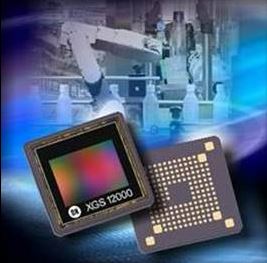
The XGS 12000 and XGS 8000, the first devices in the X-Class product family, are characterized by outstanding imaging performance, uniformity, and low noise. These products are based on the platform's first pixel architecture, including advanced 3.2 micrometer (µm) global shutter CMOS pixels. The XGS 12000 delivers 12MP (4096 x 3072 pixels) resolution in a 1-inch optical format, providing the image requirements and performance needed for the latest machine vision and inspection applications.
It is offered in two versions: a version that delivers maximum resolution at 90 frames per second, fully utilizing the 10-gigabit Ethernet interface, and a cost-effective version that delivers a maximum frame rate of 27 frames per second adapted to the bandwidth available in USB 3.0 computer interfaces. The XGS 8000 offers 4K UHD (4096 x 2160 pixels) resolution in a 1.1-inch optical format. Two versions supporting frame rates of 130 and 72 frames per second will be released, making it suitable for broadcast applications.
Both devices feature compact 29 x 29 mm² package sizes with low thermal characteristics implemented through the X-Class interface's low-voltage, low-power architecture, compatible with compact camera designs.
Hubert Uehard, Vice President and General Manager of the Industrial Solutions Business Unit for ON Semiconductor's Image Sensor Group, stated, "Through the X-Class platform and new XGS pixel-based devices, end-users can leverage the performance and imaging capabilities their applications require. Camera manufacturers gain the flexibility needed to develop next-generation camera designs for both current and future customers."
The XGS 12000 and XGS 8000 will begin sampling in Q2 2018 and move to production in Q3. Both devices will be packaged in 163-pin LGA (Land Grid Array) packages in monochrome and color versions. In the future, devices based on the 3.2-micrometer (µm) XGS pixels and products based on other pixel architectures will be added to the X-Class product family.
Related news
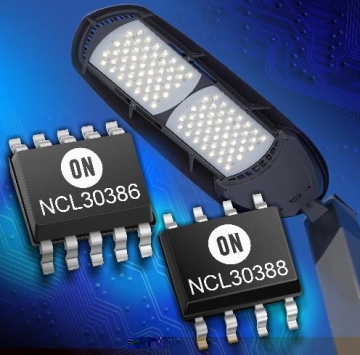
ON Semiconductor Unveils New LED Lighting Controller for Dimming/Non-Dimming
On Semiconductor has unveiled two new LED lighting controller solutions: the dimmable NCL30386 and the non-dimmable NCL30388. These solutions provide designers of LED lighting fixtures, such as lighting used in office and industrial building applications, with market-leading options. Both devices are high power factor, single-stage, constant current/constant voltage primary-side regulated (PSR) pulse width modulation (PWM) controllers for Flyback, Buck-Boost, or Sepic power topologies. They operate in Quasi-Resonant mode to achieve efficiency levels that exceed those required by power standards including the EU's Ecodesign, ENERGY STAR, and NEMA SSL regulations.
2018.03.06by 김지혜 기자
.jpg)
OnSemiconductor Unveils High-Resolution 35mm CCD Image Sensor
OnSemiconductor has introduced the KAI-43140, a 43-megapixel (MP) high-resolution 35mm optical format charge-coupled device (CCD) image sensor, expanding its capabilities in high-resolution industrial imaging solutions. The KAI-43140 is well-suited for applications requiring ultra-high-resolution image capture and excellent image uniformity, such as final inspection of high-definition (HD) and ultra-high-definition (UHD) flat panel displays and aerial photography.
2018.03.07by 김지혜 기자
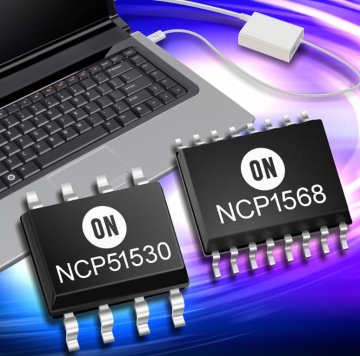
ON Semiconductor Unveils Solution for High-Density Power Adapters
ON Semiconductor has unveiled a new solution for high-density power adapters that meet global standards for notebooks, tablets, and other portable devices requiring compatibility with USB PD (Power Delivery) or Qualcomm Quick Charge specifications. This solution, which is the subject of multiple patent applications, consists of an active clamp flyback (ACF) controller NCP1568 and a corresponding high-speed half-bridge driver NCP51530. A 65W USB-PD compatible adapter delivers power efficiency up to 94.5% and power density of 30W/in³. The NCP1568 is a highly integrated AC-DC pulse width modulation (PWM) controller that implements ACF topology with zero voltage switching (ZVS) for high-frequency applications (up to 1 MHz) requiring high power density and efficiency. Additionally, the NCP1568 controller can implement ACF topology using proven Super Junction FETs or high-performance gallium nitride (GaN) FETs.
2018.03.08by 김지혜 기자

Intel Unveils Next-Generation 'Core Ultra Series 3' and vPro Platform for Enterprise PCs
Intel has officially unveiled the "Intel Core Ultra Series 3" for next-generation enterprise PCs and the latest vPro platform, addressing a wide range of demands from enterprise notebooks to high-performance workstations.
2026.03.26by 배종인 기자
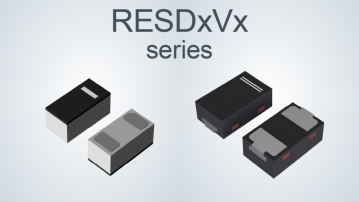
ROHM Launches ESD Protection Diode Compatible with High-Speed Interfaces of 10Gbps or Higher
Semiconductor specialist ROHM has developed the 'RESDxVx series' of ESD (electrostatic discharge) protection diodes capable of responding to next-generation high-speed data communication environments exceeding 10Gbps, simultaneously enhancing both signal quality maintenance required in high-speed interfaces and IC protection performance.
2026.03.26by 배종인 기자











