



Now is the time for manufacturing security to raise its awareness to the 'zero security' level.
 Published2018.04.03 14:07
'Minimum security requirements' and other measures should be created considering the realities of small and medium-sized enterprises
With the advancement of the Fourth Industrial Revolution, security is both a matter that needs improvement and an immediate challenge. The importance of industrial development is evidenced by the government's 'Smart Manufacturing Innovation Vision 2025' and companies' push for automation. However, currently, the focus is on the blind adoption and strategic aspects of smart factories rather than their qualitative aspects.
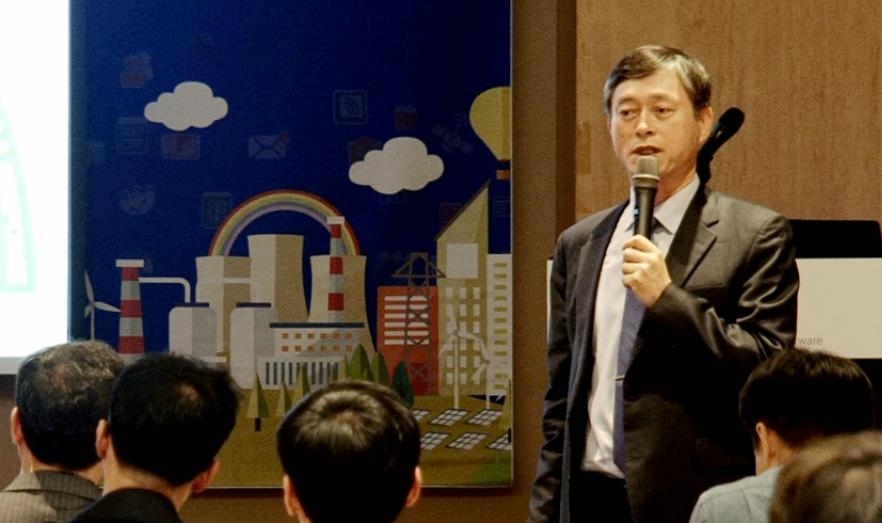
Professor Han Geun-hee of the Graduate School of Information Security at Konkuk University stated, “The importance of security has already been emphasized through domestic and international cases. Information security measures for smart factories are necessary, and the starting point requires not only technological capabilities but also a prior awareness of security among the public.” Through the interview, the current situation and various case studies were discussed to explain why security is important, what is needed, and what attitude we should adopt in dealing with it.
Many companies recognize the importance of security. Could you explain the necessity of security a little more clearly?
The importance of security can be best illustrated by looking at accident cases resulting from a lack of security. In manufacturing sites, equipment frequently malfunctions due to errors, malicious code is intentionally embedded, or vulnerabilities are exploited to halt normal operation. In the manufacturing sector, if equipment such as PLCs, sensors, and actuators malfunction due to hacking, it can lead not only to massive losses but also to human casualties. Representative examples include the wireless hacking attack on Australia's wastewater treatment system and Stuxnet. Security incidents resulting from such attacks can cause large-scale national and social disruption and escalate to a level that threatens national security. To prevent this, effective security countermeasures must be established.
- What is the level of our country's technological capability regarding security, and what other requirements do we need to meet?
I believe that both technological capabilities and physical security are close to zero. Looking at the government's smart factory initiatives and other policies, they focus solely on quantitative aspects while neglecting security. Moreover, what is actually more critical is the significant lack of awareness regarding the importance and perspective of security. The Stuxnet case is a prime example. This security incident involved a power plant that shut down because the internal devices were not detected, despite the facility appearing intact on the outside. This case demonstrates a breach in human security. The fact that an infection occurred despite strict internal controls and a lack of connection to external networks indicates that it was an accident caused by humans. Security incidents at the site of personal information leaks are also human-related. While technological capabilities and physical security are important, human security is the top priority when it comes to safety and security.
- What efforts do you think should be made first to strengthen human security?
This refers to security personnel training. For the sake of personal information protection, training should be conducted once a year. Unlike large corporations, small and medium-sized enterprises (SMEs) may avoid implementing such training due to concerns regarding the time and cost involved. However, the long-term losses resulting from incidents are far greater than the short-term costs invested in security. This includes not only monetary costs but also the company's reputation and image. In other words, training is crucial. Nevertheless, the reality is that such training is not being conducted even by the Smart Factory Promotion Team or other public institutions. It is necessary to prioritize strengthening security education under government leadership.
- In addition to awareness and human factors, what aspects need to be improved regulatoryly or technically?
The United States is strong in security. We need to refer to this. Recognizing the importance of ICS for a long time, they have introduced various countermeasures. One of these is the 'Minimum Security Requirements.' These were created considering the circumstances of small and medium-sized enterprises (SMEs) that have limited investment capabilities. In this regard, Korea's countermeasures are significantly lacking. We also need to recognize that many companies face difficulties in adopting systems, and rather than pushing forward unreasonably, we need to refer to these foreign examples and apply the 'Minimum Security Requirements.'
관련뉴스
.jpg)
When Industrial Security Requires 'Skilled Experts' and 'Management Attention'
2011년 4월 현대캐피탈이 총 175만 명에 달하는 고객 정보를 해킹당했다. 그리고 같은 해 7월에는 네이트에서 3,500만 건이, 2014년 1월에는, KB카드, 롯데카드, NH카드 3사의 개인정보가 모두 합해 1억 건이 유출됐다. 해킹에는 많은 이유가 있지만, 관리에 대한 소홀함과 직원들의 소행으로 드러났다. 내부 직원에 의한 정보유출은 빈번히 일어나고 있다. 금융회사들이 전산망의 해킹을 막는 데 집중하느라 내부 직원이나 보안 관리자를 통제하는 데에는 미흡했다. 위 사례를 통해 보안에 대한 사람의 중요성, 사람 중심의 패러다임 변화라는 교훈을 알 수 있다. 하지만 우리는 여전히 상황에 대해 고려가 아닌 일원화된 대응책만을 마련해 다양하고 입체적인 위협요소로부터 위험에 놓여있다. 주변 환경에 대해 늘 견지해야 할 필요가 있다. 4차 산업에 대한 정부 및 공공기관, 여론의 관심이 높아지고 있다. 그리고 각종 국제무대에서 혁신적인 제품을 내놓고 있다. 4차 산업의 핵심은 초연결을 기반으로 한다. 많은 사람의 의견을 듣고 사물을 접하면 질적으로나 양적으로 데이터가 풍부해진다. 연결의 범위가 확대하고 다양한 정보를 획득하면서 데이터 추론과 자율적인 서비스가 가능해지며 유의미한 정보 생산이 이루어진다.
2018.03.19by 김학준 기자
.jpg)
[Foreign Press Briefing] Profitable AI White Paper: "Accelerating AI for Future Network Operations" and More
돈 되는 인공지능 백석 ‘미래 네트워크 운영을 위한 AI 가속화’ ZTE가 IDC와 '미래 네트워크 운영을 위한 AI 가속화‘ 백서를 발간한다. 여기에는 2020년까지 모든 데이터를 분석하고 유용한 정보를 제공하는 조직은 4,300억 달러 이상의 생산성을 낼 것으로 봤다. ZTE는 5G 관점에서 AI를 투자 우선순위로 삼았으며 5G 네트워크는 인프라 관리, 네트워크 및 비즈니스 기능 관리 및 운영 지원을 포괄하는 인공지능 기능에 의존할 것으로 봤다. 주요 응용 프로그램 전망에는 '네트워크 운영 및 유지 보수', '보안 및 네트워크 구성과 오케스트레이션, 최적화', '비즈니스 운영 및 지원' 등 세 가지 영역이 있다. 네트워크 운영은 AI 기반 자동화가 가치를 창출하기 위한 즉각적인 영역이다. 네트워크 구성, 오케스트레이션 및 최적화는 5G 환경에서 AI의 이점을 가장 크게 볼 것으로 내다봤다. 비즈니스 운영 및 지원은 고객 참여 인터페이스, 지식 기반 및 작업 발송 시스템에 포함된 AI로 향상할 것이라고 밝혔다.
2018.03.21by 김학준 기자
Limelight Networks Sets Out to Target Domestic CDN Market
라임라이트 네트웍스는 삼성동 그랜드인터컨티넨탈호텔 메이플룸에서 기업 및 공공 기관의 CxO 및 주요 관리자들이 참여한 가운데 ‘차세대 비즈니스 리더를 위한 라임라이트 세미나’를 성황리에 개최했다고 밝혔다. ‘차세대 비즈니스 리더를 위한 라임라이트 세미나’에서 라임라이트는 강력한 클라우드 보안 서비스 제공 및 고화질 저지연 글로벌 CDN 사설망 기반으로 고객 맞춤형 서비스 제공으로 비디오 스트리밍 시장 공략 강화에 나서, 국내 CDN 시장을 공략하여 저변 확대에 나선다고 밝혔다. 이날 세미나에서는 n차세대 비즈니스의 리더들을 위한 혁신적인 라임라이트 서비스 n성공적인 비즈니스의 필수 요소, ‘클라우드 보안’ n비즈니스 국내외 성공사례 등을 소개했다.
2018.03.29by 김지혜 기자
.png)
Databricks Unveils Open AI Security Monitoring 'Lakewatch'
데이터브릭스가 3월 24일 개방형 에이전틱 SIEM ‘레이크워치’를 공개하며 보안 시장에 진입했다. 이 제품은 보안, IT, 비즈니스 데이터를 단일 환경에서 통합 분석해 AI 기반 위협 탐지와 조사를 지원하는 것이 핵심이다. 회사는 고비용 구조 때문에 일부 데이터를 포기해온 기존 보안관제의 한계를 줄이고, 개방형 형식과 생태계를 바탕으로 대규모 데이터 분석과 자동화를 가능하게 한다고 설명했다. 레이크워치는 현재 프라이빗 프리뷰로 제공되며, 어도비와 드롭박스 등이 초기 고객으로 언급됐다. 데이터브릭스는 앤트로픽과 협력을 확대하고 안티매터, SiftD.ai 인수도 함께 발표했다.
2026.03.26by 배종인 기자

Kaspersky Unveils Revamped 'NEXT' Combining SOC Integrated Management and AI Analytics
기업들이 보안관제센터(SOC) 구축과 운영에서 통합 관리와 자동화 수요를 키우는 가운데, 카스퍼스키가 자사 B2B 보안 제품군 ‘카스퍼스키 넥스트’의 개편 내용을 공개했다. 이번 업데이트는 OSMP 기반 단일 콘솔로 EPP·EDR·XDR·SIEM 연계를 넓히고, DLL 하이재킹 탐지와 계정 탈취 의심 행위 식별 같은 AI 기능, 생성형 AI 보조도구 KIRA 연동을 담았다. 회사는 대규모 배포 환경에서 EDR Expert는 최대 30%, XDR Expert는 최대 60%까지 자원 요구량을 낮출 수 있다고 밝혔다.
2026.03.25by 배종인 기자











