


Ansys Launches Comprehensive Solution for Simulation-Based Digital Twins
 Published2018.05.18 09:46
Ansys announced the release of 'Ansys 19.1', which improves productivity and dramatically reduces launch costs and time for commercial products ranging from autonomous vehicles to smart devices.
ANSYS 19.1 features ANSYS Twin Builder, the first product capable of building, verifying, and deploying simulation-based digital twins within a single workflow. This is expected to reduce product design costs in sectors such as oil and gas, industry, energy, aerospace, and defense.
Digital Twins significantly reduce unnecessary maintenance costs for industrial assets by combining data collected through Industrial Internet of Things (IIoT) connectivity platforms. Based on insights gained from this data, engineers can analyze smart machines in actual operating environments and obtain accurate feedback on the behavior of products in operation, thereby reducing risks such as unexpected downtime and enhancing the substance of product development.
'ANSYS Twin Builder' is the only product that offers a comprehensive approach to digital twins, enabling engineers to rapidly build, verify, and deploy digitized versions of physical products. As an open solution, it integrates with all IIoT platforms and features runtime deployment options to continuously monitor all products in operation. In particular, combining industrial assets and comprehensive system simulations provided by 'ANSYS Twin Builder' can perform diagnosis and troubleshooting, determine ideal maintenance programs, optimize product performance, and generate insightful data to improve product productivity.
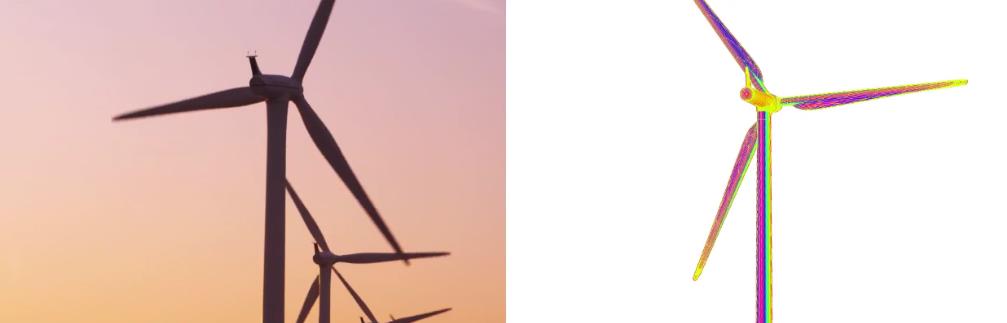
'ANSYS 19.1' supports improved customer productivity and accurate design and analysis by lowering overall product complexity and enhancing analytical capabilities through updates to the entire product family, from 3D additive manufacturing technology to 3D design.
'ANSYS 19.1' is equipped with a 3D metal additive manufacturing solution. 'ANSYS Additive Suite' enables weight and grid density optimization, creation and modification of CAD geometry, simulation of the additive manufacturing process, and structural and thermal analysis for data verification. Engineers can design, test, and verify part performance during the design phase through simulation prior to the printing process, significantly reducing costs associated with physical trial and error.
In addition, numerous new features and resources have been included, including over 100 mechanical products from Granta. Engineers can handle material selection and verification tasks more easily through the product's vast data library folders. Topology optimization users can see greater flexibility when running calculations with defined constraints or responses in 'ANSYS 19.1'.
In the Fluid product family, 'ANSYS 19.1' provides engineers with a new approach to cavitation modeling for a wide range of applications, from hydro pumps to rocket fuel systems. Engineers can reliably predict cavitation using existing material properties without the need for unnecessary physical tests.
In addition, it features 'ANSYS EnVision Pro,' a new version of 'ANSYS EnSight Viewer,' supporting engineers in processing EnSight data and generating new views and photorealistic images in real time. Engineers can analyze data, create new images and flipbooks, and perform data analysis even offline or outside the office without using EnSight.
In addition, the embedded software product family offers enhanced usability through project model loading that is four times faster and improved navigation capabilities. In addition, the 3D design product family includes new features that quickly and accurately simulate more types of loading conditions, as well as fly-through and perspective modes that enable more immersive visualization, allowing for faster and easier verification of product operation and performance.
The Electromagnetic product family of 'ANSYS 19.1' features new hybrid simulation technology for advanced driver support systems, autonomous radar analysis, and printed circuit board analysis, and supports the latest emerging technologies such as wireless communication, autonomous driving, and electrification.
In addition, in the system product family, 'ANSYS medini analyze' has been enhanced with a native model-based editor for risk and operational studies in the automotive, aerospace, defense, and railway industries, enabling more advanced safety assessment and verification.
In the semiconductor product family, a new 3D integrated circuit (3DIC) graphical user interface automatically and seamlessly connects multiple dies, interposers, and packages used for chip-level power and thermal integrity analysis. This has significantly improved usability and made it easier to set up and analyze 3D integrated circuits (3DICs). In addition, 'ANSYS 19.1' is equipped with a chip-package-system thermal solution, enabling early reliability analysis and ensuring flexibility in system-level design, which can maximize the design scope and reduce the cost of design iterations.
Eric Bantegnie, Vice President and General Manager of the Ansys Systems Business Unit, said, “'Ansys 19.1' embodies Ansys’ vision of Pervasive Engineering Simulation and is a complete solution applicable across all industries that effectively resolves product complexity. Furthermore, it will enable product innovation by realizing increased productivity, significantly improve performance indicators, and contribute to overall economic efficiency.”
Comments
Related news

Ansys Develops Flight Control System Code to be Installed on 'Embraer Aircraft'
ANSYS announced that it has developed embedded software for aircraft development and simulation, as well as embedded code that can control the basic flight control system, which will be installed in the 'Embraer E190-E2 aircraft,' Brazil's largest airline. The 'Embraer E190-E2 aircraft' equipped with ANSYS software is the most efficient single-aisle aircraft, with 17.3% higher fuel efficiency compared to the E190, the current mainstream generation. Additionally, as the most environmentally friendly aircraft, it has the lowest external noise and emission gas levels in its class, and features the longest maintenance interval among single-aisle aircraft.
2018.04.30by 김지혜 기자

ANSYS Acquires Optis to Provide Simulation Solutions for Autonomous Vehicle Sensor Development
ANSYS has announced the completion of the final acquisition of OPTIS, a supplier of physics-based visual simulation software for light and human vision. Through this acquisition of OPTIS, ANSYS has added optical sensors and closed-loop simulation platforms to its Multiphysics portfolio, thereby providing comprehensive autonomous vehicle sensor development simulation solutions to verify the safety and reliability of autonomous vehicles. Additionally, ANSYS has built an expanded portfolio through simulation of all sensors including lidar, cameras, and radar in its solutions, multiphysics simulation of physical and electronic components, system safety analysis, and development of safety-certified embedded software.
2018.05.08by 김지혜 기자
Ansys Korea to Host '2018 Ansys Convergence Conference' on the 24th
Ansys Korea announced that it will hold the '2018 Ansys Convergence Conference' on the 24th, targeting customers and industry stakeholders. At the '2018 Ansys Convergence Conference', the company plans to introduce rapidly evolving simulation technology trends and various success cases of engineering simulation. Additionally, through expert sessions across five tracks—structures, fluid dynamics, electrical/electronics, and semiconductors—the latest technologies in each industrial sector will be shared.
2018.05.15by 김지혜 기자
.jpg)
SalePoint Signs Multi-Year Partnership Agreement with AWS… Promoting Identity Security that Integrates Even AI Agents
Sailpoint has entered into a multi-year strategic partnership agreement with AWS and is moving forward with establishing an integrated governance system that manages both human and non-human identities together. The plan is to consistently manage access permissions in an environment where AI agents are increasing as work execution entities, while applying the principle of least privilege and automated policy enforcement. The two companies plan to jointly expand capabilities to manage the identities of various entities, including AI agents, within a single layer in the AWS environment. This collaboration is interpreted as a move to design security and governance together in corporate environments where AI adoption is expanding.
2026.03.26by 배종인 기자
.png)
Databricks Unveils Open AI Security Monitoring 'Lakewatch'
Databricks entered the security market on March 24 by unveiling LakeWatch, an open-source agentic SIEM. The core functionality of this product is to integrate and analyze security, IT, and business data in a single environment to support AI-based threat detection and investigation. The company explained that it reduces the limitations of existing security operations centers, which have had to forgo some data due to high cost structures, and enables large-scale data analysis and automation based on open formats and ecosystems. LakeWatch is currently offered as a private preview, with Adobe and Dropbox mentioned as early customers. Databricks also announced an expanded partnership with Anthropic as well as the acquisition of Antimatter and SiftD.ai.
2026.03.26by 배종인 기자











