



96-layer 3D NAND technology with 1.33 terabit
 Published2018.08.04 10:05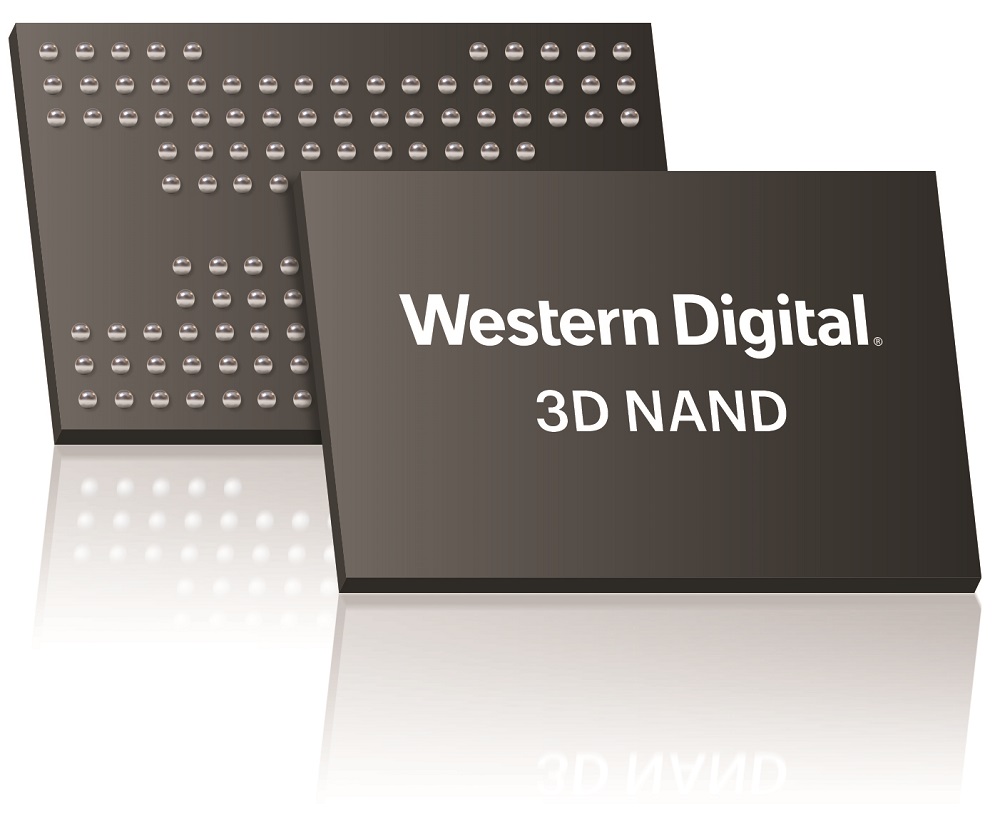
Western Digital has announced the development of 96-layer 3D NAND technology based on its second-generation QLC (4-bits-per-cell) architecture and has begun full-scale sample shipments.
Western Digital has achieved 1.33 terabit (Tb) of data throughput in its 96-layer BiCS4 device, based on QLC. BiCS4 is a next-generation 96-layer vertically stacked 3D NAND technology jointly developed with Western Digital's partner Toshiba. The new QLC-based 96-layer 3D NAND is currently sampling to OEM customers and is expected to be incorporated into SanDisk-branded consumer products later this year. Western Digital expects that BiCS4 technology will be applied to various applications, including enterprise SSDs as well as consumer SSDs in the future.
“We’ve achieved 16 levels of data storage with our QLC architecture, combining Western Digital’s silicon process, device engineering and system integration capabilities,” said Siva Sivaram, senior vice president of Silicon Technology and Manufacturing at Western Digital. “Building on our experience developing 64-layer BiCS3 technology, Western Digital’s second-generation BiCS4 QLC devices will enable us to more aggressively address the exploding data demands across consumer, mobile, embedded, client and enterprise environments, while continuing to drive flash innovation.”
Comments 1
1 Comments:
Related news

ASUS and Seagate Host 'Enterprise Solutions Conference 2018'
ASUS (hereinafter referred to as ASUS) announced that it held the 'Enterprise Solutions Conference 2018' together with SEAGATE (hereinafter referred to as Seagate). The event was held with the participation of numerous B2B and server-related personnel as well as dealers, serving as an occasion for ASUS and Seagate to announce their respective newly launched enterprise server and storage products and introduce related cutting-edge technologies in line with their recent foray into the enterprise business.
2018.01.24by 김학준 기자
Western Digital Launches New, Powerful Gaming SSDs
Western Digital is launching the high-performance "Western Digital WD Black 3D NVMe SSD" in the domestic market, featuring cutting-edge performance, low power consumption, and enhanced durability for PC gaming systems. The new product utilizes Western Digital's proprietary SSD architecture and controller to accelerate data utilization in PC applications, enabling users to access, work with, and store high-resolution video, audio, and gaming content more quickly.
2018.05.25by 김지혜 기자

Western Digital Begins Domestic Sales of New 'SanDisk Extreme Portable SSD'
Western Digital is introducing the SanDisk Extreme Portable SSD, a new concept latest external SSD designed for professional photographers requiring high-speed and large-capacity storage, to the domestic market and is commencing full-scale sales.
2018.06.14by 명세환 기자

Intel Unveils Next-Generation 'Core Ultra Series 3' and vPro Platform for Enterprise PCs
Intel has officially unveiled the "Intel Core Ultra Series 3" for next-generation enterprise PCs and the latest vPro platform, addressing a wide range of demands from enterprise notebooks to high-performance workstations.
2026.03.26by 배종인 기자

ROHM Launches ESD Protection Diode Compatible with High-Speed Interfaces of 10Gbps or Higher
Semiconductor specialist ROHM has developed the 'RESDxVx series' of ESD (electrostatic discharge) protection diodes capable of responding to next-generation high-speed data communication environments exceeding 10Gbps, simultaneously enhancing both signal quality maintenance required in high-speed interfaces and IC protection performance.
2026.03.26by 배종인 기자












기대됩니다