


European DR Market Meets IoT, Set to Grow 4x by 2025
 Published2018.08.28 10:13
Overall Market Scale 2017: 5% → 2025: 15%

Frost & Sullivan Korea released the "European Demand Response Market, 2018-2025" analysis report, which includes revenue forecasts for the European market from 2018 to 2025, competitive structure analysis, and market share analysis.
Europe requires infrastructure capable of implementing customer-centric Demand Response (DR) programs, but adoption has been slow due to lack of regulations and customer awareness. Nevertheless, DR is beginning to be recognized by utilities as a useful resource rather than a factor that complicates problems. With the advancement of ICT, DR is expected to significantly help the EU achieve its 2020 target of 40% energy reduction and CO2 emission cuts.
According to the definition of the U.S. Federal Energy Regulatory Commission, DR refers to electricity users changing their consumption in response to time-varying electricity prices from their normal usage patterns. Alternatively, it refers to providing incentives designed to reduce electricity consumption when system stability deteriorates or wholesale market prices rise.
Park Se-jun, CEO of Frost & Sullivan Korea, stated, "With increased smart meter installations, the influx of new energy service companies, and the significant activities of startups specializing in specific technologies, the market size, which recorded $900 million, is expected to grow to $3.5 billion by 2025," adding that "as smart cities increase rapidly, DR systems combined with big data, predictive analytics, AI, and IoT will certainly attract greater interest from utilities, aggregators, and other software companies."
Utilities and DR aggregators will make substantial investments in DR technologies and forecasting tools to reduce grid failures and outages and lower power generation costs. DR will particularly be used in the residential sector, electric vehicle, and data center application sectors. The combined proportion of all these is projected to grow from 5% in 2017 to 15% in 2025.
To strengthen their market position, energy service companies and aggregators should target countries and regions with extensive renewable energy system (RES) installation bases, high electricity costs, and favorable policies and regulations.
Additionally, Frost & Sullivan summarized the following trends that will bring growth opportunities to the European DR market.
▲IoT-Enabled Building Services: DR with IoT capability can be fulfilled as a smart energy solution desired by customers. For aggregators and utilities to stay ahead in competition, they must cooperate with IoT gateway suppliers.
▲Data Analytics and Cloud: DR companies must present clear software platforms that can help customers understand that cost savings are possible through using DR. Energy management software suppliers will be able to integrate machine learning algorithms to meet the dynamic requirements of energy management.
▲Latest Business Models: With the emergence of IoT and RES, the energy market is transitioning to a distributed structure, requiring utilities to adopt customer-centric models such as flexible payment models, Software-as-a-Service (SaaS), and shared savings. Many utilities are positioning themselves as energy partners rather than mere electricity suppliers.
Park stated, "Utilities, aggregators, software solution providers, data analytics companies, and telecommunications carriers are increasingly integrating to provide premium services to end users," adding that "meanwhile, emerging markets will improve cost allocation and tariff structures to lead to commercialization of DR programs after 2020."
Comments
Related news
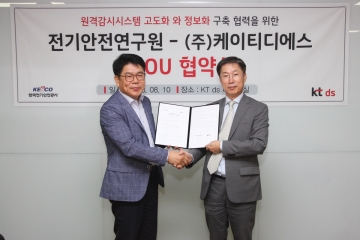
KT DS, Establishing Korea's Electrical Safety Management System
KT DS, an IT services company under KT Group, and the Korea Electrical Safety Corporation have signed a Memorandum of Understanding to establish a big data-based Korean electrical safety management system utilizing KT's Narrow Band-IoT dedicated network (NB-IoT).
2018.08.13by 이수민 기자
.jpg)
Moxa Creates a Platform to Address IIoT Utilization Challenges
Moxa will hold the 'Moxa Industrial Internet of Things Solution Day' on September 4th, with a focus on Industrial IoT. The event will cover Moxa's connectivity solutions that enable IIoT connectivity implementation.
2018.08.23by 이수민 기자
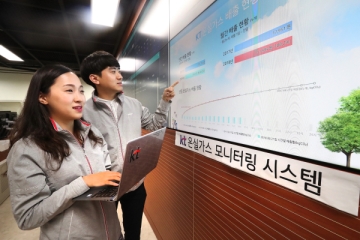
KT Achieves Environmental Protection and Business Model Simultaneously Through Greenhouse Gas Management
KT announced on the 23rd that it will establish and begin operating a greenhouse gas monitoring system capable of real-time monitoring of greenhouse gas emissions from 169 KT buildings located nationwide to manage emission status and promote greenhouse gas reduction activities.
2018.08.24by 이수민 기자

[Technical Contribution] Mouser: "AI Agents Help Accelerate and Standardize Industrial Field Maintenance Operations"
Abhishek Jadhav from Mouser Electronics discusses how to leverage agentic AI for predictive maintenance in industrial automation.
2026.10.23by 편집부
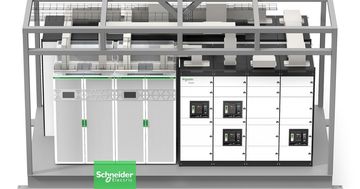
Schneider Electric Unveils Modular Power Solution for AI Data Centers
Schneider Electric has launched prefabricated power modules and power skids for AI data centers, jointly developed with NVIDIA. Based on the GB300 NVL72 reference design, the solution applies standardized design and factory pre-fabrication methods to build power infrastructure in as little as 6 months. Galaxy VXL UPS technology is integrated, with capacity options ranging from 2MW to 2.5MW.
2026.10.23by 배종인 기자











