



How to create 5G test equipment that is superior to the 5G test target?
 Published2019.05.13 17:37
| R&S and ADI collaborate to maximize key component performance
5G commercial services are beginning to roll out around the world, starting in Korea.
As wireless networks move toward 5G, the test and measurement industry faces a significant challenge related to the 5G revolution. 5G will be a huge leap forward to accommodate the wide range of devices and applications that this market will require.
The new 5G ecosystem is built on technologies that deliver faster connections and lower latency, enabling many more devices to be connected than previous generations. The diverse 5G use cases demand new and demanding configuration requirements, which require two key capabilities from test and measurement equipment:
The first is to measure performance across a much wider frequency spectrum (including mmWave at 28 GHz and 39 GHz), and the second is to perform these measurements at unprecedented bandwidths (>1 GHz) with improved signal-to-noise ratios.
We need to prepare for 5G before 5G
Electronic test and measurement (ETM) must always stay one step ahead of the latest technology. Especially when a specific technology, such as 5G, has a strong enough impact to change the market landscape, it is necessary to build a strong cooperative relationship with a semiconductor company that can act as a parts supplier and partner to become a leading company in the market.
As wireless broadband technology has evolved over generations, ETM manufacturers have been able to reduce the risk of hardware changes by taking a software-centric upgrade approach. But as the industry moves to mmWave for wireless transmission, the move to 5G will require even more advanced solutions.
“Rohde&Schwarz (R&S) knew the design was going to be difficult,” said Duncan Bosworth, general manager of the instrumentation business at Analog Devices (ADI).
R&S's long-standing partnership with ADI has enabled it to maximize the performance of its core components. “We shared the concept with R&S from the very beginning of the design process,” said Bosworth. “We discussed it frequently and involved our best people in those discussions.”
This collaboration has enabled both companies to achieve the same goals and has given R&S confidence that ADI solutions will meet the high performance requirements of this project.
Innovative testing solutions
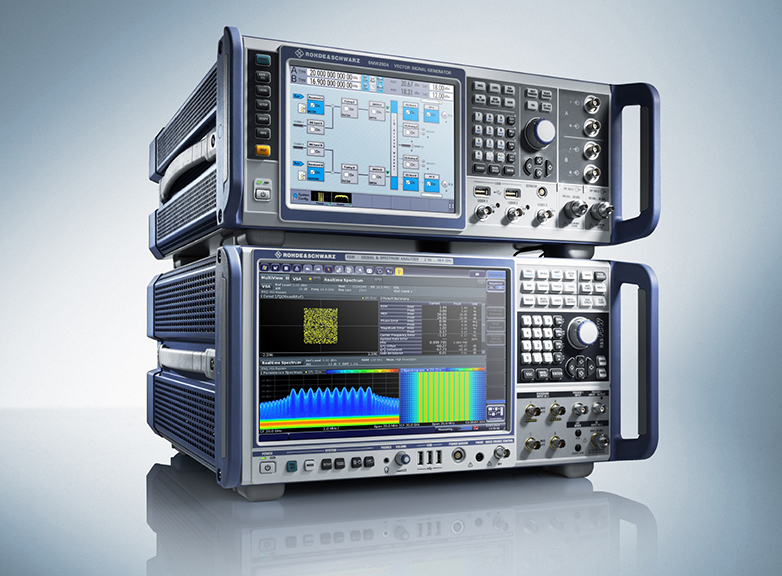
R&S has developed the R&S SMW200A vector signal generator and the R&S FSW signal and spectrum analyzer. Both instruments enable high-frequency testing with a low noise floor, making them valuable for a wide range of applications.
Both instruments are designed to address 5G challenges by generating and analyzing mmWave signals with wide modulation bandwidths of up to 2 GHz, exceeding the noise levels required by end equipment requirements.
The two devices can test building blocks for next-generation 5G equipment at both mmWave frequencies and existing sub-6 GHz cellular frequencies. Both products use ADI's data converters and RF components.
Helping customers help their customers
R&S's equipment needed to handle higher frequencies and much wider bandwidths, so ADI presented a solution that focused on RF and converter performance.
The R&S SMW200A vector signal generator provides a modulation bandwidth of up to 2 GHz using ADI converters and RF components, and its internal baseband meets 4G and 5G standards.
Additionally, this signal generator is designed with a modular, scalable architecture to meet future requirements, allowing users to optimize the signal generator for their applications and upgrade it when needed.
The R&S FSW signal and spectrum analyzer uses cutting-edge high-speed converter technology to provide IF/RF sampling with outstanding speed and linearity. As a result, the R&S FSW can basically meet the increasing demand for analysis bandwidths up to 2 GHz.
Testing the future
For R&S customers, bringing next-generation ideas to market requires the confidence that the concept will be accepted by the market. This means that the test equipment must be better than the device under test.
Checking the datasheet for proper specifications is just the beginning. What makes the difference is having a close working relationship with a supplier who can help you get the best performance from your product.
“The strong collaboration and open communication have brought us great benefits,” says Christoph Pointner, Vice President Signal Generators, Audio Analyzers and Power Meters at R&S. “This gave us confidence that ADI would deliver the level of performance they promised – and the results are what you see.”
All of this means that R&S can focus its resources on creating more value for its end customers.
Solutions for a variety of customers
Not all ETM manufacturers have the capacity to develop all the components of the signal chain. Some manufacturers may wish to use the products and know-how of suppliers.
ADI has a portfolio of high-speed converters and RF products for next-generation wideband instrumentation capable of bandwidths exceeding 4 GHz. It also has deep expertise in the ETM market that it can provide to its customers.
“We’re not only looking to develop innovative technologies and products, we’re also looking to find ways to help our customers use them,” said Bosworth, general manager. That includes providing a wide range of support.
“Our systems engineering team can fill the gap in available resources with support, service, and complete instrumentation-grade signal chain design,” Bosworth added.
A future we open together
The 5G era is already upon us for many. As the 5G era approaches, the focus is shifting to ETM, and for ETM manufacturers, 5G is already upon them.
The unprecedented technologies of the 5G ecosystem will drive higher demands on ETM products to measure performance across a much wider frequency spectrum and do so at much wider bandwidths.
To meet the 5G challenge, ETM companies will need not only new products with enhanced capabilities, but also new relationships that can leverage expertise and collaboration.
R&S has the knowledge, competencies and capabilities required for the 5G market and can provide components and support through its strong partnership with ADI. By working with ADI, R&S has been able to and is creating products that can reliably measure the future building blocks of 5G.
This article is a summary of the Analog Devices technical paper, "Helping Customers Move Toward A 5G Future - How Analog Devices Supported Two New Products From Rohde & Schwarz."
Comments
Related news
Mouser to Supply ADI Industrial Mini IMUs to Enhance Navigation Performance in IoT Applications
Mouser Electronics supplies Analog Devices' ADIS1647x precision industrial inertial measurement unit. The ADIS1647x IMU, newly added to ADI's MEMS IMU product family, improves navigation performance and stability in IIoT and IoT applications, unmanned aerial vehicles, smart agriculture, and autonomous vehicles. The device can also be used in devices being developed in the growing VR and AR markets.
2019.01.25by 이수민 기자
Microchip-TTI Launches End-to-End LoRa Security Solution
Microchip Technology has partnered with TTI to launch an industry-first end-to-end security solution that adds internationally-scaled, secure, and reliable managed authentication to LoRaWAN devices. The solution combines an agnostic ATECC608A-MAHTN-T CryptoAuthentication device that can function without requiring any knowledge of MCU and radio communications, with TTI's managed join server and Microchip's secure provisioning service to provide hardware-based security to the LoRa ecosystem.
2019.02.09by 이수민 기자

ADI Launches 'SHARC Audio Module Platform' to Accelerate Audio DSP Project Development
Analog Devices has released the SHARC Audio Module, a hardware/software platform that facilitates efficient product prototyping, development, and manufacturing of digital audio products. The SHARC Audio Module significantly reduces the product development cycle by providing an audio platform that combines a wide range of analog and digital I/O options with essential software packages and development environments. It can be used as a standalone system in its own right and also supports additional expansion, making it useful for developing customized I/O and control surfaces.
2019.02.27by 이수민 기자
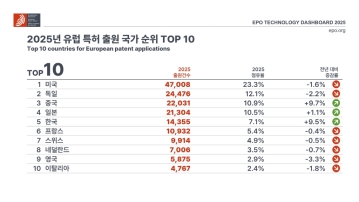
European Patent Applications Surpass 200,000 for the First Time… South Korea Maintains 5th Place, Led by Batteries and Telecommunications
According to the European Patent Office (EPO)'s 'Technology Dashboard 2025', European patent applications last year reached 201,974, surpassing 200,000 for the first time. Korean companies and inventors filed 14,355 applications, representing a 9.5% increase from the previous year and maintaining 5th place by country. Battery, digital communication, and semiconductor technologies led the growth, with Samsung ranking as the top EPO applicant for the second consecutive year and LG reaching 3rd place. The presence of major domestic cities such as Seoul, Suwon, and Yongin was also confirmed. It was also revealed that Korea's European patent strategy is expanding beyond individual technologies to span the entire industry.
2026.03.24by 명세환 기자

SK Telecom First Applies AI-Based Network Operations at Gwanghwamun K-Pop Concert
SK Telecom announced that it applied an AI-based network operation system for the first time at a large-scale K-pop concert held in the Gwanghwamun area of Seoul on March 21st, managing communication quality throughout the event. Mobile data usage during the three hours before and after the concert reached 12.15TB, approximately doubling compared to the same time slot the previous weekend. SK Telecom monitored traffic using the AI system 'A-One' in five-minute and 50-meter units to respond to potential overload situations, while also operating temporary communication facilities and on-site personnel in parallel. This case is interpreted as confirmation of the practical applicability of AI-based autonomous network operation in an environment where demand from dense events and foreign users increases simultaneously.
2026.03.23by 명세환 기자











